
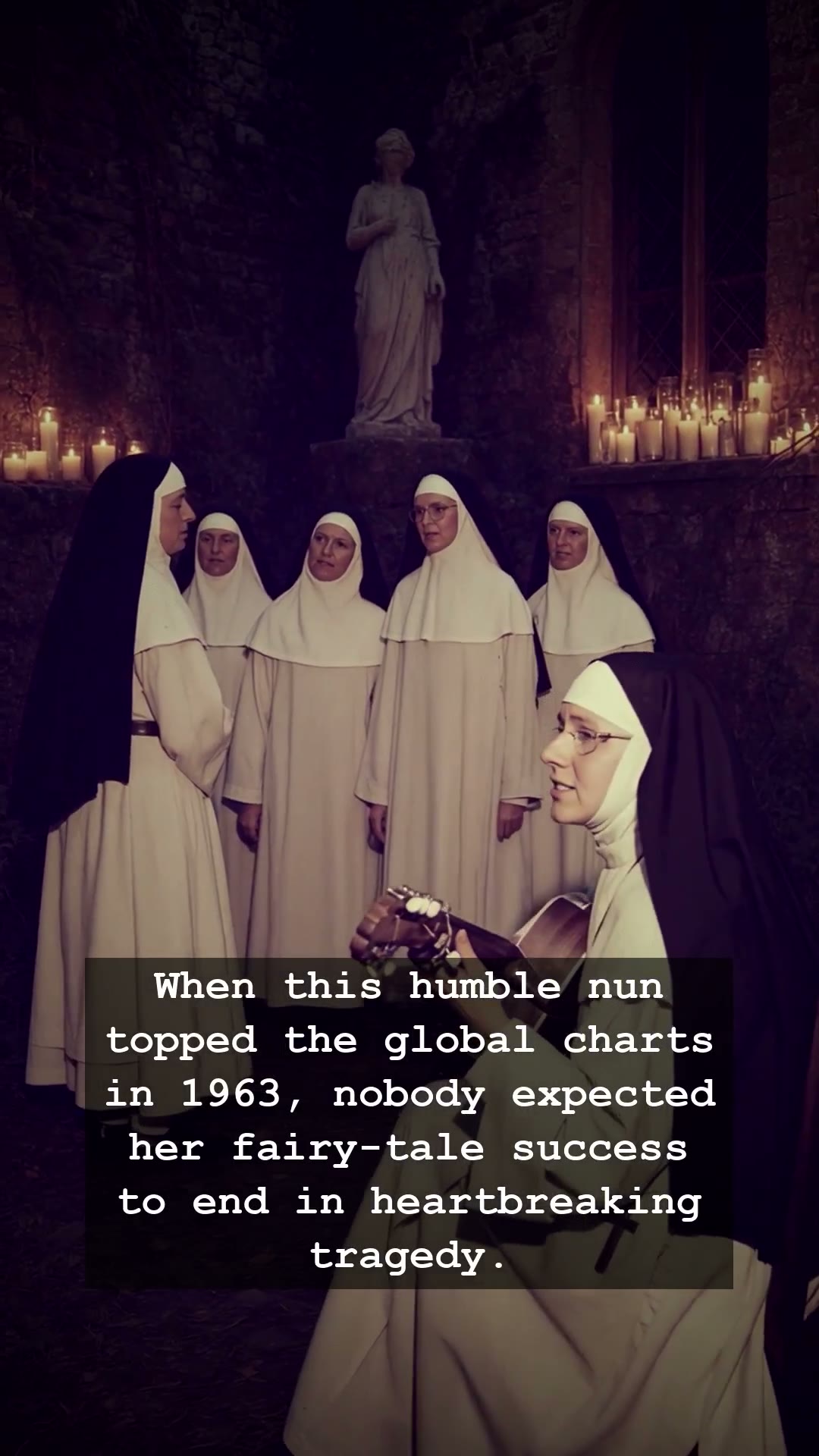
In 1963, the world was tuned into a different frequency. While the airwaves were beginning to stir with the early echoes of the British Invasion, a soft, ethereal melody cut through the noise of the jukebox era. It was Dominique, a song sung by a humble nun known as The Singing Nun, or Soeur Sourire. Within weeks, the track climbed to the very top of the Billboard Hot 100, a feat nearly impossible for a foreign-language hymn. But while the public fell in love with her serene voice and the image of a simple woman dedicated to faith, the reality behind those convent walls was far from the fairy tale the world imagined. The story of The Singing Nun is one of the most haunting tales of fame’s cruel double edge.
Jeanine Deckers, the woman behind the habit, never intended to be a pop star. She was a cloistered member of the Dominican order in Belgium, seeking peace and devotion. However, her label and her own creative impulses thrust her into the spotlight of a global stage. Unlike the rock stars of the time who sought fame, The Singing Nun was an accidental icon caught in a machinery that she did not understand. She was expected to be a pillar of purity, yet she found herself entangled in complex legal battles and financial nightmares that would eventually strip her of her dignity and her peace of mind.
The tragedy of The Singing Nun was not just about the loss of anonymity; it was about the collision between sacred faith and the cutthroat nature of the music industry. As the sixties progressed, the cultural landscape shifted toward the rebellious sounds of Woodstock and the psychedelic rock movement. Yet, Deckers remained tethered to a contract she could not escape. The royalties from her massive hit were largely absorbed by her religious order and her management, leaving her in a state of financial ruin while the world still assumed she was living in blissful, pious seclusion. The pressure of balancing her internal spiritual crisis with the demands of the public eye began to fracture her reality.
Behind the serene veneer of her records, the dark clouds were gathering. Her journey from the quiet of the convent to the center of global pop culture ended in a heartbreak that remains difficult to reconcile. In her later years, the woman who once topped the charts found herself struggling with severe depression and the heavy weight of a life lived for others. The tragedy of her final days is a sobering reminder that the shadows of fame can reach even the most sacred of places. Her story serves as a poignant, cautionary chapter in the annals of music history, contrasting sharply with the shiny, manufactured image of the mid-century star system.
Decades later, when we hear the familiar chords of Dominique, it is no longer just a catchy tune; it is a ghost of a voice reaching out from a bygone era. The Singing Nun remains an unforgettable figure, a symbol of how quickly a life can be transformed by the spotlight and how devastating the fallout can be when that light finally fades away. As we look back at the era of the transistor radio and the golden age of records, we remember not just her success, but the fragile, hidden human story that made her legend truly timeless.