
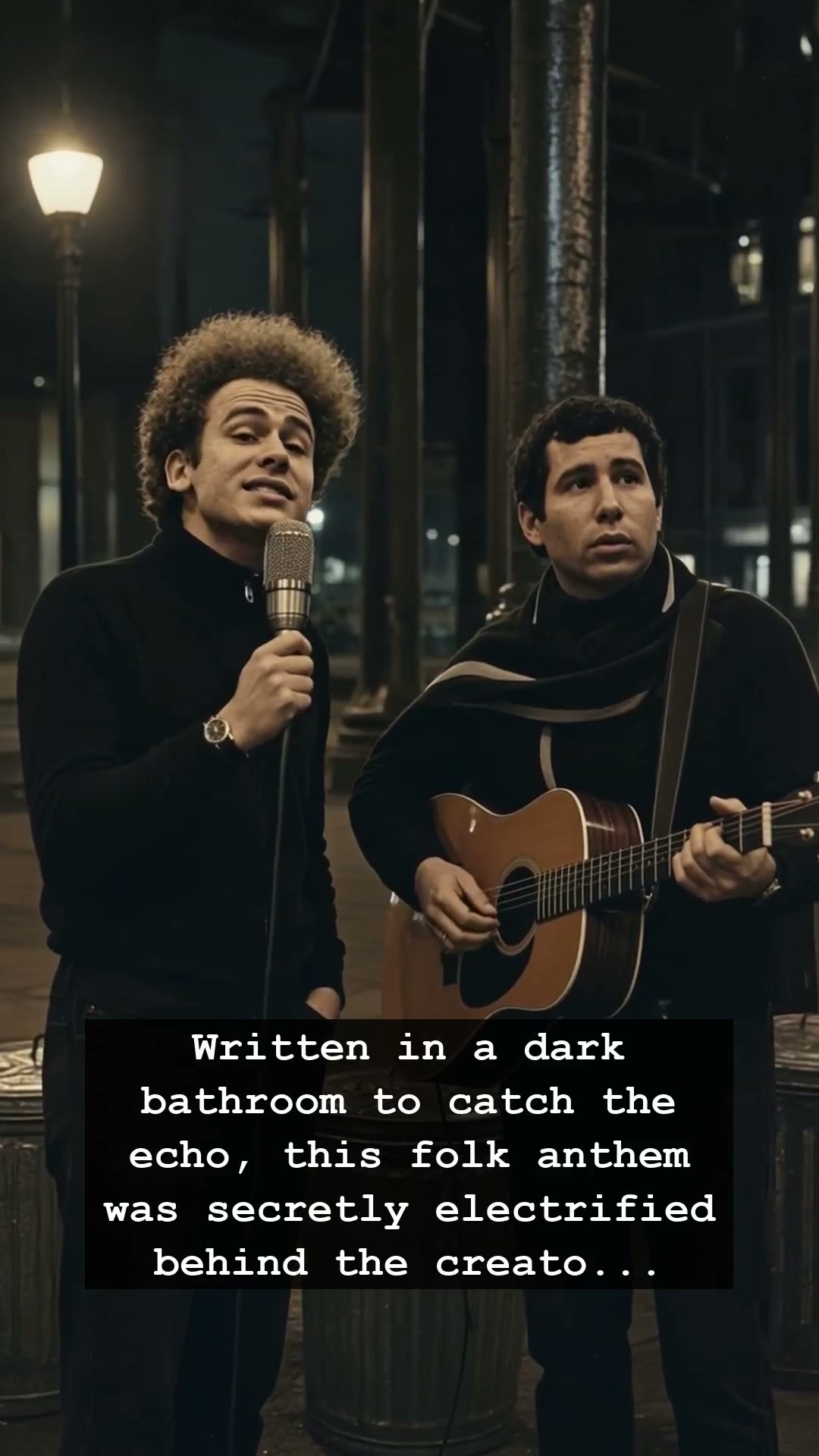
It started in the dark, windowless confines of a bathroom in Queens. Paul Simon, seeking the natural, cold reverb of tiled walls to amplify his acoustic guitar, sat in the silence of the night to capture a melody that felt like a whisper of urban alienation. The result was The Sound of Silence, a folk track that would define the mid-sixties. But beneath the soft strumming and the poetic, introspective lyrics lay a hidden storm of creative betrayal that would forever change the trajectory of Simon and Garfunkel.
At the time, the duo was reeling from the commercial failure of their debut album. They had drifted apart, with Paul Simon retreating to England to chase a solo folk career, unaware that their producer at Columbia Records, Tom Wilson, was taking matters into his own hands. In a move that shocked the artistic world, Wilson decided the original acoustic recording was simply too quiet for the burgeoning radio landscape. Without consulting the duo, he took the master tapes and secretly overdubbed electric guitars, bass, and drums in the style of the folk-rock explosion popularized by The Byrds.
When Simon and Garfunkel finally heard the electrified version, they were reportedly horrified. They felt their intimate, haunting folk anthem had been stripped of its integrity and commodified for the masses. Yet, the irony was palpable: this unauthorized revision climbed the charts with a ferocity that their acoustic original never could. It arrived at a moment when the United States was rapidly changing. The innocence of the early 1960s was fading, and the song’s lyrics about people talking without speaking and hearing without listening resonated perfectly with a generation increasingly isolated by the growing shadows of the Vietnam War and the cold, concrete expansion of modern cities.
This act of production-room betrayal inadvertently turned Simon and Garfunkel into legends of the folk-rock era. The track transformed into a cultural totem, played on every jukebox from Greenwich Village to the West Coast. It captured the profound loneliness of an era transitioning from the communal spirit of early folk to the complex, high-pressure atmosphere of the late 1960s. The tension between the organic, lonely origin of the song and its polished, electric finish remains one of the most fascinating juxtapositions in music history.
Looking back, the haunting beauty of The Sound of Silence persists because it feels deeply human, even with its controversial production. It reminds us of a time when music was transitioning from raw, basement experiments into the massive, high-fidelity industry that would eventually dominate the airwaves. Paul Simon and Art Garfunkel eventually reconciled, but that secret electrification remains a pivotal point where folk artistry collided with commercial necessity. It is a story of how a song, written in isolation, came to define the soundtrack of a fractured, modern world that still listens to it today.