
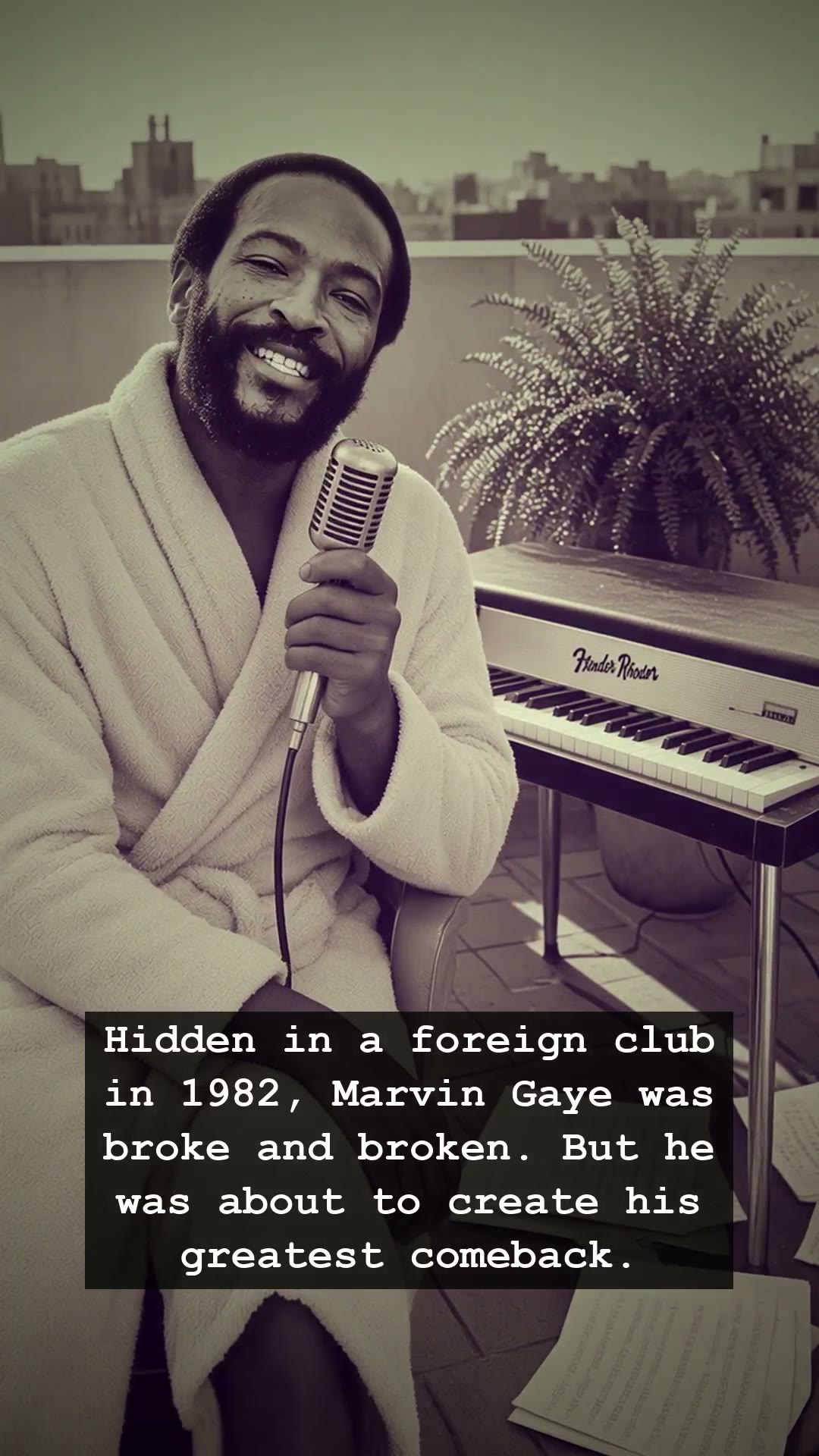
In 1982, the neon lights of the American music industry felt like a prison to Marvin Gaye. Burdened by staggering debts, the collapse of his marriage, and a spiraling struggle with substance abuse, the soul legend was essentially a fugitive from his own life. He had retreated to the quiet, gray streets of Ostend, Belgium, seeking shelter from the pressure cooker of Hollywood and the unforgiving gaze of the IRS. To the locals in that small Belgian coastal town, he was just a lonely, enigmatic American expatriate. They had no idea that beneath the surface of this man in exile, a musical fire was about to be reignited, eventually giving birth to one of the most sultry masterpieces in the history of R&B.
Living in a modest apartment and suffering from a profound sense of isolation, Marvin Gaye was at a professional dead end. He had recently departed from Motown Records, the label that had defined his career, and felt discarded by the industry that once heralded him as a prince of soul. Yet, it was precisely this vulnerability that paved the way for his evolution. He spent his nights frequenting local clubs, blending into the crowd, watching the way European nightlife pulsed to a different beat than the disco-saturated venues back in the States. It was in this anonymity that he began to experiment with the synthesizers and drum machines that would define the sound of the coming decade.
The catalyst for his comeback was the recording of Sexual Healing. Working with minimal equipment, Marvin Gaye funneled his desperation and his desire for intimacy into the track. The song was a stark departure from his earlier symphonic soul; it was minimalist, steady, and drenched in a raw, palpable longing. While the world back home was obsessed with the flashiness of MTV and the rigid structures of pop stardom, Marvin was crafting something that felt like a whisper in the dark. It was a sonic bridge between the analog warmth of the seventies and the sleek, digitized future of eighties soul music.
When the track was finally released, it didn’t just top the charts—it redefined the landscape of pop music. Marvin Gaye had transformed his exile into a sanctuary of creativity. The success of the single proved that even at his lowest point, his artistic instincts were unparalleled. He had navigated the wreckage of his personal life to find a new rhythm, proving that the most profound art often emerges from the deepest shadows. The tragedy, of course, is that his renaissance was short-lived, cut down by a domestic tragedy that stunned the world only two years later.
Today, Sexual Healing remains a timeless staple of the eighties, a song that defined a generation’s romantic sensibilities. It serves as a haunting reminder of the resilience of Marvin Gaye, a man who survived the crushing weight of fame only to find his greatest voice in the silence of a foreign land. When you listen to those iconic opening chords, remember the lonely man in Ostend who stared into the void and decided to sing one last, beautiful song for the world.