
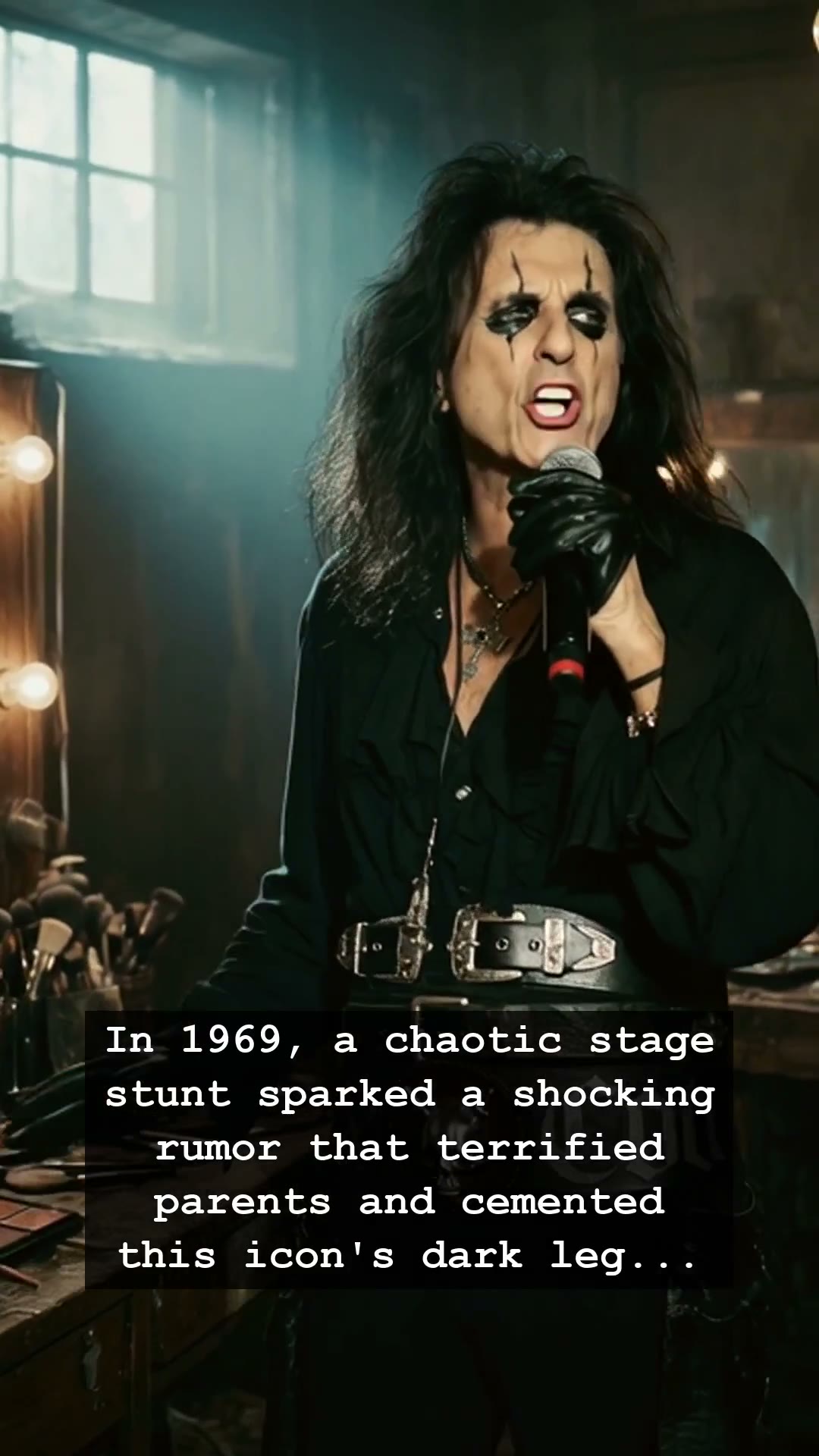
The year was 1969, a time when the world was shifting beneath our feet. While the Woodstock generation was preaching peace and love, a different kind of revolution was brewing in the dark corners of the rock scene. It was here that a lanky performer named Alice Cooper stepped onto the stage, wielding nothing but theatrical menace and a haunting, gothic aesthetic that would soon strike terror into the hearts of suburban parents across America. The air was thick with cigarette smoke and the raw, unpolished energy of a changing era, setting the perfect, chaotic backdrop for a myth that would refuse to die.
It happened during a performance at the Toronto Rock and Roll Revival. Amidst the swirling psychedelic lights and the deafening roar of an electric guitar, a live chicken somehow found its way onto the stage. Whether it was thrown by a fan or placed there by fate, Alice Cooper, in his early, unpredictable form, did not know what to make of the bird. In a moment of pure, unscripted delirium, the chicken flew off the stage and into the front row. The next day, the headlines did not just report on a performance; they invented a blood-soaked tragedy. The rumor mill churned with the sensational claim that Alice Cooper had bitten the head off the bird and drank its blood, a myth that painted him as a satanic monster rather than a budding rock icon.
This scandalous rumor spread faster than any news report could ever travel. It became the ultimate playground myth, a cautionary tale whispered by worried mothers who saw Alice Cooper as the personification of the societal decay they feared. Yet, rather than hiding from the controversy, the band leaned into the theater of the macabre. They understood, perhaps better than anyone, that rock and roll was never meant to be polite. By embracing the villainous persona forced upon him by public perception, Alice Cooper transformed himself into the Godfather of Shock Rock, paving the way for the elaborate stage theatrics that would define the decades to follow.
Looking back at that era, it is fascinating how the line between reality and performance blurred so dangerously. The 1960s were ending, giving way to the grit of the 70s, where Walkman cassettes would eventually carry these sounds into our bedrooms. The incident with the chicken was the spark that ignited a long, successful career built on the deliberate subversion of expectations. Alice Cooper proved that if you give the public a dark enough story, they will build an entire legend around it, regardless of the truth.
Today, the memory of that night remains a pillar of music history, reminding us of a time when rock stars were genuinely capable of inciting mass hysteria. While we now know the truth—that the bird flew away unharmed—the legacy of Alice Cooper remains untarnished by the facts. It is a testament to the power of the image and the enduring fascination we have with those who dare to play the villain. So, as you revisit those classic vinyl tracks today, remember the man who turned a simple farmyard accident into the most notorious legend in rock and roll history.