
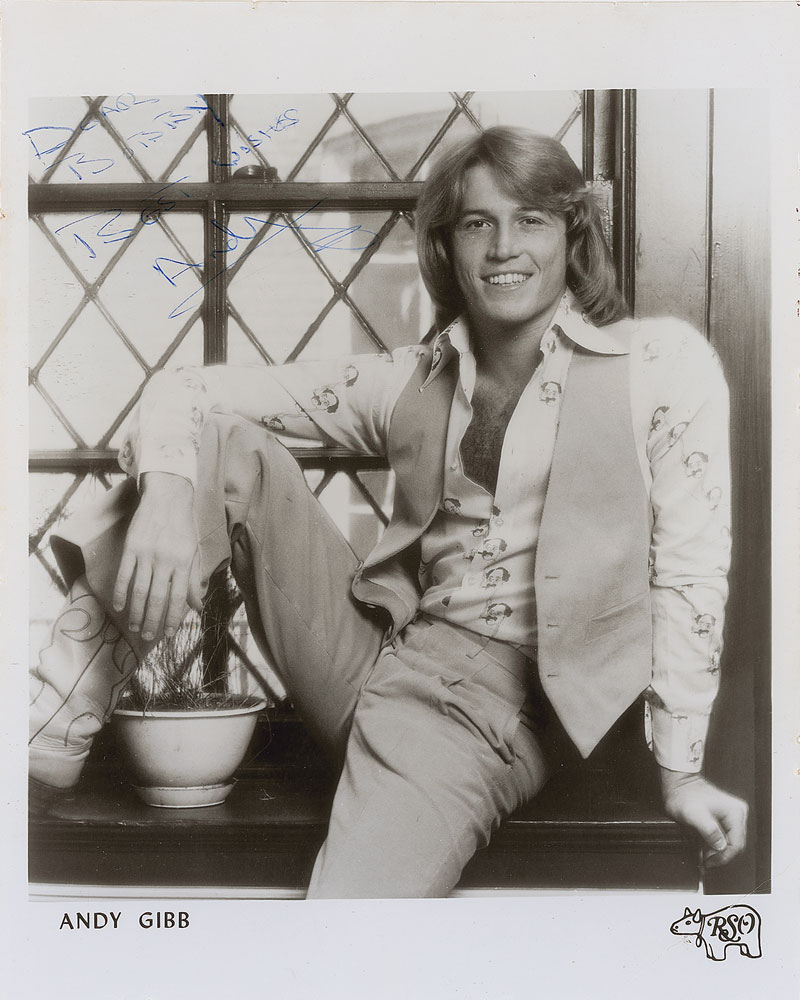
In 1978, the airwaves belonged to one man. With a voice that dripped with sunshine and a smile that commanded the hearts of millions, Andy Gibb did the impossible. He became the first male solo artist to have his first three singles hit number one on the Billboard Hot 100. As Shadow Dancing climbed the charts, the world saw a golden boy, a teen idol who seemed to effortlessly capture the spirit of the disco era. He was the younger brother of the Bee Gees, the baby-faced prince of a music dynasty, but beneath the shimmering disco balls of Studio 54 and the glossy perfection of television appearances, a silent, crushing weight was dragging him into the dark.
To understand the magnitude of Andy Gibb, you have to remember the era. This was a time when the Jukebox was king, and the sound of his voice on the radio felt like the very soundtrack of youth. He represented the pinnacle of late seventies pop, a polished, high-energy perfection that defined a generation. Yet, while fans were taping his hits off the radio onto their portable cassette players, Andy was struggling to escape the long, imposing shadows cast by his older, immensely successful brothers. He was a supernova that burned too bright, and the internal pressure to maintain his status as a global icon began to fracture his fragile psyche.
Behind the polished exterior that millions adored lay a life defined by agonizing loneliness and the relentless pursuit of an impossible standard. The music industry in the late 1970s was a fast-moving machine that rarely paused to check on the human cost of its stars. As the hits continued to roll, Andy Gibb became increasingly reliant on a cocktail of substances to cope with the crushing anxiety of his touring schedule. It was a secret hidden in plain sight, masked by the glamour of his outfits and the melodic euphoria of his records, but those close to him saw the man behind the myth fading away.
His downfall was not just a story of addiction, but a cautionary tale of a soul lost in the relentless machinery of fame. When the disco craze finally waned, Andy found himself untethered in a changing musical landscape that moved toward the synth-pop and new wave sounds of the eighties. The lack of commercial validation for his later work exacerbated his self-doubt, leading him further into isolation. It is a profound tragedy that someone who gave so much joy to the world could experience so little of it in his own private hours, eventually leaving us far too young.
Today, when we listen to the soaring melodies of his greatest hits, we are not just hearing pop songs; we are hearing the echo of a brilliant, tortured spirit. The legacy of Andy Gibb serves as a somber reminder of the faces behind the music we grew up with. Behind every polished, perfect track lies a human story—one often filled with as much pain as there is melody. Let us remember Andy not just as a fading icon of a bygone disco decade, but as a man whose voice remains an indelible part of our collective, nostalgic history.