
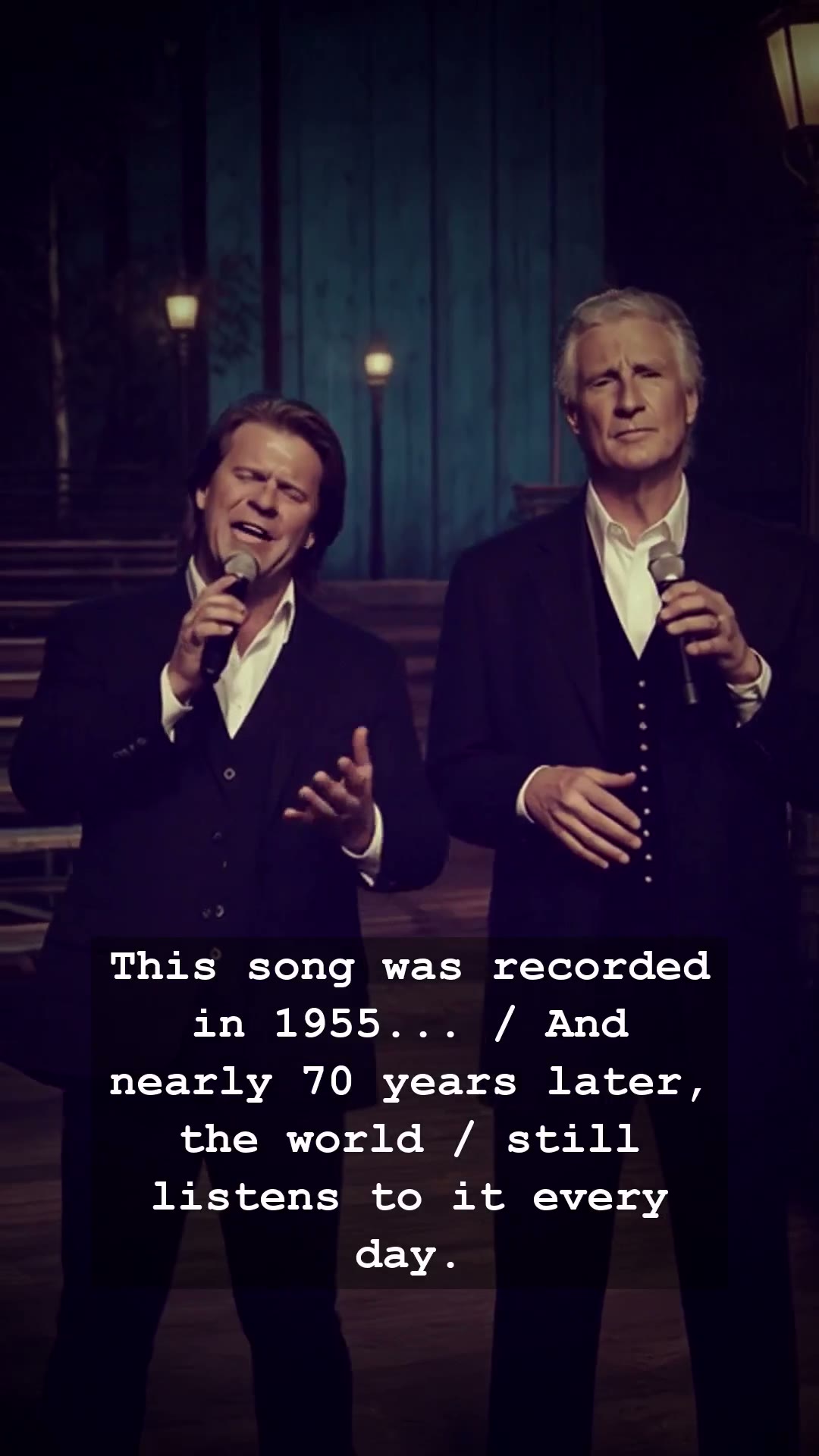
It was 1964 when a haunting melody first drifted through the airwaves, catching the world off guard. While many believe the origins of the iconic Unchained Melody trace back to the mid-fifties, it was the legendary duo known as The Righteous Brothers who truly immortalized the track, turning a simple film theme into a colossal cultural phenomenon. At the time, the air was thick with the transition from the innocence of early rock and roll to the complex, soulful expressions of the mid-sixties. When Bill Medley and Bobby Hatfield stepped into the studio, they were not merely recording a song; they were capturing the ache of human longing that transcends generations.
The Righteous Brothers were an unlikely pairing, possessing voices that seemed to pull from the very bedrock of American soul. Bill Medley’s deep, gravelly baritone provided the perfect foundation for Bobby Hatfield’s soaring, fragile tenor. Their unique sound, often dubbed blue-eyed soul, became the heartbeat of an era defined by the crackle of vinyl on a turntable and the glowing warmth of a jukebox in a dimly lit diner. Back then, they were the kings of the blue-collar ballroom, commanding stages with a raw intensity that made audiences feel every syllable of their heartbreak.
Yet, the journey of this song was anything but smooth. Beneath the polished veneer of their success lay a grueling world of studio politics and immense pressure. Producers wanted a quick hit, but The Righteous Brothers insisted on their own signature arrangement, pushing back against the industry standards of the day. This creative friction is exactly what infused the track with its haunting, desperate soul. They were channeling something deeper, a sense of isolation and passion that resonated with anyone who had ever loved and lost. It was not just another love song; it was a testament to the emotional volatility of the sixties.
Decades later, the song found a new life, transcending its origin to become a cinematic shorthand for eternal romance. Even as the music industry pivoted toward the neon excess of the eighties and the digital shift of the nineties, the sheer power of The Righteous Brothers remained undeniable. The song became a staple in our collective consciousness, heard in the hum of a Walkman and the quiet corners of late-night cinema. It is a rare piece of art that manages to remain relevant seventy years after its initial gestation, proving that true talent does not age; it merely deepens.
Today, when we listen to that iconic opening note, we are transported back to a time when music felt dangerous, real, and intimately personal. The Righteous Brothers left us with a legacy that refuses to be ignored or forgotten. Whether it was the golden age of the jukebox or the modern era of streaming, the song continues to remind us that some stories are truly meant to be sung forever. Have you ever wondered how such a simple melody could carry so much weight after all these years?