
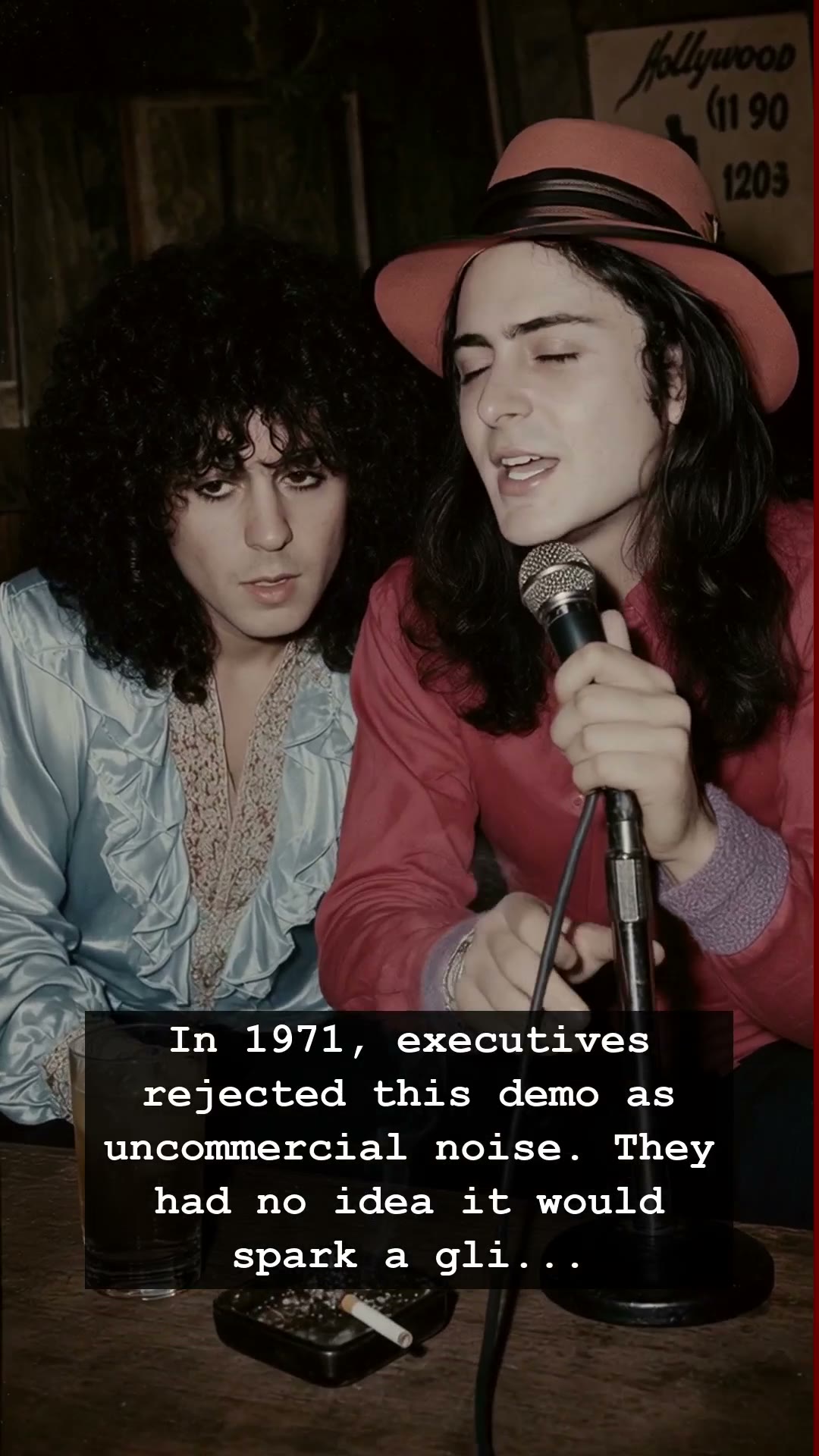
In 1971, the music industry was a fortress of gatekeepers, and they were deaf to the future. When a demo tape featuring a strange, repetitive, and undeniably infectious riff landed on executive desks, it was dismissed as uncommercial noise. To the suits in their plush offices, it lacked the technical polish of the era, but they were fundamentally wrong. That track was the heartbeat of a cultural earthquake, and it was about to launch the glittering, mascara-streaked explosion known as Glam Rock. This was the dawn of T. Rex, and the song was the iconic Get It On, a track that would change the trajectory of rock and roll forever.
At the center of this storm was Marc Bolan, a man whose ambition was as sharp as his cheekbones. Before T. Rex became a household name, Bolan had spent years in the folk wilderness, but he was hungry for something bigger. He wanted to merge the raw, primitive stomp of fifties rockabilly with the avant-garde sensibilities of the burgeoning London underground. By the time he stepped onto the stage of Top of the Pops in 1971 wearing a shimmering satin outfit and a dusting of glitter on his face, he wasn’t just performing music; he was inventing an aesthetic that would define an entire generation.
The atmosphere in early seventies Britain was perfect for this transformation. The drab, post-war austerity was finally fading, and the youth were desperate for an escape that was loud, proud, and unapologetically flamboyant. T. Rex provided the soundtrack to this rebellion. While bands like Led Zeppelin were chasing the heavy, thunderous sounds of the stadium, T. Rex brought a swinging, rhythmic groove that invited everyone to dance. The music was simple, repetitive, and deeply addictive—a stark contrast to the bloated progressive rock that dominated the airwaves at the time.
Behind the glitter, however, the life of Marc Bolan was a whirlwind of pressure and shifting loyalties. As T. Rex skyrocketed to fame, the band became a vehicle for Bolan’s singular vision, often leading to friction with original members who felt sidelined by his sudden transformation into a sex symbol. The backstage dramas of the T. Rex era were legendary, fueled by the intoxicating mix of sudden stardom, relentless touring, and the hedonistic culture that permeated the London scene before the punk explosion took hold in the late seventies.
Yet, the legacy of T. Rex remains untarnished by the passage of time. Walk through any vintage record store today, and you will still see fans digging through crates for those original vinyl pressings. The influence of Bolan’s work resonates through decades of music, from the synth-pop pioneers to the indie bands of today who still borrow that signature swing. It is a reminder that the best art is often the kind that the establishment initially rejects. So, put on your favorite record, let the needle drop, and remember the night T. Rex taught the world how to glitter.