
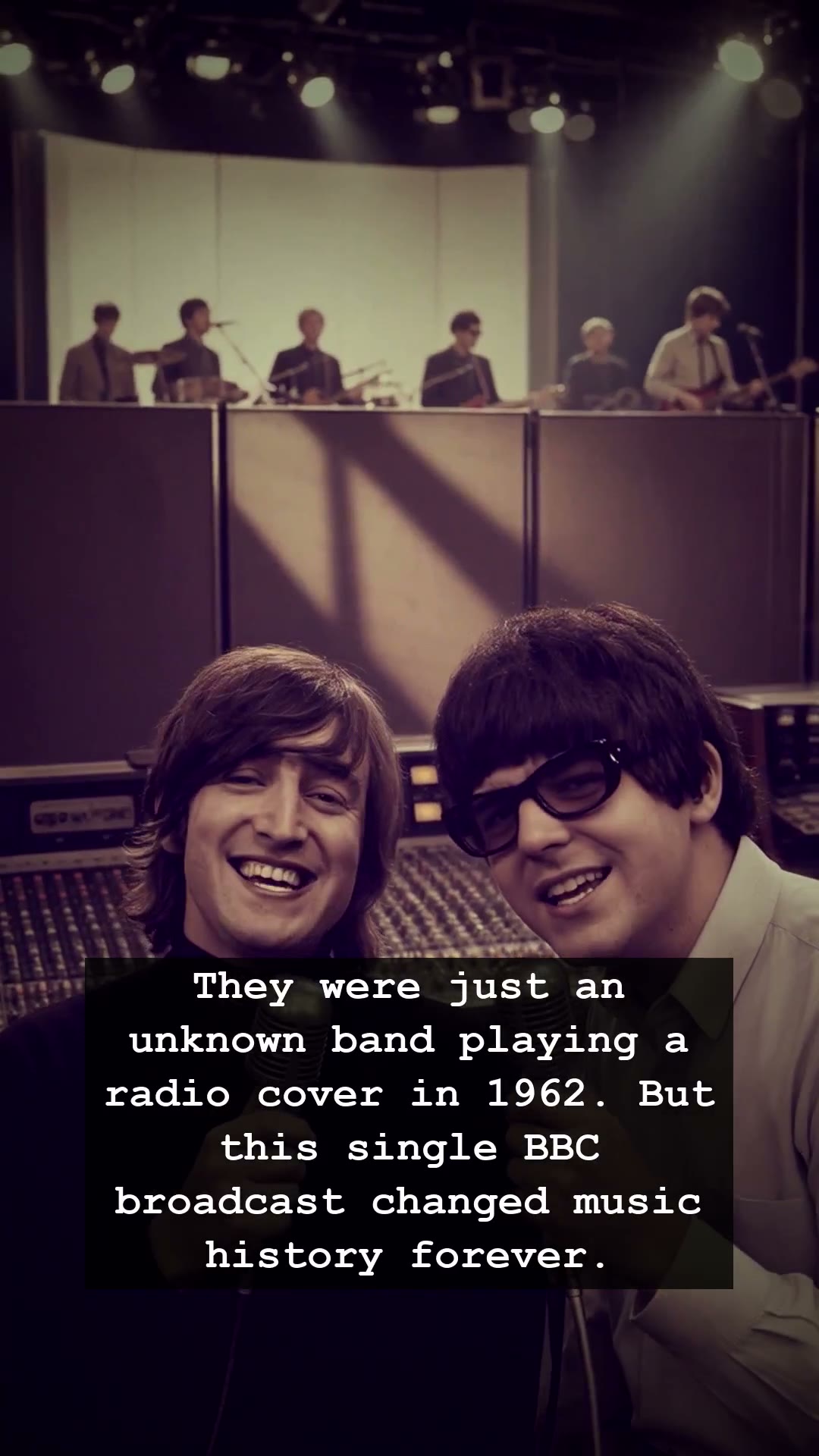
It was March 1962, a time when the world was still humming the soft melodies of the previous decade, unaware that a sonic earthquake was brewing in a cramped studio. Four young men from Liverpool, dressed in modest suits and armed with little more than raw ambition and a few wooden guitars, stepped in front of a BBC microphone. They were not yet the global icons who would later command stadium crowds and redefine the fabric of pop culture. At that moment, The Beatles were merely an unknown, hungry band playing a cover song, desperate for a breakthrough. No one listening to that broadcast could have predicted that this single performance would act as the primary spark for a musical revolution that would change the world forever.
The atmosphere in Britain during the early sixties was ripe for change, yet still lingering in the shadow of post-war austerity. The Jukebox was the heartbeat of every local milk bar, spinning hits that felt polished and predictable. When The Beatles stepped into the BBC studio, they brought something dangerously different. Their sound was unrefined, electric, and brimming with a kinetic energy that demanded attention. It was not just music; it was a cultural shift captured in audio waves. The executives at the BBC likely viewed them as just another group of lads from the North, but the vibration of their chords carried the weight of a generation ready to break free from the constraints of the fifties.
Looking back, the history of The Beatles is often told through the lens of their later, more psychedelic experiments or the intense drama that eventually fractured their brotherhood. Yet, it is this specific, almost forgotten moment in 1962 that resonates with a unique, poignant nostalgia. It was a time before the crushing weight of fame, before the screams of Beatlemania became deafening, and before the inner turmoil of artistic differences began to erode their collective soul. They were simply four friends, linked by the shared dream of making their mark, unaware that they were about to become the architects of the modern music industry.
This early broadcast remains a testament to the power of a turning point. It reminds us that every legend begins in the shadows, away from the glare of spotlights and the scrutiny of the media. The transition from that small radio studio to the height of global superstardom is a narrative arc that continues to fascinate us today. The Beatles represented more than just chords and lyrics; they were the embodiment of the shifting tides of the twentieth century, bridging the gap between the traditional crooners of the past and the rebellious, boundary-pushing rock stars of the future.
Even decades later, the legacy of The Beatles persists because their story is fundamentally human. It is a tale of meteoric rise, immense creative pressure, and the inevitable evolution that comes with being the most famous people on the planet. When we revisit that 1962 broadcast, we aren’t just listening to a song; we are witnessing the exact heartbeat of a changing world. It serves as a beautiful, melancholic reminder that even the biggest revolutions start with a simple, quiet breath before the storm.