
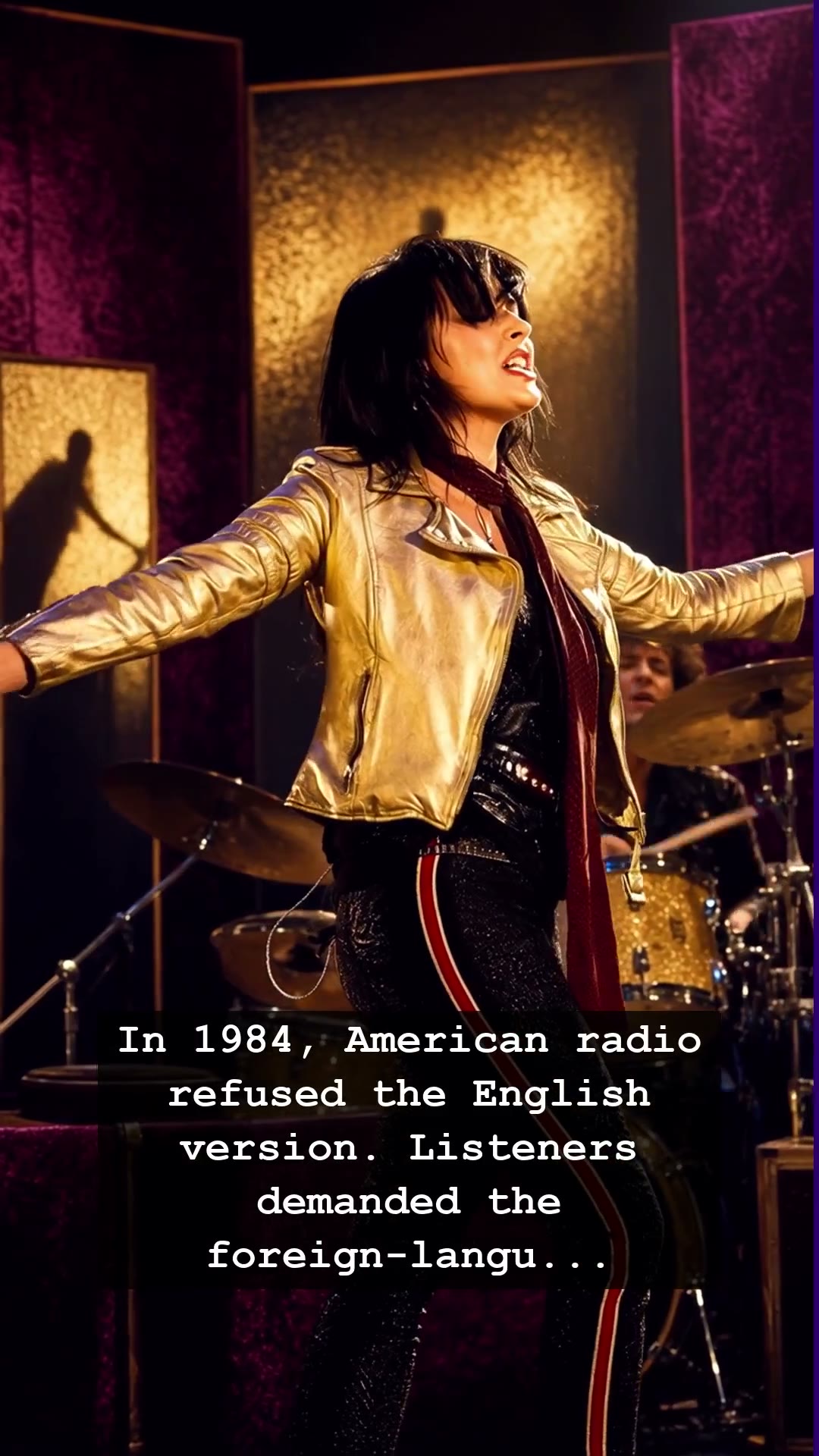
It was 1984, the era of the neon-drenched MTV revolution and the click of the Sony Walkman becoming the soundtrack to a generation. In the sterile, high-stakes boardrooms of American music labels, there was a golden rule that nobody dared to break: if you wanted to conquer the charts, you had to sing in English. Then came a German band from West Berlin with a jagged, infectious anti-war anthem that would turn that industry logic completely on its head. The song was 99 Luftballons, and the force behind it was the enigmatic Nena. When record executives insisted that she record an English version to make the track palatable for the mainstream, they underestimated the raw, defiant spirit of the Cold War youth who were tired of polished, manufactured pop.
The pressure on Nena was immense. The music industry viewed foreign-language tracks as commercial suicide, fearing that American radio listeners would immediately tune out anything they could not translate. However, the track was undeniably catchy, vibrating with an urgent, nervous energy that captured the paranoia of the times. When radio stations finally started spinning the original German version, something miraculous happened. Listeners did not care about the linguistic barrier; they were captivated by the haunting melody and the sheer emotional honesty radiating from Nena’s performance. Phone lines at local stations lit up, not for the sanitized English translation, but for the haunting, original German masterpiece that felt like a secret broadcast from the front lines of history.
This success was a true cultural anomaly. In a world where Disco was fading and the synthetic glitz of the mid-80s was taking over, Nena represented something grittier and more authentic. She wasn’t just a pop star; she was the face of a generation living under the shadow of the Berlin Wall. Her look—a mix of punk-influenced messy hair and eclectic fashion—stood in stark contrast to the perfectly curated images seen on the early MTV broadcasts. She didn’t need to conform to the rules of the American machine because the music, in its rawest, most unrefined state, had already won the hearts of the people.
Looking back, the triumph of 99 Luftballons remains a powerful reminder of how art can bridge divides that politics cannot. For those of us who grew up in the shadow of the jukebox era, the song is a bittersweet portal to a time when music felt dangerous and revolutionary. It reminds us of a decade where, for one brief, glorious moment, the audience held the power to reject the corporate narrative and elevate a foreign voice to the top of the mountain.
Decades later, the legacy of Nena persists not just as a one-hit wonder, but as a symbol of artistic integrity in the face of commercial pressure. Every time those first synthesized notes hit the airwaves, we are transported back to 1984, remembering why we fell in love with music in the first place. It was never about perfect pronunciation; it was about the truth in the melody. Do you still remember where you were when those 99 balloons took flight?