
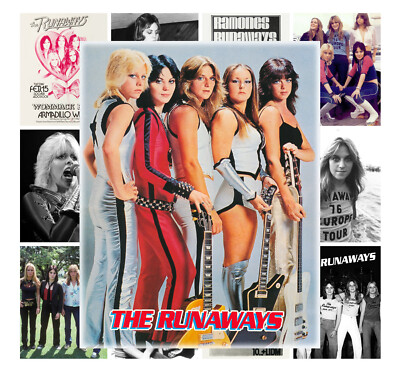
In 1975, the air in a humid Los Angeles rehearsal space was thick with the scent of cheap cigarettes and teenage angst. A fifteen-year-old girl walked into a room, guitar slung low, ready to face a group of industry sharks and budding musicians. She had zero experience, no professional track record, and a nervous energy that could have easily broken her. Yet, in a blink, she would help dismantle the gender barriers of the rock industry forever. This was the birth of The Runaways, a band that didn’t just play music; they weaponized rebellion to challenge everything the patriarchal music scene of the seventies stood for.
During those early, frantic auditions, the chemistry was anything but perfect. When the band struggled to play the song she brought to the table, they didn’t fold. Instead, they dove headfirst into the unknown, frantically piecing together a riff that would eventually become an iconic rebellious anthem. It was raw, unpolished, and dripping with the kind of authentic grit that the polished disco sounds of the era could never replicate. The Runaways were not here to be polite; they were here to burn the house down and build something louder, faster, and far more dangerous in the ashes.
Living through the mid-seventies meant witnessing the cultural shift between the remnants of the hippie peace-and-love movement and the brewing cynicism of punk rock. The Runaways occupied this volatile middle ground perfectly. While mainstream radio was flooded with sanitized pop, these girls were channeling the influence of underground glam and raw proto-punk. They carried the spirit of a thousand basement rehearsals, fueled by the desire to be taken seriously in a world that saw them only as a novelty act or a group of teenage runaways looking for trouble.
The pressure of fame, however, was a double-edged sword that sliced deep. Behind the leather jackets and the heavy eyeliner, the members of The Runaways faced the dark, hollow reality of the music industry. They were subjected to grueling tours, predatory management, and the isolating weight of being young women navigating a male-dominated jungle. Yet, in those moments of exhaustion, they found their sound. Their music became a sanctuary, a loud declaration of identity that resonated with countless listeners who felt trapped by their own circumstances. They were the voice of the misunderstood, the architects of an attitude that would eventually define the Riot Grrrl movement decades later.
Decades later, the legacy of The Runaways remains as potent as it was in that smoky Los Angeles studio. They proved that you didn’t need decades of classical training or approval from the establishment to change the face of rock and roll. You just needed a story to tell and the courage to scream it at the top of your lungs. As we look back through the lens of nostalgia, listening to those distorted, high-octane tracks, we aren’t just hearing songs; we are hearing the heartbeat of a revolution. Let us keep the volume turned up, honoring the girls who dared to rewrite the rules.