
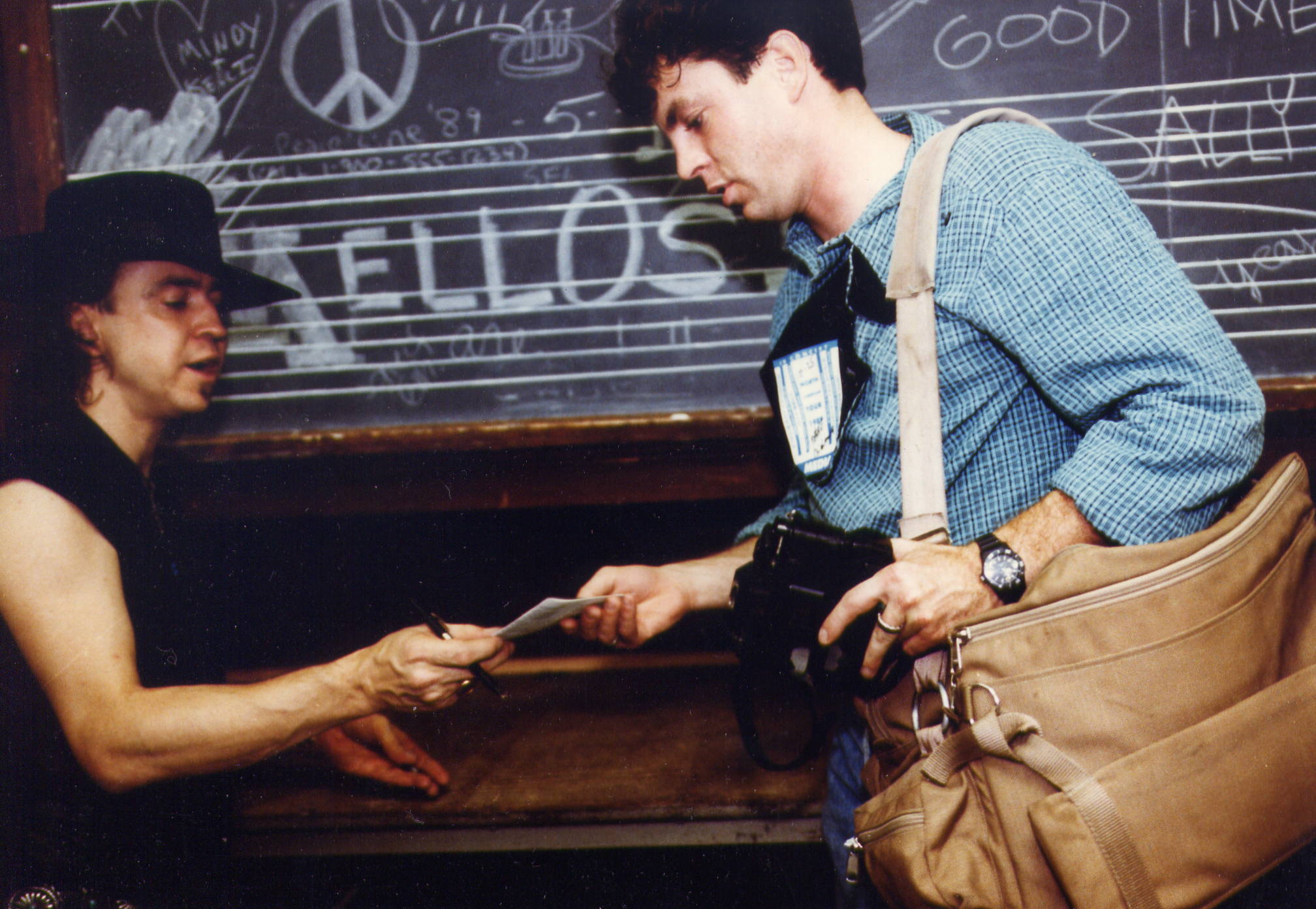
The night air at the Alpine Valley Music Theatre in Wisconsin was thick with the scent of summer rain and the electric hum of anticipation. On August 26, 1990, the stage was a sanctuary for guitar legends. Eric Clapton, Buddy Guy, Jimmie Vaughan, and the man who had breathed new life into the blues, Stevie Ray Vaughan, gathered for a finale that would forever be etched in the annals of rock history. They traded licks with a ferocity that seemed to push the boundaries of human emotion, unaware that they were witnessing the final moments of a musical titan. As the final notes of Sweet Home Chicago faded, Stevie Ray Vaughan walked off that stage not as a performer, but as a man who had reached the pinnacle of his craft, unaware that a tragic fate awaited him just hours later.
To understand the magnitude of Stevie Ray Vaughan, one must look back at the landscape of the 1980s. While synthesizers and neon-drenched pop dominated the MTV era, Vaughan arrived like a bolt of lightning from the Texas dirt. Armed with his battered ‘Number One’ Stratocaster, he didn’t just play the blues; he channeled them. He was a force of nature who bridged the gap between the gritty juke joints of the past and the massive stadium concerts of the present. His influence was a rebellion against the plastic polished sound of the decade, bringing a raw, authentic soul that resonated with anyone who felt the sting of life’s hardships.
However, the story of Stevie Ray Vaughan is one defined by a harrowing descent into the darkness of addiction and a triumphant, spiritual return to the light. Before that fateful August, he had spent years battling demons that threatened to silence his guitar forever. His sobriety in the final years of his life wasn’t just a personal victory; it was a visible evolution in his music. There was a clarity, a newfound sweetness in his tone, and an urgency in his playing that suggested he was making up for lost time. He was a beacon for his peers, proving that you could burn bright without burning out if you were brave enough to face your shadow.
When the helicopter carrying Stevie Ray Vaughan crashed into the fog-covered hillside in the early hours of August 27, 1990, the music world went silent. It wasn’t just the loss of a virtuoso; it was the abrupt end of a revival. That morning, the industry lost a man who had single-handedly carried the torch of the blues into the modern age. The tragedy cast a long, melancholy shadow over the late eighties and early nineties, signaling that even the most vibrant spirits are fragile.
Decades later, the legend of Stevie Ray Vaughan endures through his vinyl records and those grainy, flickering clips of his performances. He remains a symbol of the uncompromising soul, a man who gave everything he had to the strings until there was nothing left but the echo. When we listen to his music today, we aren’t just hearing guitar solos; we are hearing the heartbeat of a man who loved deeply and lived fast. Though he left us far too soon, the fire he ignited in the blues continues to burn, reminding us that true artistry is indeed timeless.