
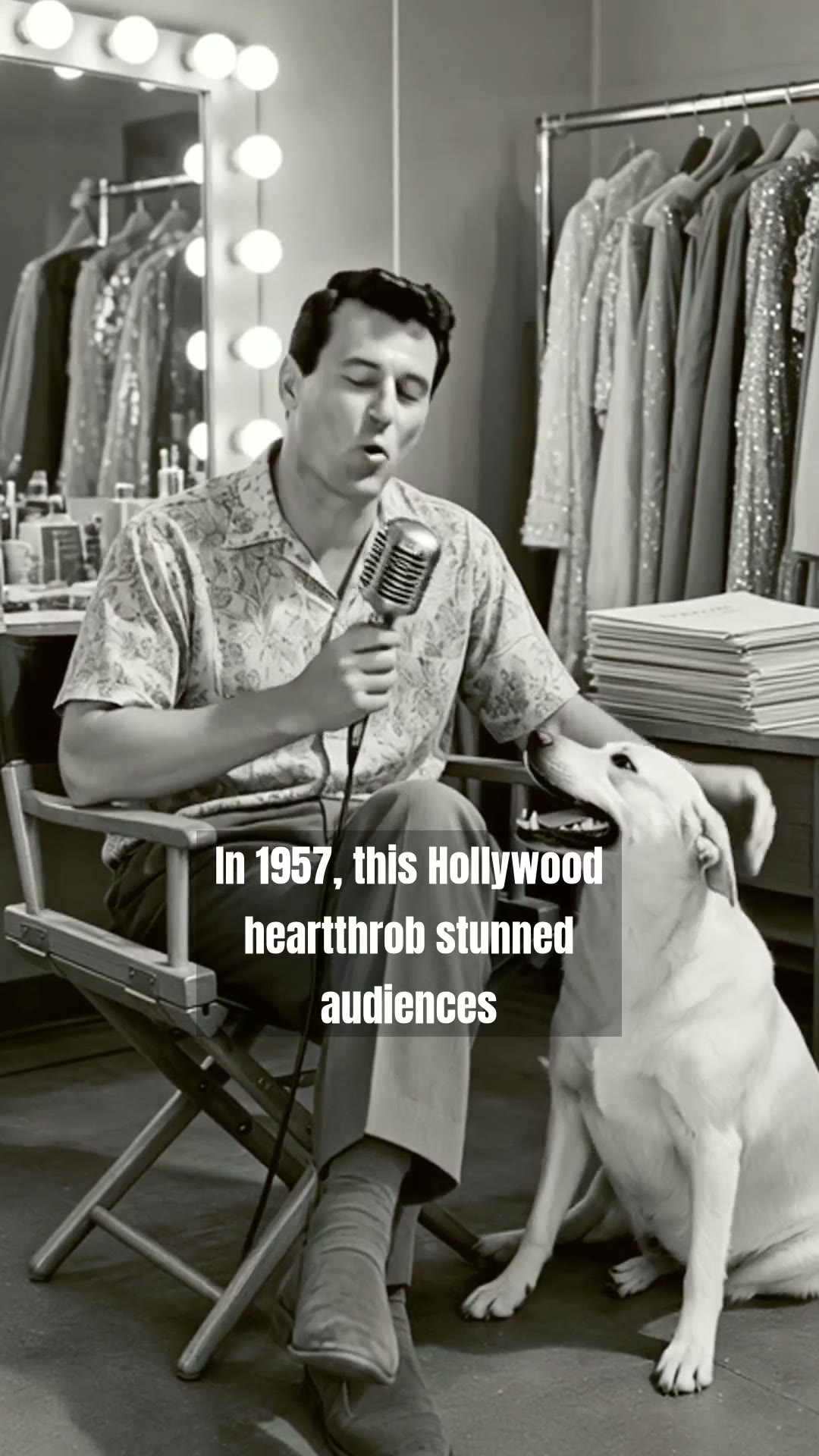
In the shimmering landscape of the Golden Age of Hollywood, few figures embodied the archetype of the leading man quite like Rock Hudson. With his towering stature, chiseled features, and a smile that seemed to light up every corner of the screen, he was the quintessential box-office darling. For years, audiences flocked to the cinema to see him as the charming, reliable romantic lead in Technicolor masterpieces. However, beneath the polished facade of the studio system, there existed a dramatic powerhouse waiting to be unleashed. The year 1957 proved to be the turning point that forever altered how the world perceived this legendary star, marking the moment when Rock Hudson finally stepped out of the shadow of his own fame.
The film in question was George Stevens’ epic drama Giant. While audiences were accustomed to his lighthearted presence, his performance as Jordan ‘Bick’ Benedict Jr. was a revelation of depth and vulnerability. Watching Rock Hudson evolve on screen from a brash, young Texas rancher into an aging, humbled man struggling with the shifting tides of the 20th century was nothing short of a masterclass. It was a raw, grounded performance that silenced the skeptics who had dismissively labeled him merely a pretty face. When the Academy Award nomination for Best Actor was announced, it confirmed what his peers had begun to suspect: Rock Hudson was a serious actor capable of profound emotional resonance.
That nomination remains a poignant milestone in cinema history. At a time when the Method Acting movement was beginning to redefine the craft, Rock Hudson held his own against the titans of the era, including Elizabeth Taylor and James Dean. The chemistry between them was palpable, weaving a tapestry of human ambition, pride, and sorrow that defined the mid-century American experience. While he never took home the golden statuette, the respect he earned during that Oscar night resonated throughout his long career. It proved that even within the rigid machine of studio-era Hollywood, an actor could transcend his image to deliver something truly authentic.
Looking back at his filmography through the lens of history, we see a man who navigated the complexities of fame with grace. From the lighthearted rom-coms that defined his box-office dominance to the gritty, emotional stakes of his later work, he remained a constant in an ever-changing industry. Today, fans often find his films on dusty VHS tapes or restored digital prints, yet the impact of his craft remains undiminished. He reminds us of an era when movie stars were not just celebrities, but icons of the screen who carried the weight of our shared human stories upon their shoulders.
Rock Hudson left behind a legacy that invites us to look closer at the idols we admire. He serves as a bridge to a bygone era of classic storytelling, reminding us that there is always more to a person than the initial impression. Whether he was commanding the vast, open plains of a Texas ranch or gracing the silver screen in a tuxedo, he brought an undeniable humanity to his work. As we continue to celebrate the history of film, let us remember him not just as a heartthrob, but as a dedicated artist who, for one brief, brilliant moment, made the world stop and realize the true weight of his talent.