
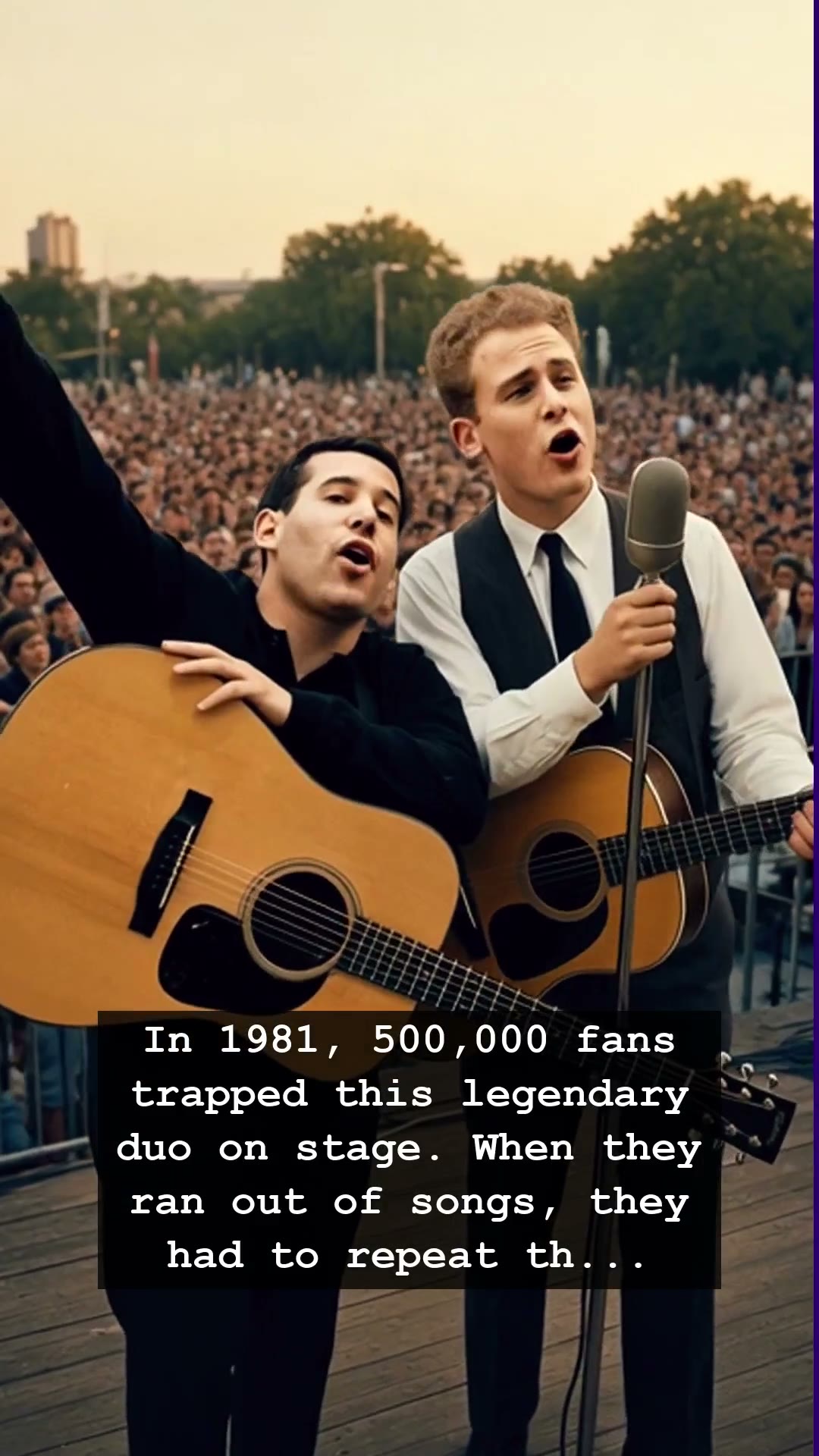
It was September 19, 1981, and the air in New York City’s Central Park felt heavy with the kind of electricity that only history-making moments possess. A sea of 500,000 people had gathered, spilling over the Great Lawn, transforming a public park into the largest open-air cathedral of sound that folk-rock had ever seen. The occasion was the legendary reunion of Simon and Garfunkel, a duo whose harmonies had defined the introspective soundtrack of the 1960s but whose personal relationship had shattered years prior. As the sun dipped below the city skyline, the sheer scale of the crowd became an overwhelming, claustrophobic force that felt like it might swallow the stage whole.
The tension beneath the surface was palpable. Paul Simon and Art Garfunkel, two masters of melody, had spent a decade harboring the quiet grievances of former friends turned rivals. Yet, standing there under the park lights, they were forced to reconcile their fractured past for the sake of the music. The audience, a mix of aging boomers reflecting on their youth and a new generation discovering the poetic weight of folk-rock, hung onto every note. But as the setlist dwindled, the band faced a terrifying logistical reality: they had simply run out of material they had rehearsed together.
Panic began to simmer backstage. The crowd, a massive, shifting organism of half a million fans, was hungry for more and refused to dissipate. With no backup plan and the pressure of the moment bearing down on them, the duo made a desperate decision. To satisfy the sea of humanity and survive the night without inciting a riot or ending the set in disappointment, they decided to repeat their most iconic hit. For the second time that evening, the haunting opening chords of The Sound of Silence rang out across the grass, serving as a strange, beautiful, and slightly frantic final encore that sealed their legacy in the annals of rock history.
This night in Central Park was more than just a reunion; it was a snapshot of an era in transition. The Walkman was beginning to change how we consumed music, and the communal experience of the concert was reaching a fever pitch before the digital age fragmented our collective listening habits. Watching Simon and Garfunkel that night, one could sense the fragility of their bond against the backdrop of their immense cultural footprint. It was a testament to how their music transcended their own personal turmoil, offering a mirror to a generation grappling with its own complexities.
Even today, the footage of that performance carries a melancholic weight. It reminds us that behind the polished production of our favorite records often lies a story of human imperfection, bruised egos, and the unpredictable nature of live fame. The Simon and Garfunkel reunion remains a powerful study in contrast: the soft, delicate harmonies of their folk roots set against the raw, almost dangerous energy of a city hungry for a glimpse of the past. It remains one of the most poignant echoes of the twentieth century, reminding us that sometimes, the most beautiful music is born from the most desperate of circumstances.