
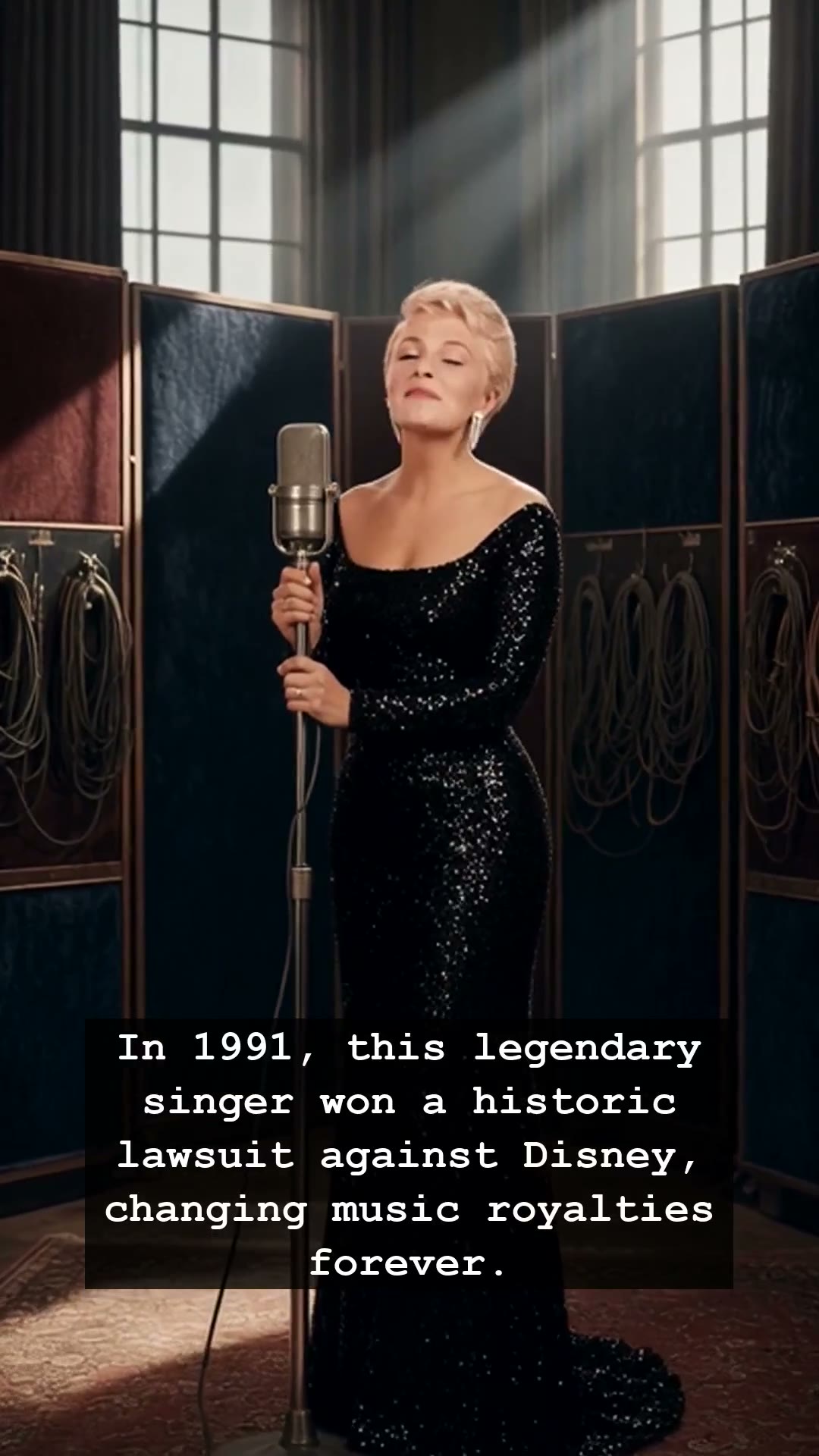
In the golden age of animation, there was one voice that could charm a snake, soothe a restless child, and command an entire room with nothing more than a smoky, whispered note. Peggy Lee was the epitome of cool, a jazz icon whose breathy delivery became the heartbeat of classic cinema. Yet, beneath the velvet gowns and the effortless glamour of her career, Peggy Lee was a fierce guardian of her own artistic legacy. Most fans remember her for the haunting allure of Fever or her enchanting work on the Lady and the Tramp soundtrack, but the most dramatic chapter of her life unfolded not in a recording booth, but in a tense, high-stakes courtroom that would alter the music industry forever.
By 1991, the world of music distribution was evolving rapidly. The emergence of the home video market had transformed studios into massive corporate juggernauts, and artists often found their past contributions exploited in new formats without proper compensation. Peggy Lee, always sharp and ahead of her time, realized that her contribution to the 1955 animated masterpiece Lady and the Tramp—where she voiced multiple characters and co-wrote several songs—was being repackaged for a new generation on VHS without her permission. While others might have retreated into the shadows of retirement, Peggy Lee took a stand against the ultimate giant of animation.
The trial was a David versus Goliath narrative that gripped the industry. For years, songwriters and vocalists had operated under archaic contracts that failed to anticipate the digital and home media revolutions. When the case finally reached its conclusion, Peggy Lee emerged victorious, walking out of court with a staggering 2.3 million dollar verdict. It was more than just a financial win; it was a watershed moment that forced entertainment executives to rethink how they accounted for an artist’s intellectual property. She had effectively secured the rights for generations of musicians to come.
To understand why this mattered, one must revisit the era Peggy Lee defined. She was a fixture of the mid-century American soundscape, a time when a Jukebox held the secret to romance and the radio was the only window into a wider, more mysterious world. Her ability to navigate the shifting cultural tides from big band jazz to the sultry pop of the post-war years made her a legend, but it was her iron will that cemented her status as a titan. Her legal battle stands as a testament to the fact that the most delicate voices often possess the most impenetrable resolve.
Today, we listen to her records with the clarity of modern technology, hearing every nuance of her breath and every inflection of her wit. We owe a debt to the woman who stood her ground when the legal landscape was anything but fair. Peggy Lee remains a reminder that music is not just a melody; it is property, soul, and a hard-won heritage. As the lights dim on the golden era she helped build, her voice lingers, echoing not just through the speakers, but through every contract and royalty check that honors the spirit of the artist.