
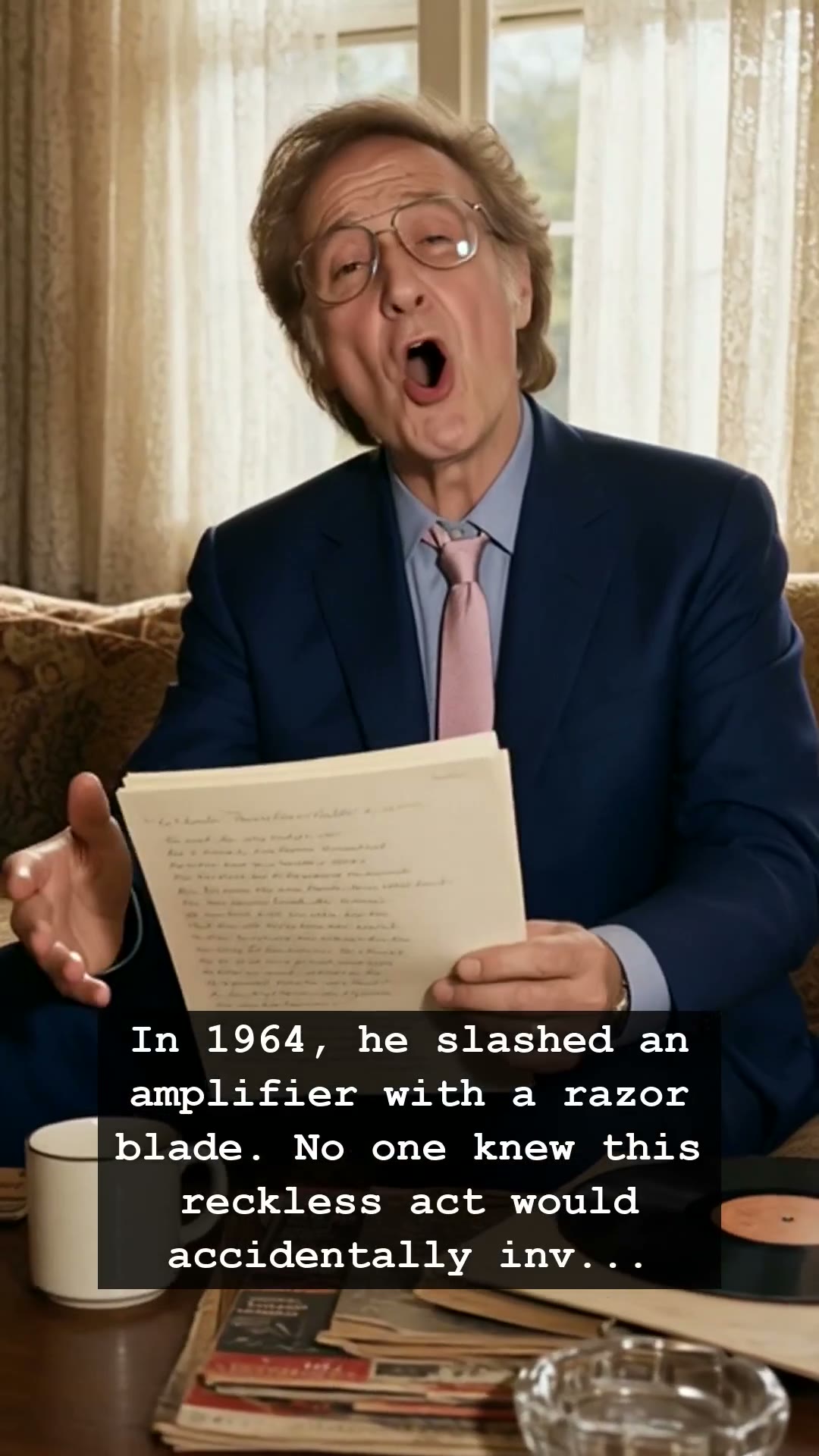
The year was 1964. The British Invasion was in full swing, and the airwaves were dominated by the polished, clean-cut harmonies of pop groups. But inside a cramped, smoke-filled recording studio, Ray Davies, the restless mastermind of The Kinks, was experiencing a moment of pure, unadulterated frustration. He wasn’t trying to change the course of music history; he was simply fed up with the sound coming through his amplifier. In a fit of raw, unfiltered artistic agitation, Ray Davies grabbed a razor blade and slashed the speaker cone of his small green Elpico amplifier. He didn’t know it then, but that single, violent act of destruction would ripple through the decades to come.
The resulting sound was something the world had never heard before: a jagged, fuzzy, and aggressively distorted tone that defied the pristine production standards of the early sixties. When Ray Davies played those chords for You Really Got Me, the air in the room felt different. The smooth pop veneer had been ripped open, exposing a rougher, more dangerous undercurrent that would eventually pave the way for heavy metal, punk, and garage rock. By intentionally crippling his gear, Ray Davies stumbled upon the sonic equivalent of a lightning strike, proving that sometimes, the most revolutionary breakthroughs are born from simple, human imperfection.
At the time, the music industry was obsessed with the jukebox aesthetic—songs were meant to be catchy, melodic, and safe for radio play. The Kinks were supposed to be another act chasing the tail of the British charts, but Ray Davies had a different vision. He channeled his inner turmoil into the hardware itself. That distorted sound wasn’t just a technical glitch; it was a manifestation of the mounting pressure and restless energy that defined the mid-sixties. While other bands were perfecting their matching suits, Ray Davies was busy dissecting his equipment to find a voice that screamed louder than the rest.
Looking back at that era, it is fascinating to realize how close we came to never hearing that legendary fuzz. If Ray Davies hadn’t acted on his impulse, the landscape of rock and roll might have remained in its polite, melodic bubble for years longer. That razor-slashed speaker became the ancestor of every power chord, every distorted solo, and every high-gain riff that defined the arena rock giants of the seventies and the metal gods of the eighties. It was an accidental revolution, a moment of chaos that forever altered the DNA of modern sound.
Even today, the legacy of that moment persists in the way we view the relationship between artist and instrument. We often romanticize the polished masterpieces of the past, but the story of Ray Davies reminds us that greatness often hides in the mistakes, the outbursts, and the reckless experiments. Next time you hear a crushing guitar riff or the raw hum of an electric amp, take a moment to look back at 1964 and the man who wasn’t afraid to cut his sound to pieces.