
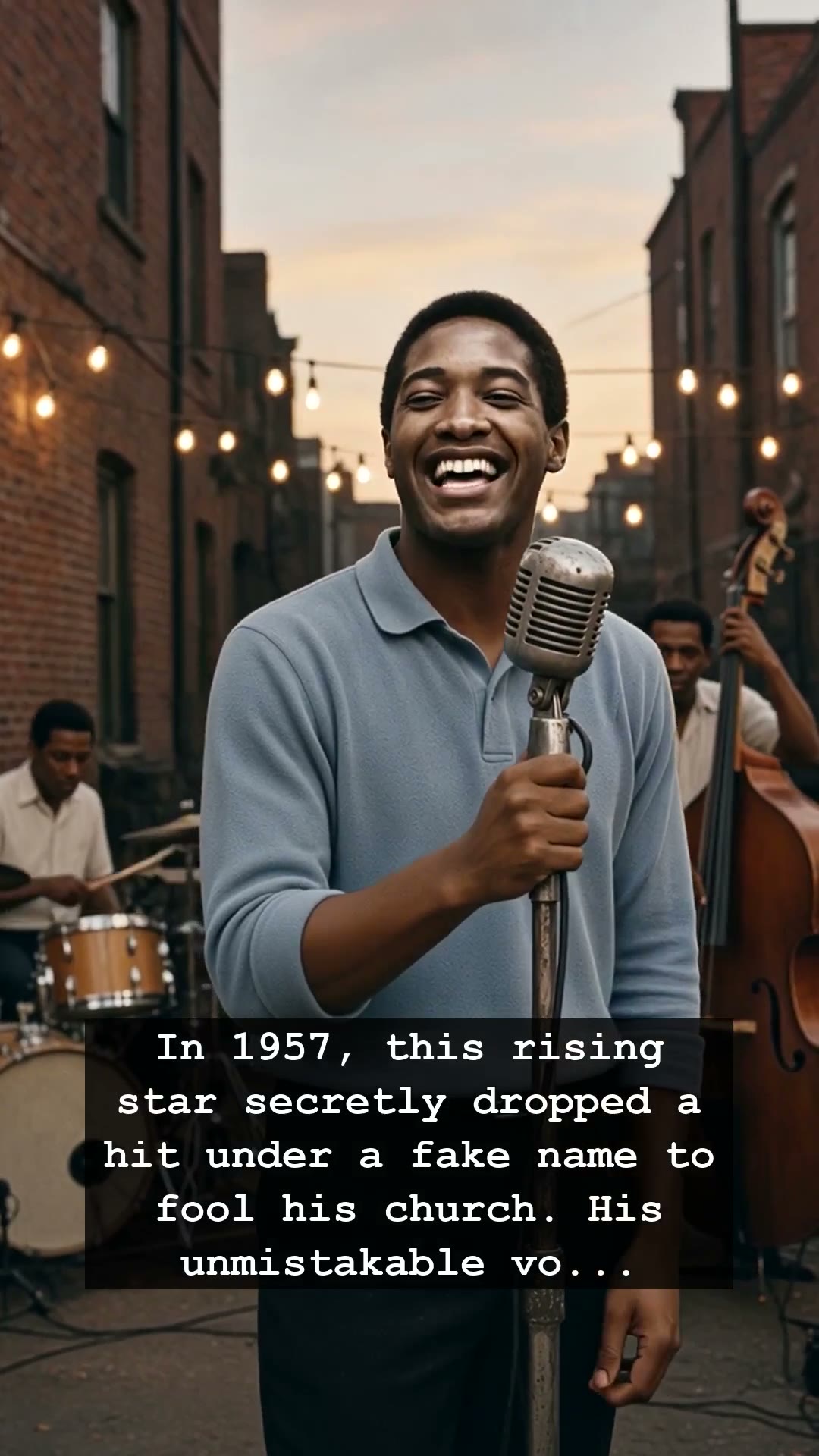
In the golden age of American music, the divide between the church and the club was as wide as the Mississippi River. For a young, charismatic gospel prodigy named Sam Cooke, this line was not just a musical boundary; it was a career-defining trap. By 1957, Sam Cooke was the golden boy of the gospel world, a man whose voice could stir the heavens. But inside, he felt the pull of a different sound—the rhythmic, seductive pulse of rhythm and blues that was sweeping across American jukeboxes and radio airwaves.
Fearing that his devoted gospel audience would view a shift to secular music as a betrayal of God, Sam Cooke concocted a daring, high-stakes scheme. He walked into the studio and recorded the track Lovable under the pseudonym Dale Cook. He hoped that the fake name would shield his reputation and keep his gospel career intact while he explored the dangerous, lucrative world of pop music. But he severely underestimated the most powerful instrument he owned: his own voice. The moment the record hit the airwaves, the smooth, honey-soaked timbre of the singer was unmistakable. It was clearly Sam Cooke, and the jig was up immediately.
This secret act of rebellion was more than just a musical experiment; it was a watershed moment in American cultural history. At that time, the music industry was strictly compartmentalized by race and genre. Transitioning from the sanctity of the church to the raw, energetic environment of the secular charts was considered a moral gamble. Yet, Sam Cooke possessed a vision that defied the norms of his era. He knew that the soul he poured into his hymns was exactly what the world needed in its dance halls and nightclubs. The backlash was instantaneous, but so was the success, proving that his crossover appeal was undeniable.
Throughout the late fifties and early sixties, Sam Cooke went on to bridge these worlds, eventually becoming one of the most influential soul artists of all time. His ability to navigate the transition from gospel to pop paved the way for generations of musicians who refused to be boxed into a single label. It was the birth of soul music as we know it, a genre that blended the emotional intensity of the Sunday service with the upbeat, syncopated rhythms that defined the birth of modern American pop. The weight of his fame brought immense pressure, but his legacy remains untouchable.
When we listen to Sam Cooke today, we are not just hearing a beautiful melody; we are listening to a man who dared to challenge the status quo. His story is a poignant reminder of the tension between personal artistic growth and the rigid expectations of society. Even decades later, the warmth of his voice continues to resonate, reminding us of a time when music was the bridge between our most private devotions and our loudest, most joyous celebrations. Do you remember the first time those smooth vocals caught your ear?