
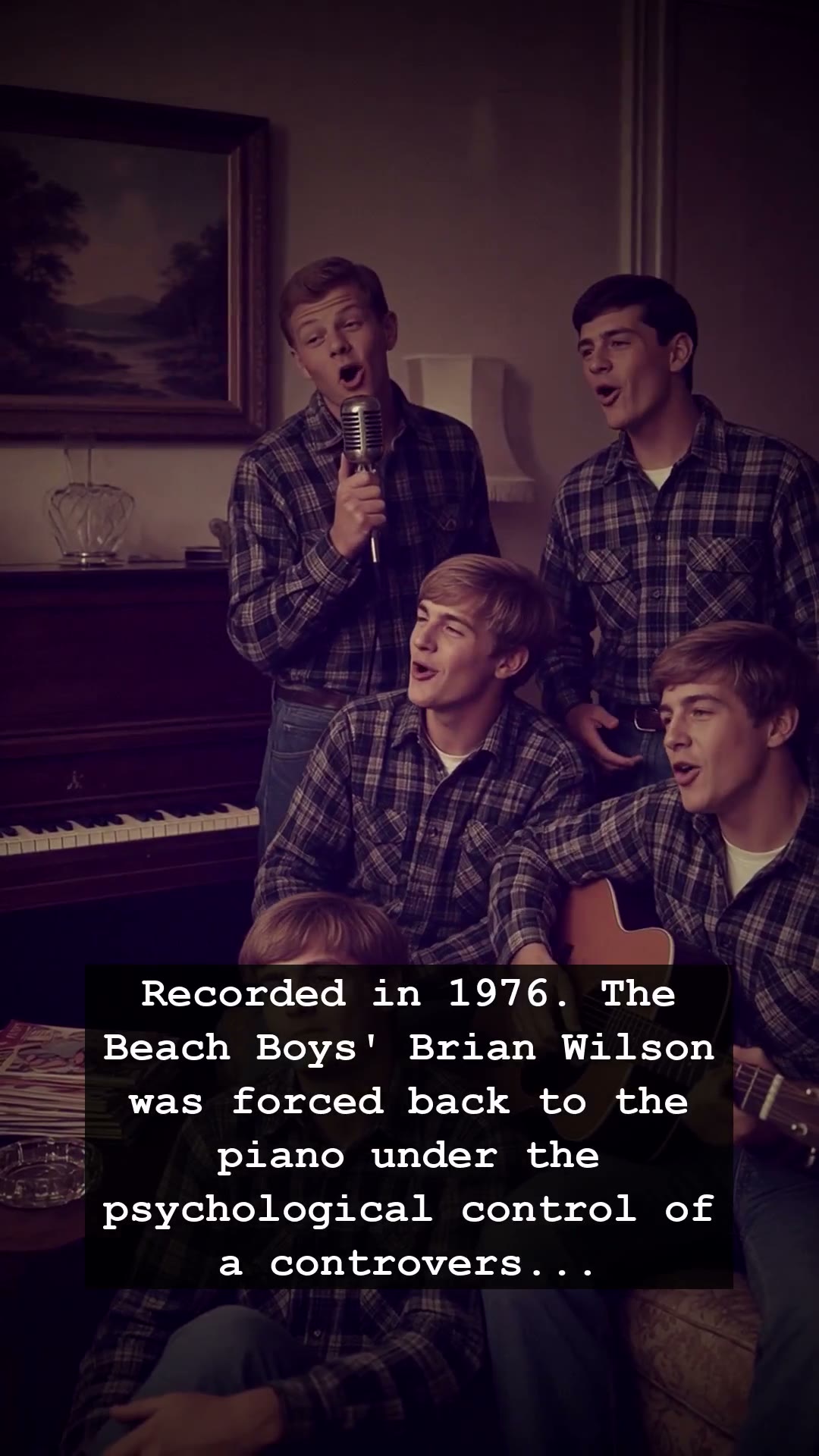
The year was 1976. Inside the sun-drenched recording studios of Los Angeles, a hollowed-out shell of a man sat before a grand piano. To the public, he was Brian Wilson, the visionary architect of the Beach Boys’ intricate harmonies and the mastermind behind Pet Sounds. To the music industry, he was the golden boy returning from a long, self-imposed exile. But behind that fragile smile lay a harrowing reality: Brian Wilson was not a free man. He was living under the suffocating, around-the-clock psychological grip of Eugene Landy, a controversial therapist who had effectively hijacked the legendary musician’s life, finances, and creative spirit.
During this era, while the rest of the world was distracted by the glitz of disco and the rising dominance of MTV, the music community whispered about the strange state of the man who had once redefined American pop. The arrangement was sold as a therapeutic necessity, a way to guide Brian Wilson back to health. Instead, it became one of the darkest chapters in rock and roll history. Witnesses described a scene where Landy dictated what Brian ate, who he spoke to, and—most chillingly—what melodies he could compose. It was a complete dismantling of an artist’s autonomy, disguised as a path to salvation.
Brian Wilson spent those days trapped in a gilded cage of psychological surveillance. There is a haunting image from that time: Brian Wilson, a man who once orchestrated symphonic masterpieces with the precision of a classical composer, looking back over his shoulder for approval before striking a single note. The pressure was not just artistic; it was a desperate battle for his own consciousness. While fans outside hoped for the return of the sunshine pop sound that defined the 1960s, the man behind the piano was fighting to remember who he was beneath the weight of relentless external control.
Why does this story still resonate so deeply with us today? It serves as a stark reminder of the dark side of fame and the predatory instincts that often orbit true genius. In an industry that often treats artists as commodities, Brian Wilson’s experience remains a cautionary tale of exploitation. The tragedy wasn’t just the loss of his prime years; it was the theft of his creative agency. Yet, throughout this ordeal, his genius proved impossible to entirely suppress, occasionally flickering through the cracks of his confinement in moments of raw, unvarnished brilliance.
Today, as we look back on those mid-seventies sessions, we hear a different story within the music—one of resilience and hidden pain. The legacy of Brian Wilson is far greater than his struggles, but we owe it to his history to acknowledge the cost of his survival. He eventually broke free, reclaiming his name and his art, but the memory of that piano bench in 1976 remains a chilling testament to the price of being a musical titan. When you listen to the songs of that period now, remember the man who had to fight a war on two fronts: one against his own mind, and one against the people who were supposed to be his protectors.