
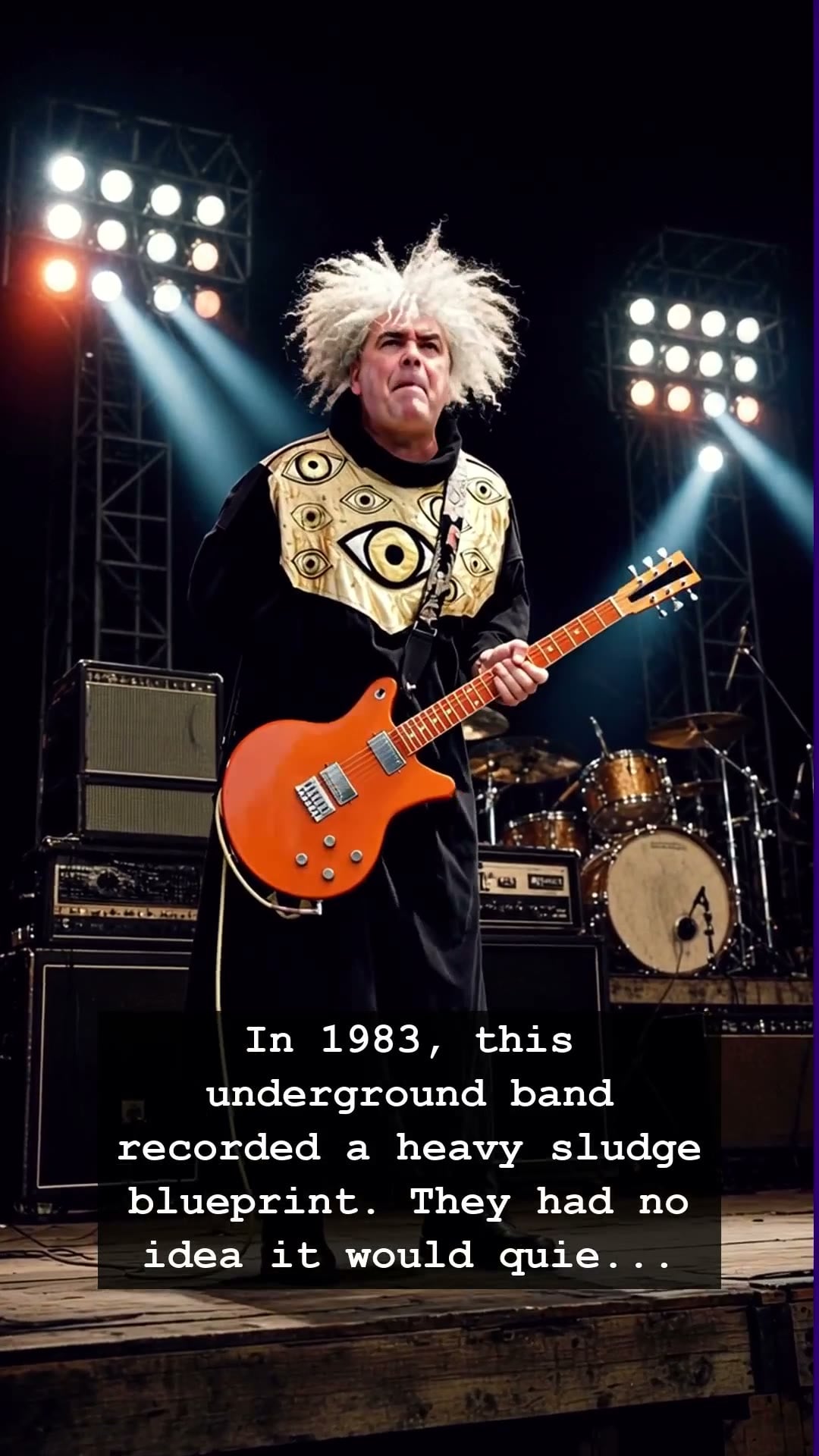
In the sweltering garages of 1983 Aberdeen, Washington, the air was thick with boredom and the static of a dying era. While the mainstream was busy chasing the neon glitter of synth-pop and the slick production of MTV, a trio of outcasts known as The Melvins were busy architecting a sonic apocalypse. They did not know it at the time, but the heavy, detuned sludge they were grinding out in their practice space would quietly become the blueprint for a cultural revolution. Long before the flannel shirts hit the runways of Paris, The Melvins were laying down the darkest, slowest chords that would eventually define the angst of an entire generation.
To understand the birth of grunge, you have to look past the later stadium anthems and return to the grit of the early eighties. The Melvins were not trying to conquer the charts; they were simply trying to escape the suffocating silence of their small town. By slowing down the tempo of traditional punk and injecting it with the heavy, viscous weight of Sabbath-inspired metal, they created something entirely alien. This was not the polished sound heard on your Walkman or at the glitzy Studio 54. It was raw, ugly, and profoundly honest. Buzz Osborne and his bandmates were carving out a niche that nobody else dared to touch, trading speed for pure, bone-shaking volume.
This sonic experiment did not just happen in a vacuum. It was the antithesis of the excess that defined the mid-eighties. While hair metal bands were singing about fast cars and midnight parties, The Melvins were exploring the psychological abyss. Their music served as the missing link, the secret bridge between the chaotic energy of hardcore punk and the sludgy, atmospheric dread that would soon erupt from Seattle. By the time the world caught on to the Pacific Northwest sound, the heavy, deliberate pacing of The Melvins had already seeped into the DNA of the burgeoning underground scene, influencing everyone from Nirvana to Mudhoney.
There is a tragic, beautiful irony in their anonymity during those formative years. While their peers were still finding their footing, The Melvins were already masters of the feedback loop and the crushing riff. They lived in the shadow of obscurity, fueled by cheap beer and a stubborn refusal to conform to industry standards. Their rehearsals were not merely practice sessions; they were visceral rituals of sound that felt less like music and more like a tectonic shift occurring beneath the feet of an unsuspecting public. It was the sound of a movement waiting for the right moment to explode.
Today, the legacy of The Melvins stands as a testament to the power of pure artistic integrity. They proved that you do not need the polished machinery of the music industry to create something that lasts for decades. They remain the architects of the slow-burn, the fathers of sludge, and the quiet instigators of a global grunge empire. Whenever you hear those thick, fuzzy guitar lines that make your chest rattle, you are hearing the echo of those 1983 sessions. It is a reminder that sometimes the most influential music in history is the kind that starts as a whisper in a forgotten basement, waiting for the world to finally catch up.