
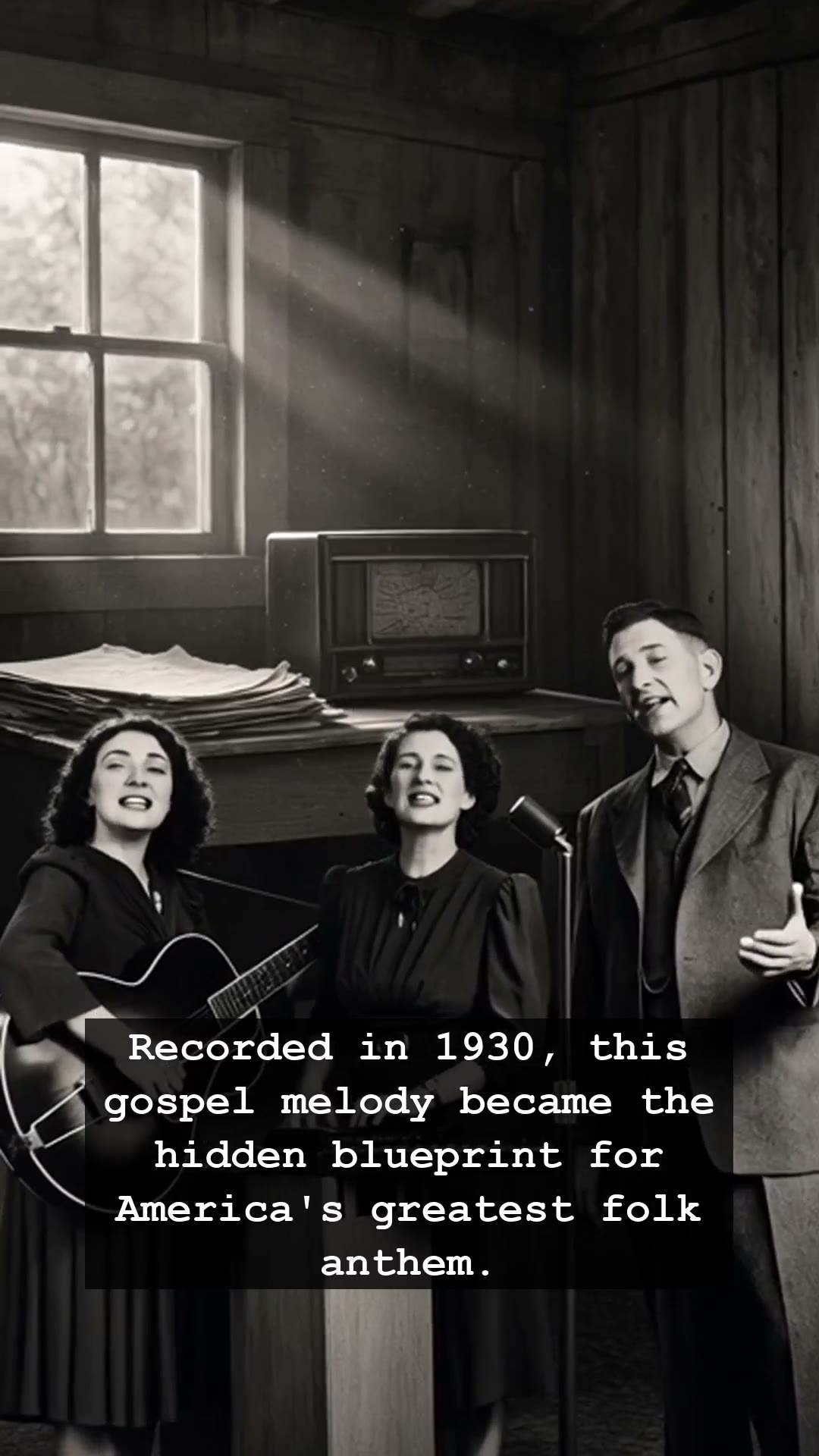
In the dusty, sun-drenched archives of early American folk history, truth is often a matter of perspective. Long before the polished sounds of FM radio took over the airwaves, there was a raw, magnetic force emanating from a 1930 recording by the Carter Family. It was a simple gospel tune titled When the World’s on Fire, dripping with the Appalachian sincerity that defined an era of Jukebox dreams and front-porch picking. But while the Carter Family breathed life into those chords, it was a wandering troubadour named Woody Guthrie who would eventually turn that melody into the backbone of a national anthem. The story of how this song traveled from the rural South to the soul of the American public is a tale of artistic evolution, hidden debts, and the power of a borrowed tune.
Woody Guthrie was not merely a folk singer; he was a sponge for the American experience, traveling the rails during the Great Depression with nothing but his guitar and a notebook. When he encountered the gospel harmonies of the Carter Family, something clicked. He recognized that the melody possessed a haunting, rhythmic quality that could carry the weight of a nation’s struggles. In a move that would define his legacy, Woody Guthrie subtly repurposed the musical DNA of that gospel track to craft his own iconic vision. He wasn’t looking to deceive; he was looking to connect. He understood that folk music was a living, breathing entity, passed from one set of calloused hands to another, constantly being reimagined for a new audience.
This was an era defined by the crackle of vinyl and the shared intimacy of the radio. For listeners in the mid-twentieth century, music was the primary record of human history. When Woody Guthrie began performing his anthem, it struck a nerve that ran deep into the American psyche. The song spoke of displacement, hope, and the rugged landscape of a country attempting to heal from economic collapse. By borrowing the cadence of the Carter Family, Guthrie managed to bridge the gap between sacred gospel music and the secular fight for the working man, creating a sound that felt as timeless as the rolling hills of the Ozarks.
Looking back, we often romanticize the purity of folk legends, forgetting that these artists were human beings navigating a chaotic world. The tension between original inspiration and creative adaptation is a recurring theme in the history of American music, from the early days of the Grand Ole Opry to the massive festivals like Woodstock. Woody Guthrie thrived in this friction, turning an obscure piece of gospel history into a rallying cry that transcended genre. His ability to weave his own truth into the fabric of an existing melody remains a masterclass in songwriting, reminding us that every great artist stands on the shoulders of the giants who came before them.
Today, we look back at the relationship between Woody Guthrie and the Carter Family not as a controversy, but as a bridge. It is a testament to the fact that music is a communal gift. While the technology of the day has shifted from scratched 78s to digital streaming, the emotional resonance of that 1930 recording persists. It serves as a haunting reminder of the days when music was the only way to share a secret across miles of track. The melody survives because it was never really owned by anyone; it belongs to the wanderers and the dreamers who kept the fire burning through the long, dark nights of history.