
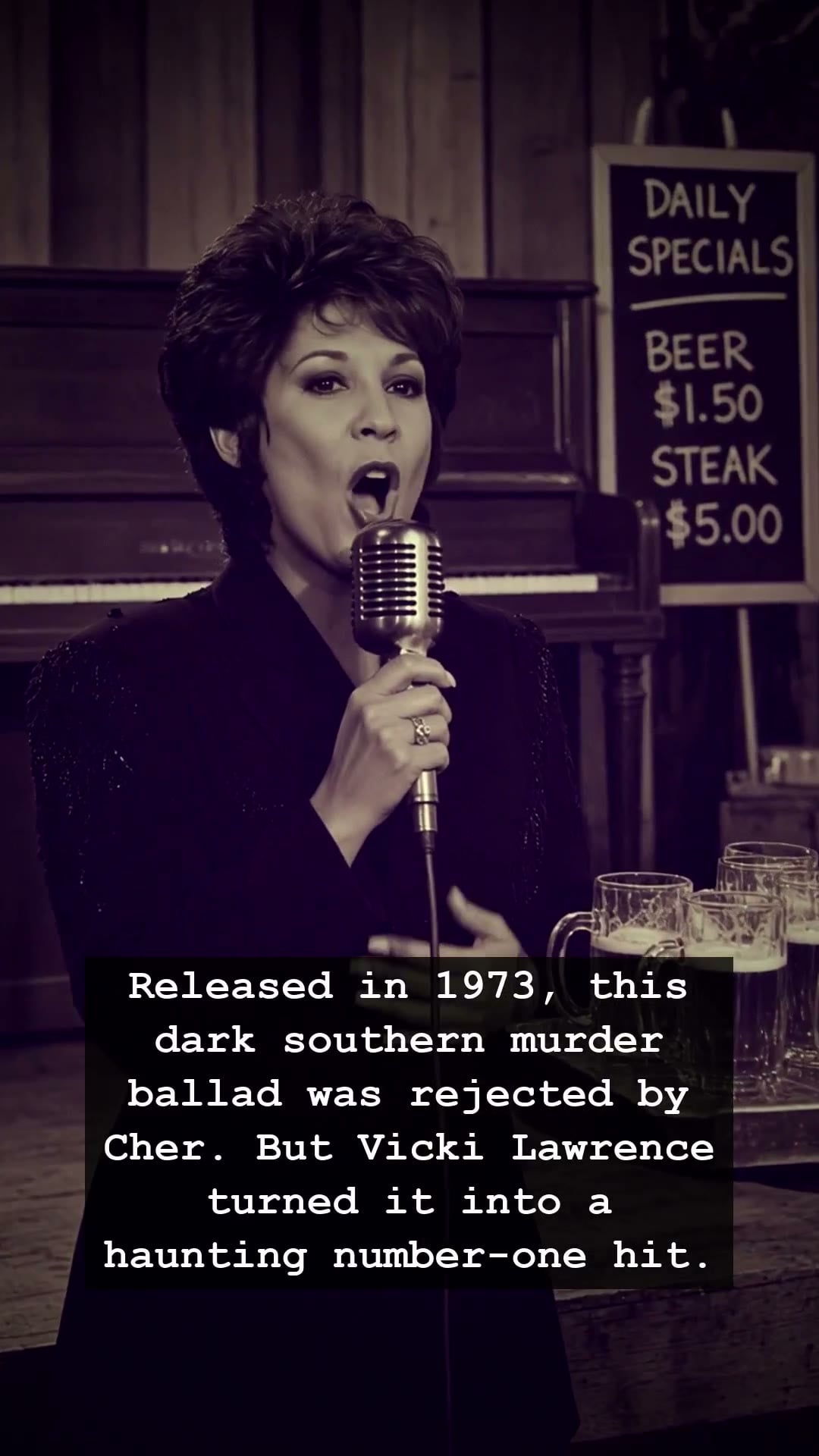
It is 1973, and the airwaves are filled with the glimmer of disco’s infancy and the lingering echoes of the Woodstock era. In the heart of the American music industry, a song titled The Night the Lights Went Out in Georgia is circulating. It is a chilling, narrative-driven murder ballad dripping with Southern Gothic tension and a twisted sense of justice. Most stars would have run from its dark subject matter, and indeed, the legendary Cher reportedly turned it down, viewing it as too risky or perhaps not quite the right fit for her rising pop trajectory. But in the shadows of the recording studio, Vicki Lawrence, a young star best known for her comedic timing on The Carol Burnett Show, heard something haunting in those lyrics that no one else dared to touch.
Vicki Lawrence was not a conventional choice for a gritty, southern tragedy. To the public, she was a bright, hilarious presence on television, a woman who knew how to make millions laugh every week. Yet, when she stepped behind the microphone, she shed the comedy to embrace the weary, desperate soul of the song’s narrator. She understood the weight of the lyrics—a tale of infidelity, a misplaced judgment, and a tragic execution that leaves the listener questioning the very nature of truth. It was a gamble that felt like stepping onto a tightrope without a net, especially in an era where radio programmers were often cautious about airing such grim storytelling.
When the track was released, the impact was immediate and visceral. The song climbed the charts with a haunting momentum, eventually hitting number one on the Billboard Hot 100. It resonated because it felt like a ghost story told on a porch late at night, a departure from the high-energy synth-pop or the polished sounds that were starting to dominate the airwaves. Vicki Lawrence proved that a story told with enough conviction could pierce through the noise of the mainstream. For listeners huddled around their wooden transistor radios or spinning the record on their home systems, the song was a revelation of depth and dramatic flair.
Looking back, the success of the song feels like a pivotal moment of artistic rebellion. While other artists were chasing the shiny, neon-lit future of the mid-seventies, Vicki Lawrence tapped into a timeless, darker tradition of storytelling that stretched back to the folk roots of the American South. The production—simple, moody, and driven by that iconic, ominous rhythm—served as a backdrop for a voice that sounded both vulnerable and cold. It was a performance that transformed a rejected demo into a cultural milestone, cementing its place in the pantheon of seventies music history.
Even today, the song remains a staple of nostalgia, a reminder of the days when music could be as shocking as a headline and as captivating as a noir novel. It sits alongside the era’s best, a testament to how one bold choice changed everything for Vicki Lawrence. As we look back at the landscape of the 1970s, it is impossible to ignore the grit and the brilliance of this singular, haunting hit. It stands as a chilling reminder that sometimes the most unlikely voices carry the darkest and most beautiful stories of all.