
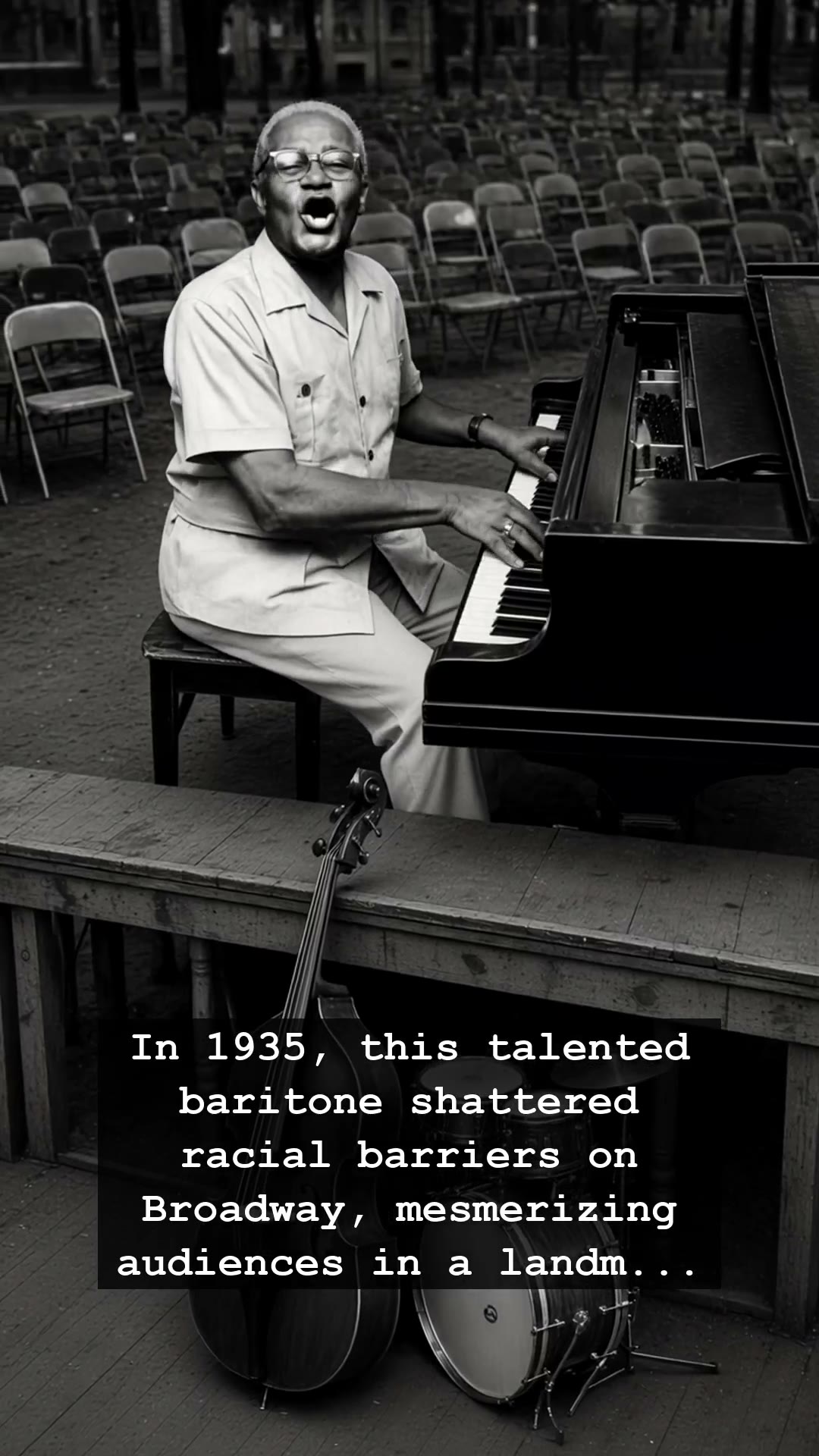
In the sweltering heat of the 1935 Broadway season, a man stepped into the spotlight who would change the course of American performing arts forever. While the radio waves of the era were just beginning to broadcast the birth of modern American music, a deeper transformation was taking place inside the Alvin Theatre. The man was Todd Duncan, and his performance as Porgy in George Gershwin’s masterpiece Porgy and Bess was not merely a display of vocal prowess; it was a defiant act of cultural disruption. At a time when segregation was woven into the very fabric of American life, Todd Duncan stood center stage, forcing audiences to confront their prejudices through the sheer, hypnotic power of his baritone.
To understand the magnitude of Todd Duncan, you must picture the rigid social landscape of the mid-thirties. The Jukebox had not yet become the universal equalizer it would later be in the fifties, and the racial lines drawn on the American stage were often strictly enforced. When Gershwin first heard Todd Duncan sing, he reportedly stopped the audition halfway through and immediately offered him the role. The traditionalists were horrified, and the societal pressures were immense. Yet, Todd Duncan possessed a grace and a gravitas that made his presence undeniable. He wasn’t just a singer; he was a pioneer who walked through doors that were chained shut, paving the way for every soul artist and performer who would later find fame in the Motown and rhythm and blues eras.
Beyond the historic firsts, there was the voice itself—a rich, velvet baritone that could fill the rafters of any house without a microphone. It is easy to romanticize the era of the fifties and sixties with their vinyl records and iconic dance halls, but the foundation of those legends was laid by men like Todd Duncan. He carried the weight of a generation on his shoulders every time he opened his mouth. His story is one of quiet, steely determination, a stark contrast to the explosive drama that would later define rock and roll tours or the chaotic excess of the Studio 54 days. Todd Duncan represented a different kind of intensity, the kind that survives long after the flashbulbs fade.
Why does his name still matter to us in this age of digital streaming? It is because Todd Duncan represents the moment the American arts began to evolve into a more honest mirror of its people. Every time we hear a powerful ballad, we are hearing the echoes of his courage. He proved that excellence is the ultimate weapon against bigotry, and his legacy remains a cornerstone of the American musical experience. He navigated the treacherous waters of fame with a poise that many modern stars would struggle to emulate, never losing sight of his craft amidst the swirling controversy surrounding the production.
As we look back at the timeline of American music—from the swing of the thirties to the synthesizers of the eighties—the silhouette of Todd Duncan remains unmistakable. He was the man who sang truth to power before the term even existed. If you listen closely to the recordings that remain, you can still hear the resonance of a man who changed the world one note at a time. The next time you find yourself lost in a classic record, take a moment to remember the man who stood on that Broadway stage in 1935, broke the silence of an era, and forever transformed the landscape of our shared cultural heart.