
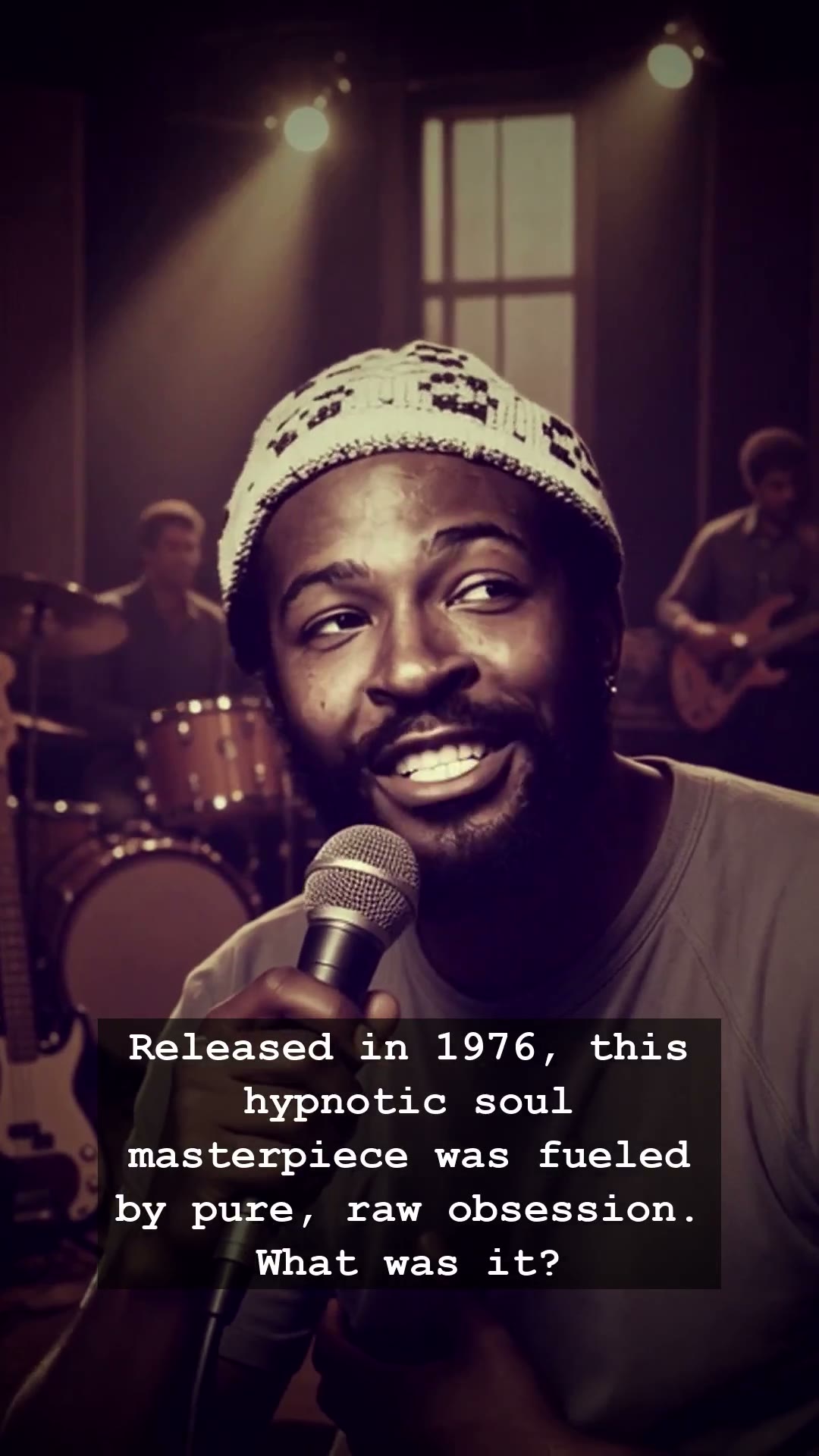
It was 1976, and the air in the recording studio was thick with the scent of late-night cigarettes, expensive cologne, and a volatile, electric tension that seemed to vibrate off the walls. Marvin Gaye, the velvet-voiced king of Motown, was not just recording an album; he was surrendering to a dangerous, all-consuming infatuation. While the rest of the world was catching the fever of the disco era, Marvin was locked in a midnight crucible, pouring every ounce of his fractured soul into the hypnotic masterpiece that would become I Want You. This was not the smooth, polished pop he had once delivered; this was raw, unfiltered human obsession captured on analog tape.
To understand the gravity of this record, you have to transport yourself back to the mid-seventies. The Motown sound was evolving, moving away from the tight, choreographed perfection of the sixties toward something deeper, funkier, and more psychedelic. Marvin Gaye, already reeling from the immense pressure of his internal demons and a crumbling marriage to Anna Gordy, found himself transfixed by a new muse. This obsession became the heartbeat of the album. Every bassline, every breathy vocal inflection, and every layered harmony was a direct manifestation of his internal state. He wasn’t just performing; he was exorcising his personal truths through a seductive, rhythmic landscape that redefined the possibilities of soul music.
The studio sessions for I Want You were legendary for their intensity. Marvin worked in a haze of smoke and introspection, insisting on a rhythmic precision that frustrated his engineers but enchanted his audience. He turned the studio into a sanctuary where his obsession could breathe, weaving complex percussion textures that anticipated the future of R&B. During an era defined by the rise of the Walkman and the neon decadence of Studio 54, Marvin provided an intimate, nocturnal alternative. He invited the listener into his private world, a place where desire was not just an emotion but a heavy, gravitational force that dictated his every move.
Yet, this musical genius came at a staggering personal cost. Marvin Gaye was a man perpetually caught between his immense talent and the crushing weight of his own psychological battles. The brilliance of his 1976 work lies in its vulnerability. By daring to put his rawest, most obsessive feelings on full display, he managed to create something timeless. Even decades later, the title track still feels like an intimate confession, a masterclass in how to turn heartbreak and desire into an untouchable piece of art.
Looking back at his discography, I Want You stands as a haunting monument to a singular moment of turmoil. It remains a testament to Marvin Gaye at his absolute zenith—fragile, brilliant, and utterly authentic. As the needle drops on that vintage vinyl and the syncopated rhythm begins to pull you in, you aren’t just listening to a song; you are stepping into a midnight studio in 1976, sharing a space with a musical giant whose passion was as dangerous as it was beautiful. It serves as a gentle reminder that some of the greatest music in history was born from the darkest, most private corners of the human heart.