
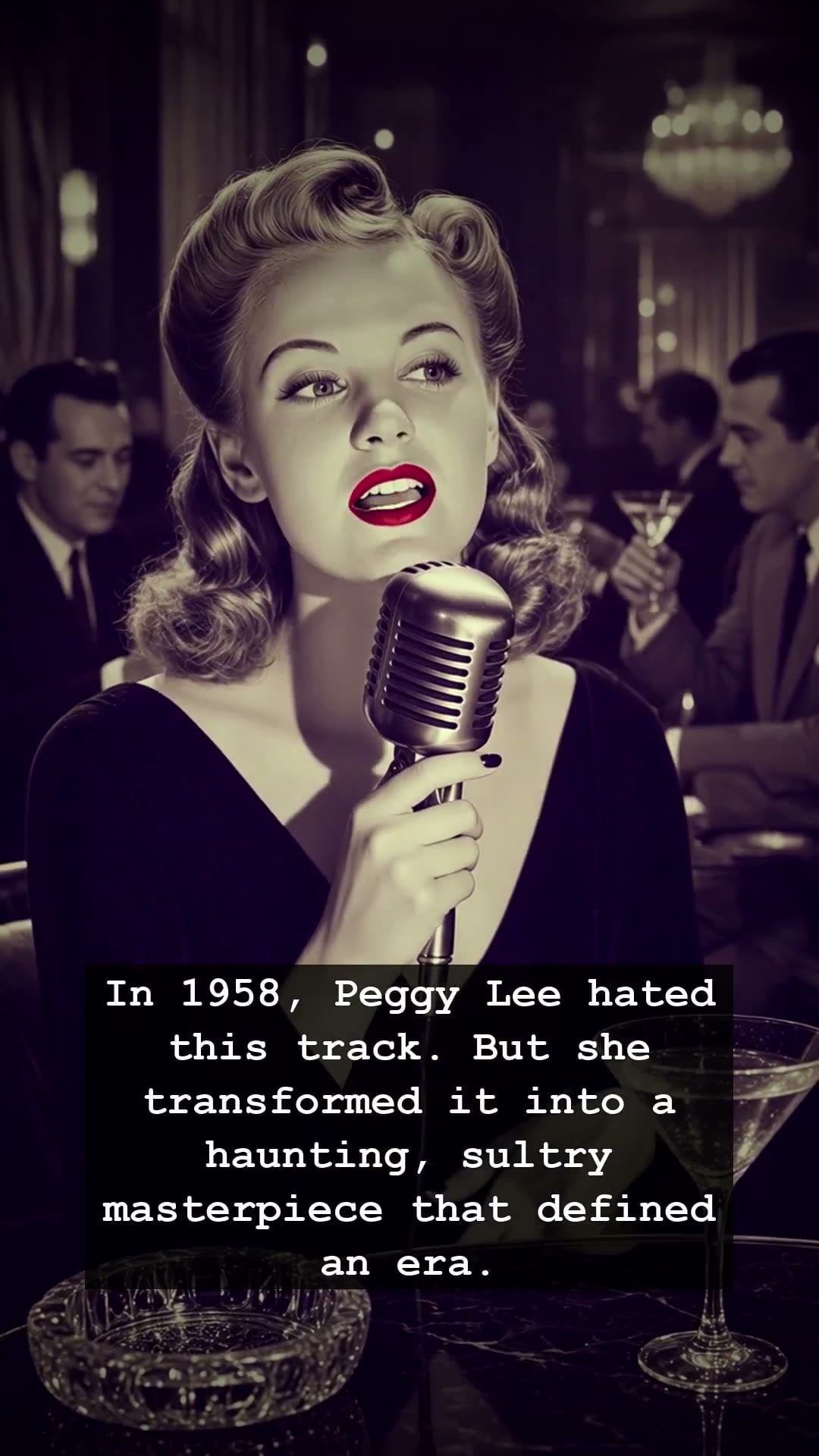
In 1958, the airwaves were dominated by the polished innocence of pop, but beneath the surface of the jukebox era, a tension was brewing. Peggy Lee, the cool, sophisticated voice of an entire generation, was staring at a sheet of music she absolutely despised. The song was Fever. To her ears, it was just another trite melody, a disposable tune that lacked the depth she demanded from her craft. Yet, in a twist of fate that would define her career forever, she didn’t just record it—she dismantled it and rebuilt it into a haunting, sultry masterpiece that still shivers down the spine of anyone who hears it today.
Peggy Lee was a master of reinvention, a woman who understood that silence is just as powerful as sound. When she walked into the studio, the original arrangement was busy and frantic. She stripped everything away, leaving nothing but a driving, minimalist bassline and the rhythmic, iconic snap of her fingers. It was a radical gamble. In an era when orchestras were standard and excess was expected, Peggy Lee chose the terrifying beauty of emptiness. She turned the microphone into a confidant, whispering lyrics that felt like a secret shared in the smoky haze of a jazz club.
This transformation wasn’t just a technical decision; it was a psychological one. By leaning into the discomfort of the song she originally detested, Peggy Lee captured a raw, predatory longing that resonated with a post-war America craving authenticity. When that record hit the airwaves, it didn’t just play; it haunted. It became the sonic equivalent of a film noir aesthetic, a stark contrast to the saccharine sounds pouring out of radios in living rooms across the country. The track became a cultural anchor, proving that even a song born from resentment could evolve into a timeless signature.
Looking back, it is impossible to imagine the landscape of mid-century music without the ghostly imprint of this single. Peggy Lee had taken a song she viewed with disdain and used it to redefine the limits of vocal performance. She proved that the most compelling art often emerges from a place of friction. The brilliance of her delivery lay in her restraint—the way she played with the beat, the way she made every syllable feel like a brushstroke on a canvas of shadows. She didn’t just sing the song; she owned the atmosphere it created.
Decades later, that rhythmic snap still echoes in our cultural consciousness. It is a testament to the fact that greatness is rarely about the notes on the page, but rather the spirit of the person delivering them. Peggy Lee remains a titan of the golden age, a woman who fought her own material and emerged victorious. Next time you hear those opening bars, remember that you are listening to the sound of an artist at her most defiant, turning a song she hated into the very thing that made her immortal. We are still catching the fever today, long after the records have stopped spinning.