
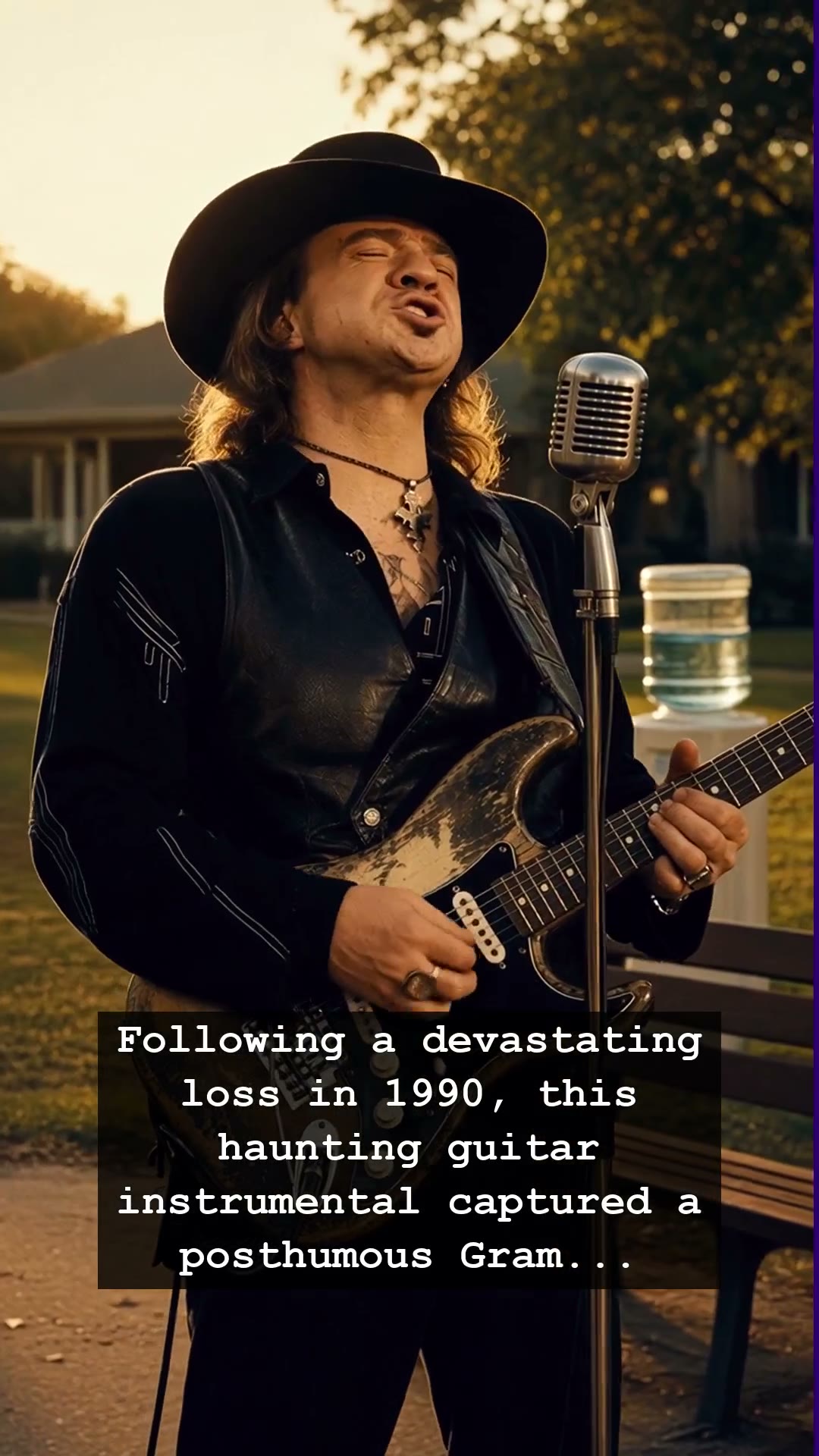
The late summer air in East Troy, Wisconsin, felt heavy on August 27, 1990. Hours after a star-studded concert at Alpine Valley, the world of music tilted on its axis. Stevie Ray Vaughan, the man who single-handedly resurrected the blues for a generation hooked on neon synths and hair metal, was gone. A helicopter crash in the dark, foggy night silenced the most formidable Fender Stratocaster to ever grace a stage. He was only thirty-five, just as his career was reaching a stratospheric peak that seemed destined to redefine American rock music for decades to come.
Stevie Ray Vaughan was more than just a guitarist; he was a force of nature. Emerging from the gritty clubs of Austin, Texas, he brought a ferocious intensity that felt like a lightning strike in the polished, synthetic era of the mid-eighties. While MTV was busy obsessed with MTV-ready pop stars, Stevie was channeling the spirits of Albert King and Jimi Hendrix, reminding everyone that the soul of music lived in the calloused fingers of a man pushing his amplifier to the point of collapse. He had finally conquered his inner demons, trading the whiskey and substances for a life of clarity, only for fate to intervene in the most cruel fashion imaginable.
In the wake of his passing, the music world collectively mourned, but it was a haunting, soulful instrumental track that became the definitive eulogy for the fallen hero. Lenny, a track named after his wife, captured the vulnerability beneath the bravado. When the industry awarded it a posthumous Grammy, it was a bittersweet acknowledgement that we had lost a visionary who was just getting started. The track serves as a time capsule, a reminder of the raw, unadorned beauty that Stevie could coax from a guitar when he wasn’t playing at breakneck speed.
Walking down memory lane, one can almost hear the hum of a Walkman playing those iconic opening chords. For those who witnessed his rise in the eighties, Stevie Ray Vaughan represented an authentic anchor in a decade often defined by artificiality. He was the bridge between the old-school blues masters and the modern rock arena. His influence didn’t die in that helicopter; it permeated the work of every blues-rock guitarist who followed, ensuring that the legacy of his signature Texas shuffle would never fade away.
Even today, if you listen closely to the crackle of a vintage vinyl record, the ghost of Stevie Ray Vaughan seems to linger in the room. His life was a whirlwind of triumph and struggle, a dramatic arc that still feels deeply personal to anyone who has ever felt the power of a single, well-placed guitar note. He taught us that the blues isn’t just about sadness; it is about survival, expression, and the enduring human spirit. Does the music still move you the way it did back then?