
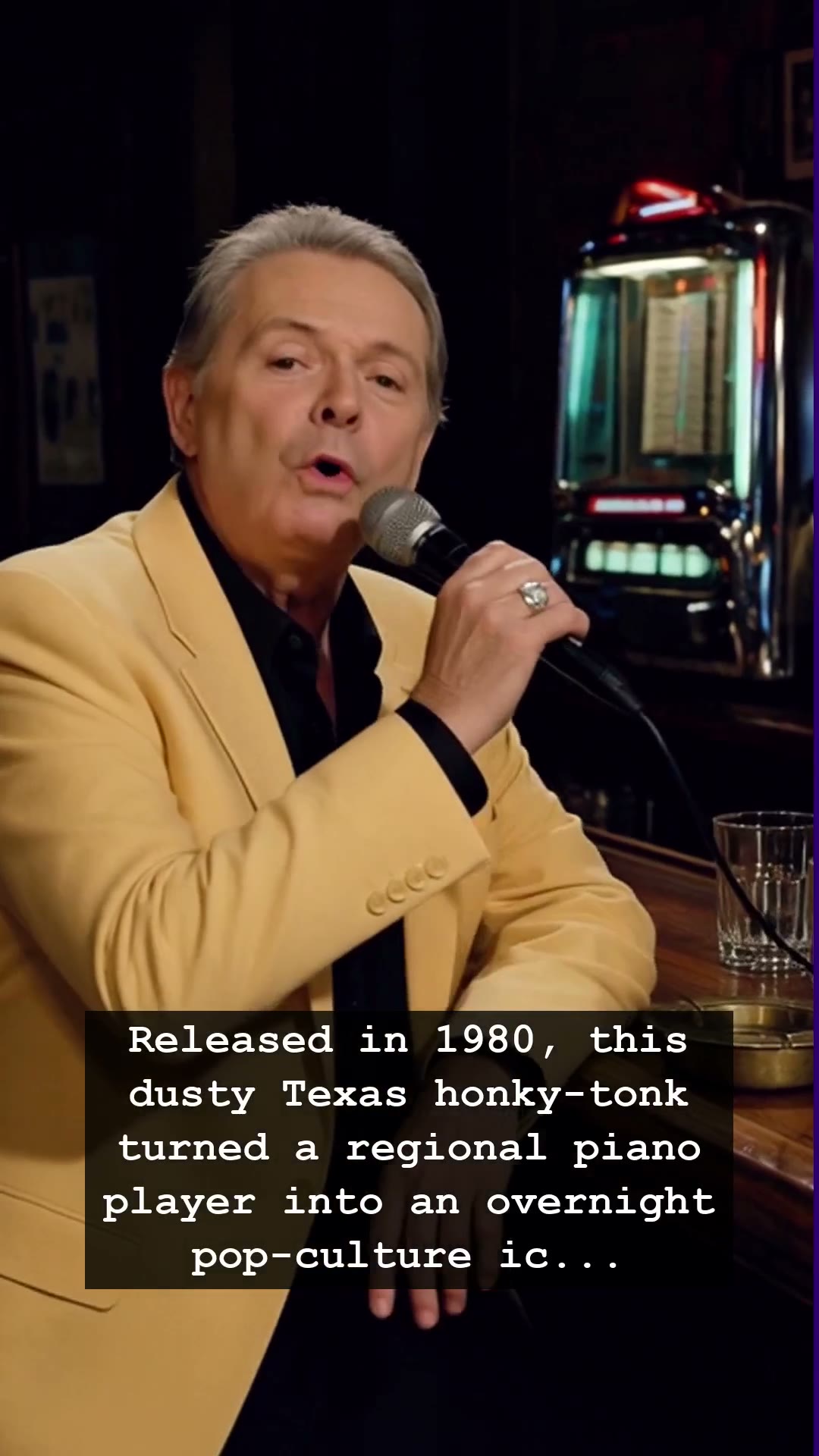
In 1980, the air inside Gilley’s Club in Pasadena, Texas, was thick with sawdust, cheap beer, and the unmistakable scent of desperate ambition. Before that year, Mickey Gilley was merely a regional piano player, a talented musician living in the long, daunting shadow of his cousin, Jerry Lee Lewis. He spent his nights playing to local crowds in his own honky-tonk, never imagining that his dusty stage would soon become the epicenter of a cultural earthquake that would change the trajectory of country music forever.
Then came Urban Cowboy. When Hollywood descended upon his club, cameras rolling and neon lights buzzing, they weren’t just filming a movie; they were documenting the birth of a phenomenon. The film starred a young, electrifying John Travolta, whose performance as Bud brought the working-class soul of the Texas dance hall to suburban living rooms across America. Suddenly, Mickey Gilley was no longer just a bar owner playing for tips. Through the cinematic lens, he became the heartbeat of a new movement, thrusting traditional country sounds into the polished, high-octane world of pop culture.
It is hard to overstate the impact of that era. Before the Walkman replaced the jukebox, the film transformed country music from a regional curiosity into a national obsession. Mickey Gilley provided the soundtrack, and the world listened. His version of Stand by Me became an anthem that bridged the gap between gritty honky-tonk authenticity and the glossy requirements of modern radio. Yet, behind the scenes, the story was far more complex. The sudden surge in fame brought a jarring shift to the local scene, turning a neighborhood refuge into a tourist attraction where the lines between reality and the scripted drama of the film began to blur.
This was the period when disco was gasping for its last breath, yet Urban Cowboy managed to weave the steady, mechanical pulse of dance-floor rhythms into the steel guitars of the South. It was a strange, intoxicating cocktail that fueled the dance floor at Gilley’s for years to come. For those who were there, the image of John Travolta riding that mechanical bull remains etched in the collective consciousness as a symbol of the late seventies giving way to the excesses of the eighties. It was the last stand of the authentic Texas country aesthetic before the industry shifted toward the arena-ready pop-country we recognize today.
Even decades later, the legacy of Mickey Gilley lingers in every neon-lit bar that dares to play a classic slide guitar solo. His story is a poignant reminder of how fragile fame can be when it is hitched to a blockbuster script. He remains a bridge to a time when music felt tactile, personal, and profoundly tied to the places where we gathered to forget our troubles. As we look back through the fog of time, the echoes of those nights at the club still remind us of a simpler, albeit noisier, era. Does the rhythm of his piano still stir a memory in your soul?