
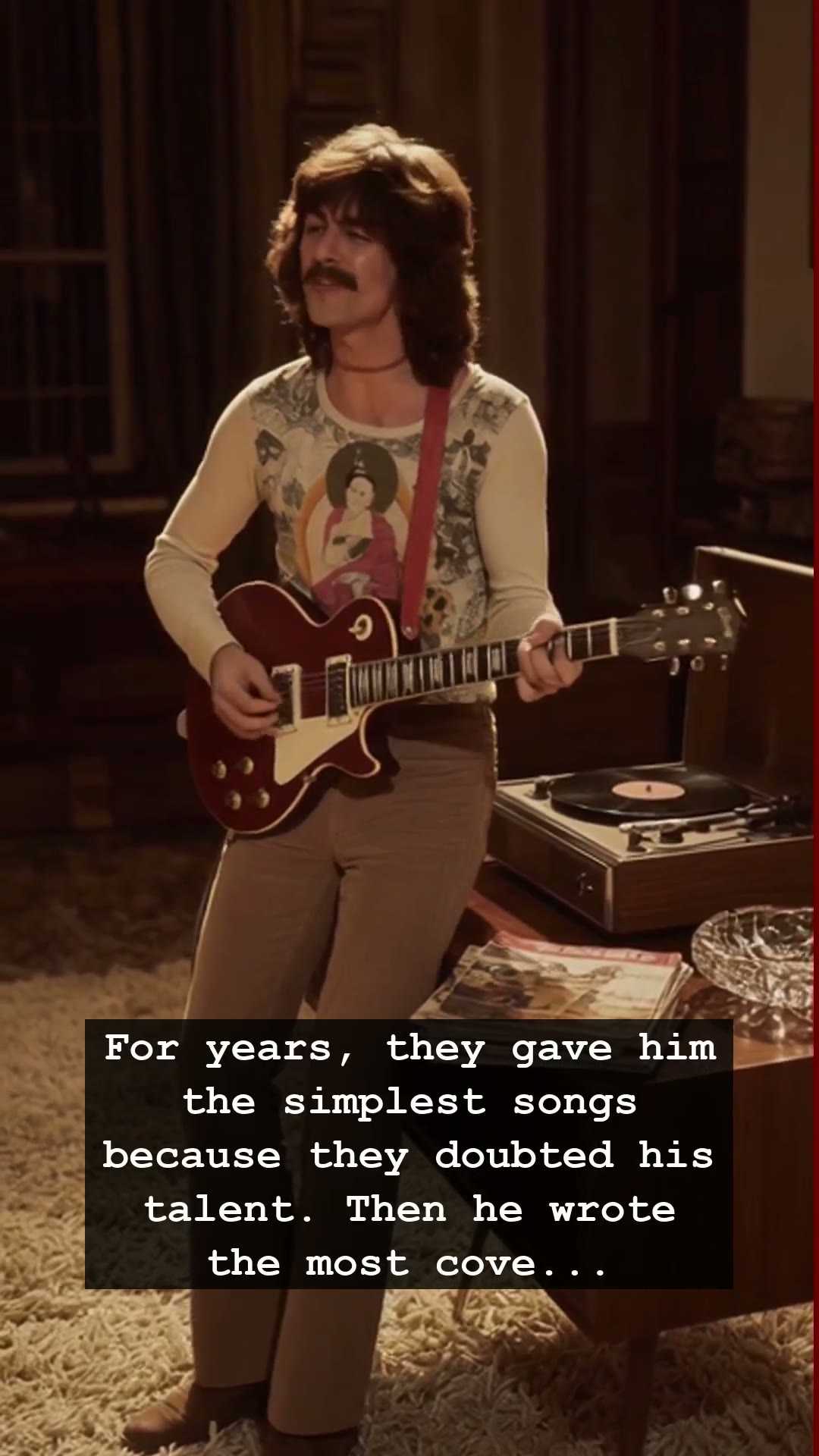
In the smoke-filled, electric atmosphere of 1960s London, four young men were busy reinventing the sound of the world. Yet, within the frantic walls of the studio, a quiet storm was brewing. George Harrison, often referred to as the quiet Beatle, found himself trapped in the shadow of the Lennon-McCartney songwriting juggernaut. For years, he was relegated to the periphery, handed simple, secondary songs to sing while his own creative genius was stifled by the heavy hands of his bandmates. He was the guitarist who could weave melodic magic, yet he was rarely given the keys to the kingdom.
Imagine the frustration of being a visionary in a room full of giants who barely noticed your growth. George Harrison watched as the band became a global phenomenon, fueled by the rapid-fire production of hit records that defined the era of the jukebox and transistor radio. While fans screamed at concerts and the press obsessed over the band’s every move, George was quietly honing his craft, absorbing influences from Indian classical music to the soulful blues of his idols. He was biding his time, waiting for the moment when his internal melody would finally demand to be heard by the masses.
Then came the breakthrough that silenced the doubters. George Harrison retreated into his own headspace, crafting a song that was both melancholic and profoundly universal. When he finally brought Something to the table during the later sessions of the band’s career, even the most skeptical members had to bow their heads in respect. It was no longer just a simple tune; it was a masterpiece of composition, a song so elegant and enduring that it would eventually become one of the most covered tracks in the history of popular music, interpreted by everyone from Frank Sinatra to James Brown.
This was the definitive turning point for George Harrison. He proved that the quietest voice in the room could hold the most weight, transforming from a reluctant contributor into a formidable solo artist who would define the seventies with his soul-searching lyrics and slide guitar mastery. His trajectory mirrors the grit and drama of a classic rock epic, a journey from being an underestimated sidekick to an untouchable icon of the music world. It is a reminder that talent, no matter how long it is suppressed, eventually finds its path to light.
Today, decades after the roar of the arena rock era has faded, Something remains a standard for romantics and musicians alike. It captures a specific, golden-hued nostalgia that reminds us of a time when music felt like a spiritual communion. George Harrison gave us a piece of his soul, proving that greatness does not need to shout to be heard. As we revisit these classic vinyl records and let the needle drop on his timeless melodies, we are reminded that some legends are built not in the spotlight, but in the patience of the craft. Did you know that the man they once doubted would leave behind a legacy that continues to define the landscape of melody itself?