
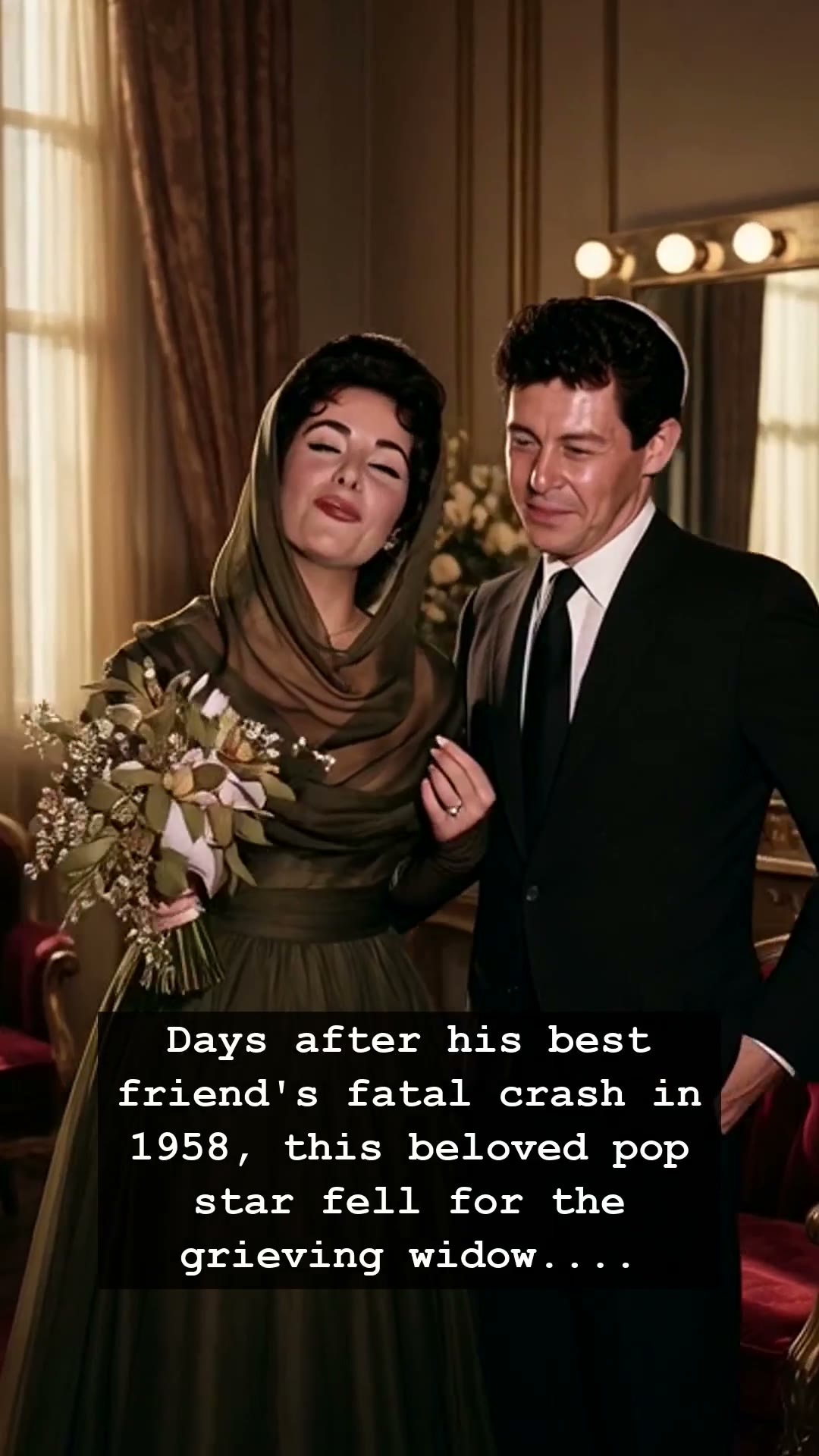
In the golden age of the 1950s, Eddie Fisher was more than just a crooner; he was the clean-cut, velvet-voiced prince of American pop. With a smile that beamed from every television set and a record collection spinning in every American home, his career seemed bulletproof. But behind the perfectly coiffed hair and the chart-topping melodies, a dark, Shakespearean tragedy was unfolding. In the winter of 1958, the world shifted when Eddie Fisher made a choice that would transform him from a beloved national treasure into the most vilified man in Hollywood overnight. The catalyst was a plane crash that took the life of his best friend, the legendary producer Mike Todd.
Todd’s death left behind his wife, the ethereal Elizabeth Taylor, in the depths of unimaginable grief. While the nation mourned the loss of a cinematic giant, Eddie Fisher stepped into the role of the devoted shoulder to cry on. As he comforted the widow, the lines between friendship and illicit passion began to blur. What started as a gesture of kindness quickly spiraled into a scandalous romance that broke every social taboo of the Eisenhower era. The public, who had viewed Eddie Fisher as the ultimate moral compass, felt deeply betrayed. The moral outrage was swift, unforgiving, and relentless, shattering the squeaky-clean image that had anchored his immense popularity.
The fallout was catastrophic. In an era before modern celebrity damage control, the scandal was a death knell for his radio presence and television sponsorship deals. He was no longer the charming boy next door; he was a social pariah. As the gossip columns turned against him, Eddie Fisher watched his career evaporate. The very audience that once swooned over his ballads now treated his name with disdain. It is a haunting reminder of how fragile the veneer of mid-century celebrity was—a world defined by the hum of the Jukebox and the rigid expectations of family values that left no room for human transgression.
Looking back, the story of Eddie Fisher remains one of the most compelling cautionary tales of the twentieth century. It was a collision of immense fame, personal tragedy, and the crushing weight of public opinion. The affair serves as a dark mirror to the optimism of the late fifties, proving that even the brightest stars could be pulled into a permanent eclipse by a single, forbidden choice. His voice, once the soundtrack of a million living rooms, became a ghost of a lost era.
Even decades later, his story resonates as a vivid reminder of the fickle nature of fame and the human cost of being an icon. Today, we remember him not just for the songs, but for the drama that rewrote the history of Hollywood. Do you still remember the man behind the music, or only the scandal that silenced him?