
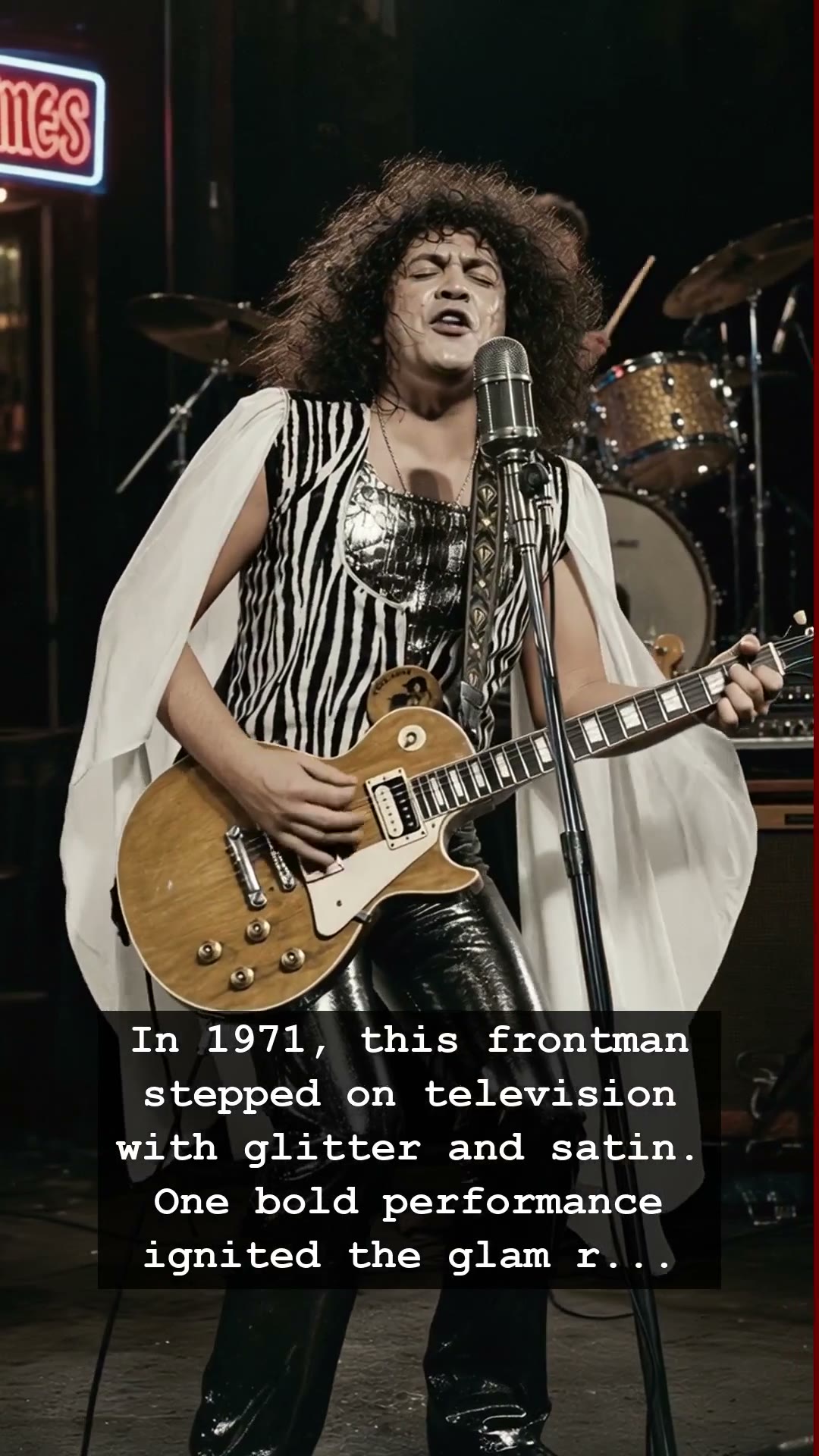
It was 1971, and the television sets across Britain were still trapped in the drab, post-sixties haze of sensible sweaters and predictable melodies. Then, Marc Bolan walked onto the stage of Top of the Pops. With glitter smeared across his cheeks like cosmic war paint and his body draped in shimmering satin, he looked less like a musician and more like an alien emissary sent to liberate the youth from their boredom. In that singular, electric moment, the earth shifted. The gritty, denim-clad seriousness of the late sixties dissolved, replaced by a neon-drenched fantasy that would define an entire decade. This was the birth of Glam Rock, and Marc Bolan was its undisputed, glittering king.
Before that night, rock and roll was often synonymous with earnest rebellion, political angst, and the heavy, blues-inflected riffs of bands like Led Zeppelin. But Marc Bolan, the mastermind behind T. Rex, had a different vision. He craved the stardust of the old Hollywood icons and the flamboyant theatricality of a circus ringmaster. By combining high-concept fashion with infectious, fuzzy guitar hooks, he transformed the sound of the charts. His performance of Ride a White Swan wasn’t just a song; it was a manifesto. It told teenagers that it was okay to be extravagant, to be loud, and to turn themselves into living pieces of art. The youth of the nation watched, mesmerized, as the rigid boundaries of masculine performance were shattered on national television.
Yet, the life of Marc Bolan was far more complex than the shimmering surface of his stage persona suggested. Behind the makeup and the whimsical lyrics about cosmic dancers and telegram Sams lay an artist driven by a relentless, often isolating ambition. He lived in the fast lane, a world filled with the dizzying pressures of sudden superstardom and the inevitable toll of life on the road. T. Rex became a phenomenon, turning arenas into frantic cathedrals of screaming fans, yet Bolan often felt like a prisoner of his own creation. The same media that hailed him as a revolutionary was quick to dissect his personal struggles once the glitter began to fade.
Looking back, the impact of T. Rex on music history remains profound. Marc Bolan opened the door for David Bowie, Roxy Music, and the entire New Romantic movement that would define the eighties. He understood that music was not just about the notes played, but about the persona projected. His influence echoes through the decades, from the fashion runways of Paris to the synth-pop sounds that would later dominate the airwaves of the MTV era. He taught us that rock and roll should be a playground for the imagination, a place where reality is merely a suggestion.
Today, when we catch a grainy clip of that 1971 performance, we aren’t just seeing a musician; we are witnessing a cultural rupture. The legacy of Marc Bolan is etched into the DNA of pop culture, reminding us of a time when music felt dangerous, beautiful, and unapologetically transformative. He remains the boy who stared into the cosmic void and decided to paint it gold. Do you remember the first time you saw the glitter, or are you just discovering the magic of the T. Rex revolution for the very first time?