
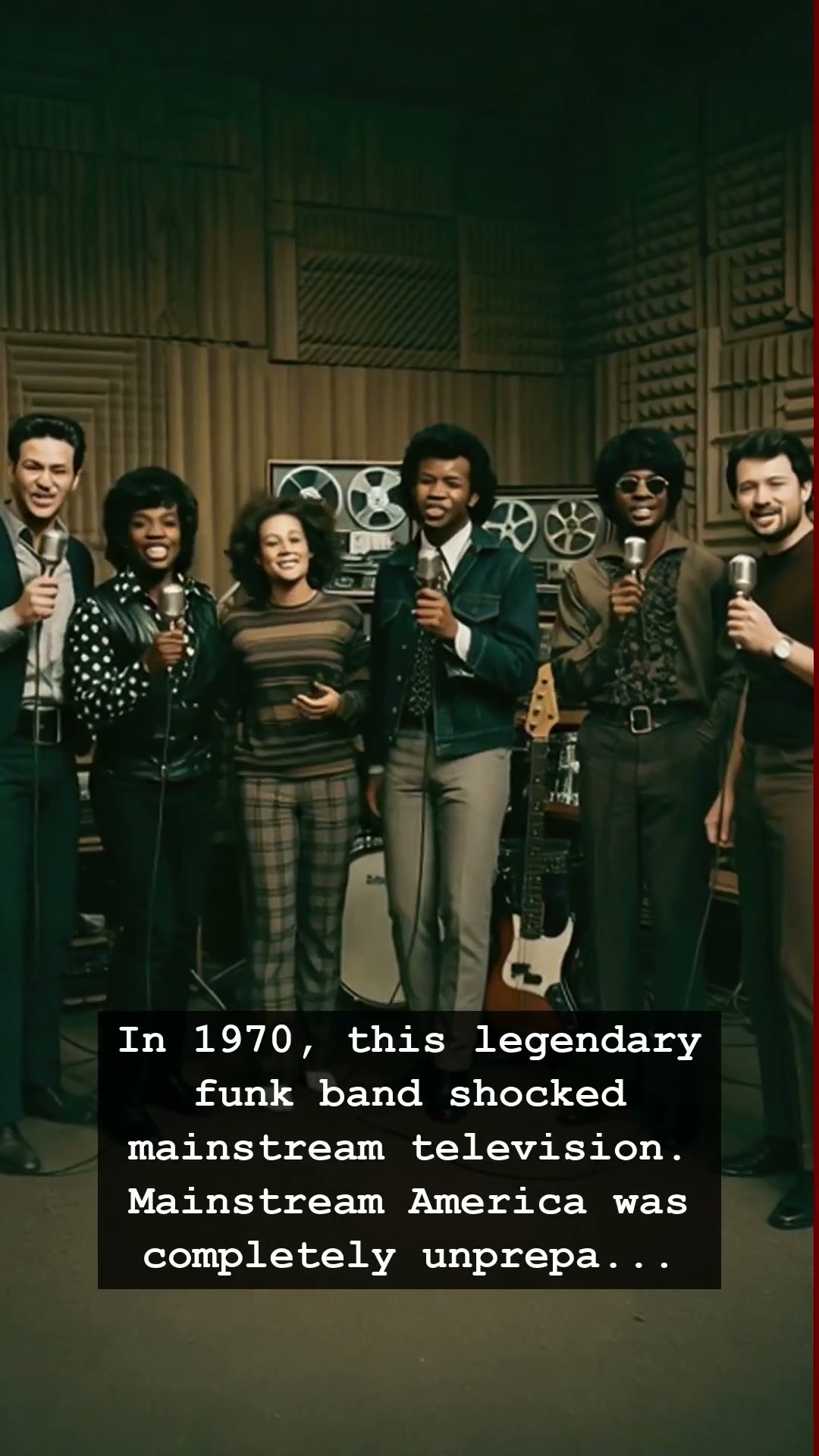
The year was 1970, a time when the glow of the television set served as the primary hearth of the American household. On that night, unsuspecting families sitting down for their evening routine were met with a sound—and a sight—that they were fundamentally unprepared for. It wasn’t just music; it was a psychedelic shockwave broadcasted live into the living rooms of conservative America. This was Sly and the Family Stone, a group that did not merely perform but fundamentally dismantled the boundaries of race, gender, and sonic structure that had held the industry in a rigid grip for decades.
At the center of this cultural disruption stood Sly Stone, a visionary who wove the grit of street-level funk with the shimmering, kaleidoscopic melodies of pop and soul. When the band took the stage, the visual impact was immediate. In an era where even musical groups were often segregated, here was a multiracial, multi-gendered ensemble that embodied the true, messy, beautiful promise of the late sixties. Their existence was a radical act. The networks were terrified, and the establishment didn’t know whether to applaud the sheer technical mastery or panic at the sight of such raw, uninhibited unity. It was the birth of a new American musical identity.
Behind the bright lights and the infectious grooves of anthems like Thank You (Falettinme Be Mice Elf Agin) lay a complex, often turbulent internal landscape. Sly and the Family Stone were not just a band; they were an experiment in human collision. The friction of bringing together such distinct personalities under the pressure of global fame created a volatile alchemy. While they were pioneering the very foundation of funk, their personal lives were increasingly clouded by the shadows of exhaustion and the heavy toll of the industry. This drama behind the scenes, fueled by the relentless demands of constant touring and the swirling excesses of the era, only added a haunting layer of tragedy to their infectious sound.
Even with the passing decades, the legacy of Sly and the Family Stone remains untarnished and undeniably potent. They represent a bridge between the soul of the Motown era and the birth of modern groove-based music. They turned the Jukebox into a pulpit for social change and proved that funk could be both a dance floor staple and a serious art form. When you listen to their tracks today, you aren’t just hearing a band from the early seventies; you are hearing the echo of a revolution that dared to challenge the status quo on national television.
It is easy to romanticize the era of vinyl records and tube televisions, but the story of Sly and the Family Stone serves as a potent reminder that greatness often comes at a steep price. Their music remains a visceral document of a time when the world felt like it was splitting open, giving birth to a sound that would define generations to come. Take a moment to listen closely to the rhythm—it still carries the electric charge of that historic 1970 performance, inviting us to keep dancing through the complexities of our own time.