
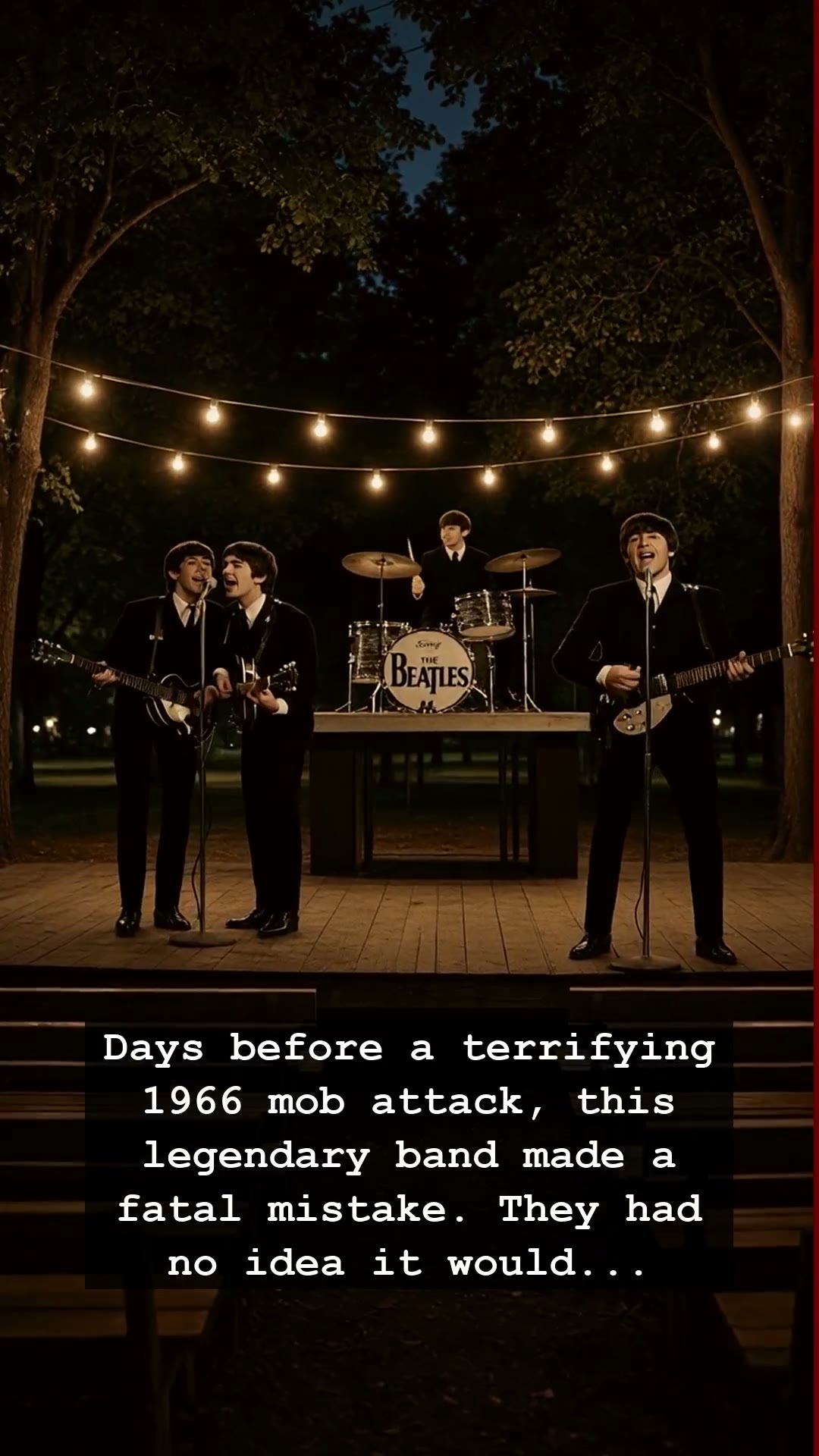
The year was 1966, a time when The Beatles were not just a band but a global phenomenon that seemed capable of defying gravity. They were the undisputed kings of the pop charts, and their records were playing on every jukebox from London to Los Angeles. Yet, in the humid, tropical air of Manila, Philippines, the band encountered a dark, terrifying reality that would forever fracture their innocence. It began with an unintentional slight against Imelda Marcos, the First Lady of the Philippines. By missing a formal breakfast invitation—an oversight due to the band’s exhaustion and poor management communication—the Fab Four unwittingly insulted the most powerful woman in the country. What followed was a descent into a nightmare that seemed ripped from a cold-war thriller.
Within hours, the local media had whipped the public into a frenzy. The Beatles, once greeted by adoring fans, were suddenly hunted. Their hotel was stormed, their staff was physically assaulted, and the band members were essentially held hostage in their own rooms. As they tried to make their way to the airport, the security presence evaporated. They were shoved, spat upon, and pushed through the terminal by an enraged mob that viewed them as icons of arrogance rather than music legends. John Lennon and Paul McCartney later described the sheer terror of that day, realizing for the first time that their fame had become a dangerous liability that shielded them from no one.
This chaotic exit from Manila marked a point of no return for The Beatles. When they touched down back in London, they were shaken to their core. The glamour of international travel and the excitement of stadium tours had curdled into the bitter taste of fear. They were tired of the screaming fans drowning out their instruments, tired of the logistical nightmares, and now, they were literally fearing for their lives. The Philippines incident was the final catalyst that convinced them to retire from the road entirely. They chose to retreat into the safe, controlled sanctuary of the recording studio, eventually giving the world masterpieces like Sgt. Pepper’s Lonely Hearts Club Band.
Looking back at that era, it is fascinating to see how that single day in Manila changed the trajectory of music history. If the tour had gone smoothly, perhaps we would have seen more live performances from the band at their peak. Instead, the world lost the chance to see The Beatles perform their later, more complex material live. It serves as a haunting reminder that even the most legendary figures are not immune to the volatility of politics and public opinion. Their flight from Manila wasn’t just a physical escape; it was the moment they ceased to be an act meant for the screaming masses and became an art collective destined for the history books.
Today, we look back at the 1960s with a sense of wonder and longing, but stories like this ground us in the reality of the price of fame. The Beatles taught us that even the brightest lights can cast long, chilling shadows. Their decision to stop touring redefined what a rock band could be, shifting the focus from the circus of the stage to the purity of the studio. As you listen to their timeless records today, remember that the music was forged in a furnace of intense global pressure, forever shaped by a humid July day in Manila that changed everything.