
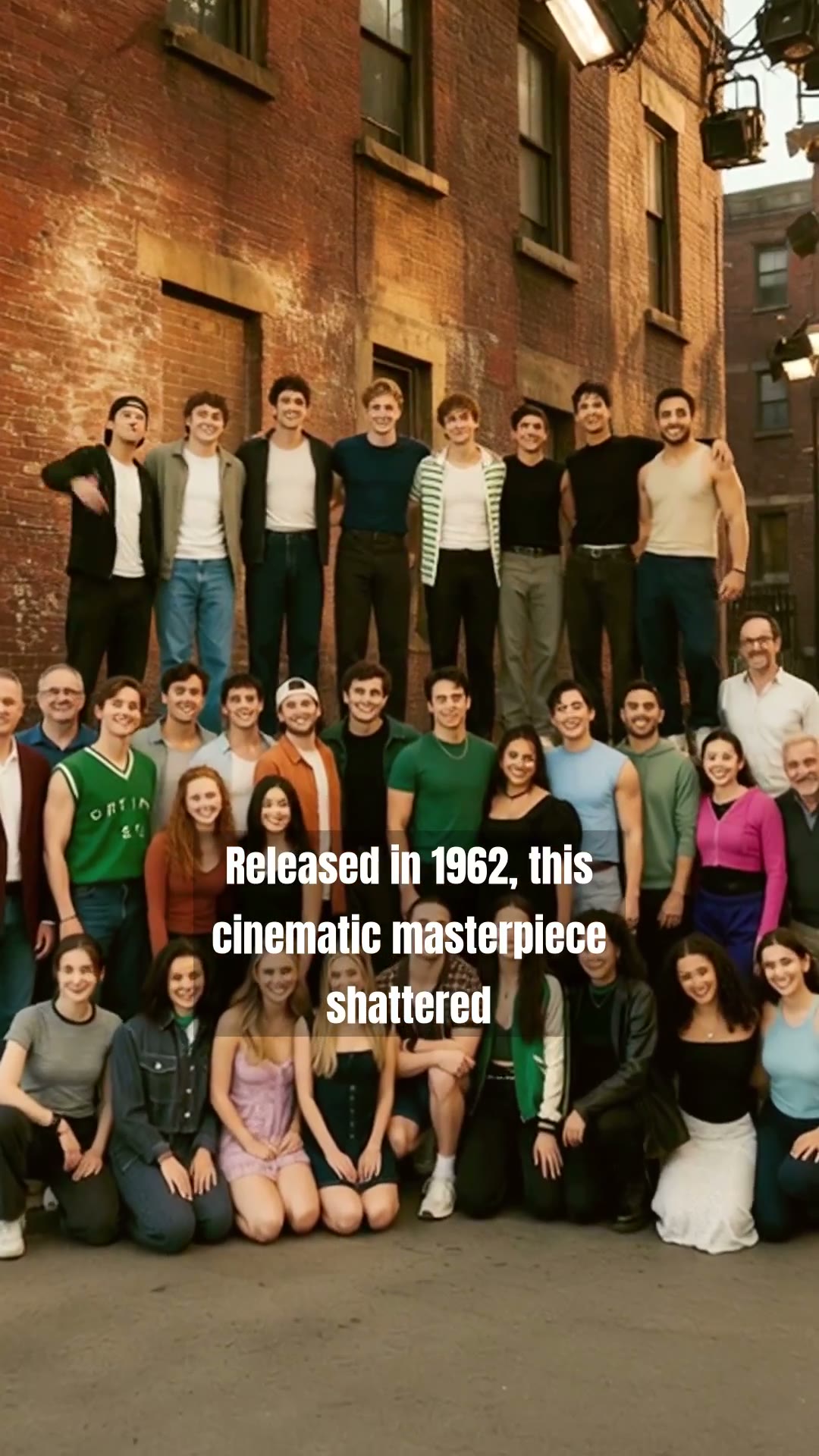
There is a specific kind of magic that occurs when the silver screen transcends its frame, turning a simple story into a cultural touchstone. In 1961, when Robert Wise and Jerome Robbins brought West Side Story to the world, they weren’t just adapting a Broadway musical; they were crafting a cinematic language that felt entirely new. For those of us who grew up in the golden era of the mid-century, this film wasn’t just another night at the local cinema. It was a visceral experience that redefined what a blockbuster could be, blending the grit of urban reality with the soaring grace of song and dance.
Walking into the theater back then, many expected a standard adaptation, yet they were met with something far more profound. West Side Story shattered the mold, painting the streets of New York in vibrant technicolor while keeping the raw heart of the Romeo and Juliet tragedy beating at its center. The cast, led by the luminous Natalie Wood and the charismatic Richard Beymer, brought a level of emotional commitment that felt like a bridge between the classic Hollywood studio system and the more experimental spirit of the coming decades. It was a perfect storm of talent, where every choreographed movement felt like an essential piece of the narrative puzzle.
When the night of the 34th Academy Awards arrived, the industry witnessed a historic sweep. Winning ten Oscars in a single evening, West Side Story did not just walk away with gold; it cemented its place in the pantheon of cinema history. For a generation of us, that night felt like a triumph for the craft itself. We remember the intensity of Rita Moreno’s performance, a masterclass in emotional complexity that proved musical theater could be as serious and poignant as any heavy drama. The film’s legacy is not just in its record-breaking accolades, but in the way it demanded we take the musical genre seriously as a form of high art.
Even today, the influence of West Side Story remains undeniable. It sits comfortably on our shelves, perhaps preserved on a weathered VHS tape that we pull out on quiet, rainy Sundays, the magnetic ribbon carrying the weight of decades of memories. Watching it now, one is struck by the timelessness of the score and the sheer audacity of the production design. It is a reminder of a time when Hollywood dared to dream in grand, sweeping gestures, supported by the relentless dedication of method actors and visionary directors who refused to compromise on their creative vision.
We look back at this film not just for the nostalgia, but for the profound humanity it captured. It remains a testament to the idea that love and conflict are the universal threads of our lives, regardless of the era. As the final notes of Bernstein’s score fade into the silence of our living rooms, we are reminded of why we fell in love with movies in the first place. Some stories never truly end; they simply wait for us to press play and step back into the light of the silver screen.