
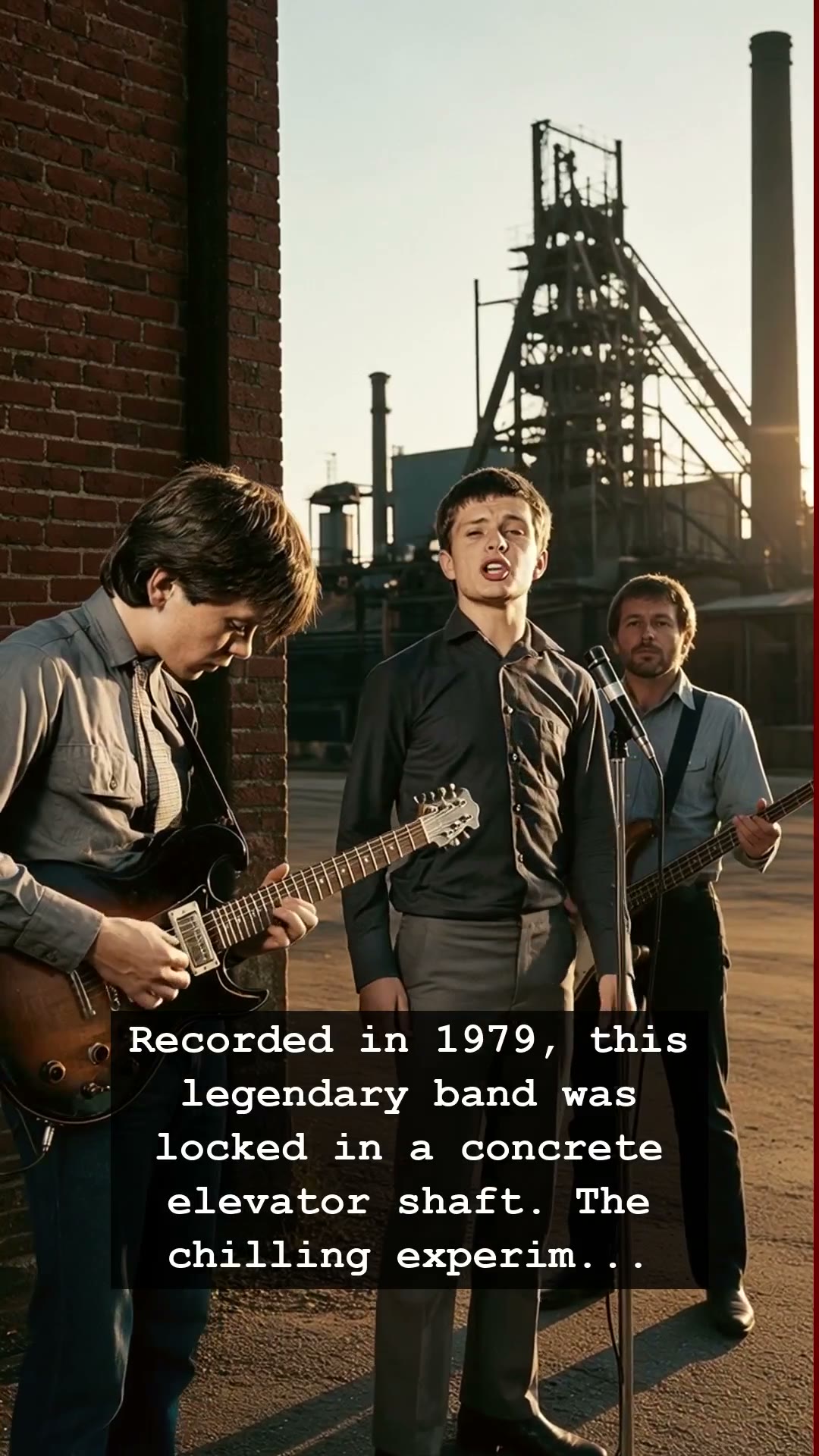
It was 1979, and the air in the studio was thick with an unsettling, metallic cold. Most bands of that era were chasing the glossy sheen of the rising disco movement or the polished pop production found on the latest MTV hits. But Joy Division was different. They were operating in the shadows of Manchester, crafting a sound that felt like it was clawing its way out of a concrete grave. The legend goes that for the recording of their seminal tracks, the band members found themselves confined within an empty, hollowed-out elevator shaft. It was a dark, industrial experiment—a freezing, claustrophobic space where sound didn’t just travel; it ricocheted off the damp, unforgiving walls, creating a haunting, metallic echo that defined the post-punk movement forever.
Ian Curtis, the brooding, enigmatic frontman of Joy Division, was a man whose soul seemed caught between two worlds. His baritone voice, raw and trembling with existential dread, found the perfect vessel in that elevator shaft’s natural acoustics. The isolation of the recording environment mirrored the isolation in his lyrics, turning the music into something far more visceral than a typical studio session. They weren’t just recording an album; they were capturing the sound of loneliness and the industrial decay of a post-war England that felt like it was suffocating. Every percussion hit from Stephen Morris felt like a hammer strike against a prison door, while the jagged, icy guitar lines from Bernard Sumner pierced through the atmosphere like a winter gale.
This sonic breakthrough was not just a technicality; it was a manifestation of the era’s hidden despair. While the world outside was dancing at Studio 54 or sporting the latest portable Walkman, Joy Division was digging into the darker recesses of human experience. Their music wasn’t meant for the radio; it was meant to be felt in the pit of your stomach. By choosing to record in such a bizarre, architectural anomaly, they bypassed the warmth of traditional production. They embraced the cold, the sharp, and the mechanical, effectively inventing the blueprint for the bleak, beautiful sound of Joy Division that would influence countless artists in the decades to follow.
The tragedy, of course, looms large over their legacy. The same intensity that fueled their revolutionary sound also weighed heavily on Curtis, leading to a climax that would tear the band apart far too soon. Yet, the work remains. Decades later, when you drop the needle on a vinyl copy of Unknown Pleasures, that elevator shaft resonance still holds its power. It is a reminder that some of the greatest art is born in the most uncomfortable, confined spaces. The cold echo of 1979 didn’t just haunt a single room; it seeped into the collective consciousness of music history, proving that even in the deepest, darkest shafts, a singular, immortal light can be found.