
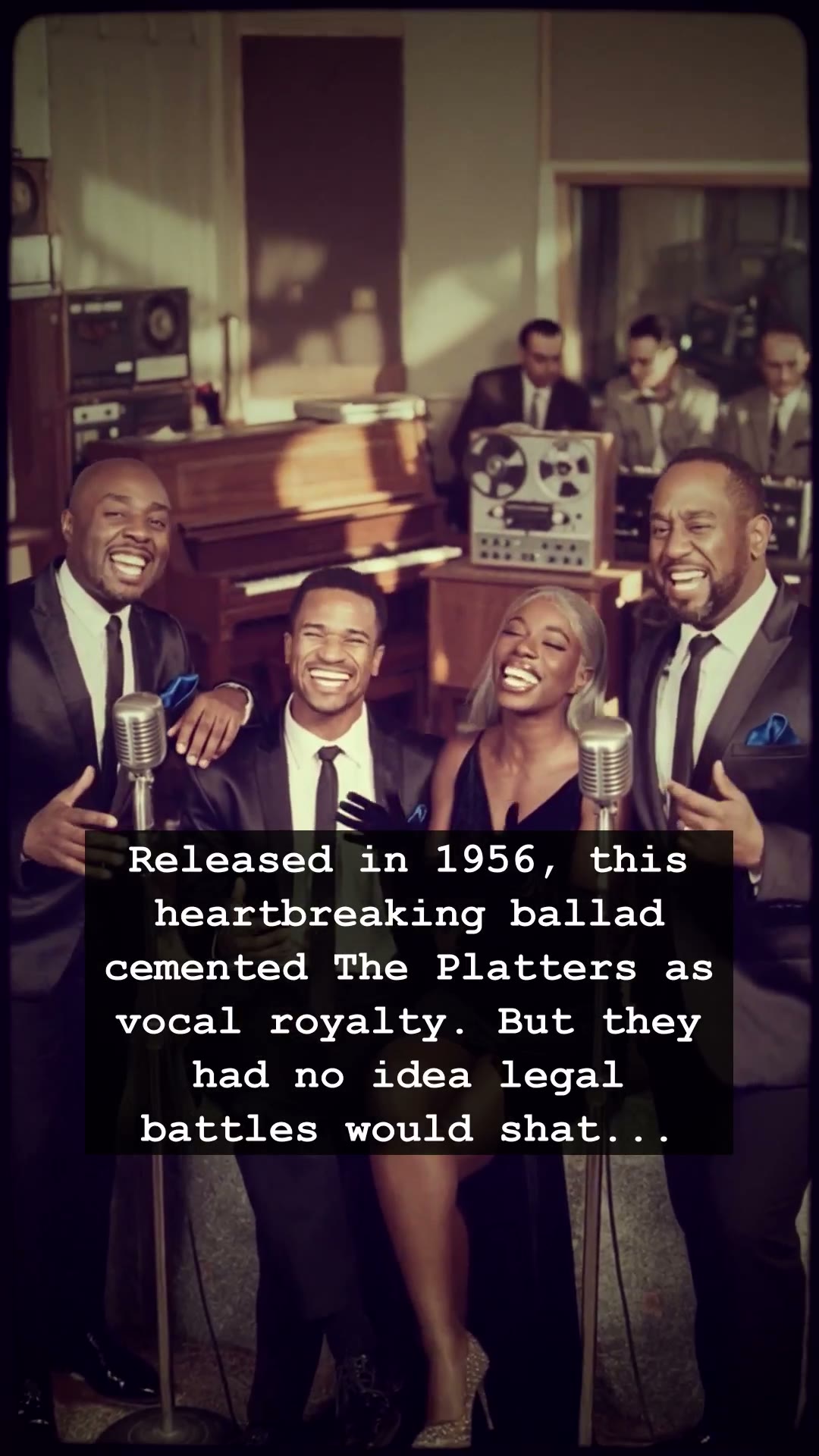
The year was 1956, and the airwaves were alive with the smooth, velvet harmonies of The Platters. When their haunting ballad hit the Jukebox circuit, it didn’t just climb the charts; it defined the romantic landscape of a generation. With Tony Williams’ ethereal voice floating over a lush arrangement, the song captured a bittersweet longing that felt both timeless and urgent. For millions of listeners tuning in from their living rooms or slow-dancing at the local soda fountain, The Platters were the undisputed royalty of the vocal group era. Yet, as the record spun on turntables across America, a dark and bitter storm was gathering behind the scenes that would eventually shatter their glittering legacy.
To understand the magnitude of The Platters, one must look back at a time when the music industry was transforming rapidly. While their melodies suggested pure, uncomplicated romance, the reality of the group’s existence was plagued by legal warfare and systemic exploitation. Behind the soaring highs of their chart-topping success lay a complex web of management disputes and contract battles that often left the artists themselves in the shadows. It is a recurring tragedy of the 1950s music scene: the stars who provided the soundtrack to our most cherished memories were often fighting for their basic rights in sterile, fluorescent-lit law offices, worlds away from the glamour of the stage.
As the group’s popularity surged, the internal friction within The Platters became impossible to ignore. Fame, while lucrative, brought a heavy toll on the members, fueled by the grueling pace of touring and the psychological strain of constant scrutiny. The very legal battles that sought to define ownership of their name and their songs created deep, irreparable rifts. It was a classic clash of ego, management, and the cold, hard reality of commercial success. These stories of betrayal and legal entanglement remain the silent, heavy footnotes to the pristine vocal performances that still grace our radios today.
Despite these private wars, the music endured. Every time that iconic opening chord rings out, the listener is transported back to a simpler, albeit more complicated, era. It is that precise paradox—the beautiful, untouchable art versus the fractured, human reality—that gives The Platters their enduring power. Their journey from the smoky clubs to the pinnacle of American music remains a cautionary tale of how quickly the golden glow of fame can fade into the harsh light of litigation.
Today, we listen to The Platters not just for the nostalgia of the 1950s, but to acknowledge the human cost of greatness. Their story is a reminder that behind every legendary track is a group of individuals who struggled, loved, and ultimately paid a price for the music that remains part of our cultural DNA. As the needle drops and those familiar harmonies fill the room, take a moment to look beyond the melody, and remember the voices that fought to be heard.