
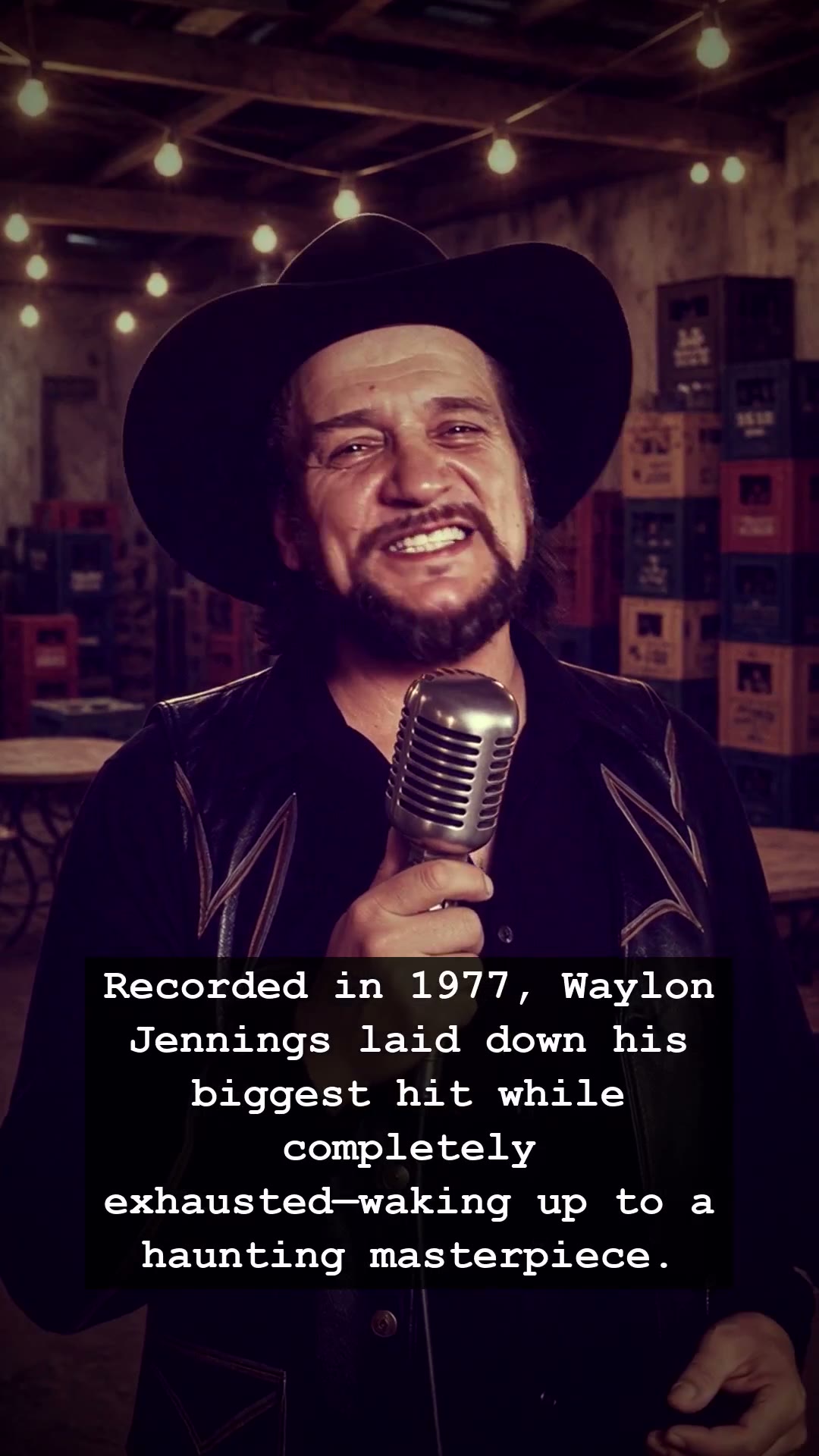
The year was 1977. While the glitter of the disco era was blinding the neon lights of Studio 54 and synthesized pop was beginning to dominate the airwaves, a different kind of revolution was simmering in the shadows of Nashville. Waylon Jennings, the gruff-voiced titan of the Outlaw Country movement, was at the absolute peak of his fame, yet he was spiraling into the darkest corners of his own psyche. Beneath the Stetson and the rough-hewn leather, a heavy reliance on chemical stimulants had pushed his body to its absolute breaking point. It was during this turbulent, exhausted haze that he stepped into the studio to lay down what would become his most iconic anthem, Luckenbach, Texas, with a story behind it that feels more like a fever dream than a professional recording session.
Legend has it that Waylon Jennings was so physically and mentally depleted that he was essentially operating on autopilot. He was trapped in a cycle of relentless touring and the crushing pressures of stardom that defined the late seventies. When he arrived at the microphone, the lines between reality and oblivion were blurred. He reportedly recorded his vocal tracks while half-asleep, guided only by the muscle memory of a man who lived and breathed music. When he finally woke up and listened to the playback, he was shocked to find that he had captured a haunting, raw masterpiece that resonated with the weary soul of the American public. It was a moment of accidental genius, born from the very exhaustion that threatened to destroy him.
Luckenbach, Texas became a beacon for those tired of the high-stakes glitz of the era. It captured the longing for a simpler life, a sentiment that struck a chord with a generation feeling disillusioned by the rapid pace of the seventies. Waylon Jennings, with his deep, resonant baritone, sang of a place where the world stops spinning so fast—a lyrical escape from the frantic energy of the decade. While his peers were chasing the polished sounds of the charts, Waylon remained the quintessential outlaw, bringing a rugged, unvarnished truth to the speakers of millions of cars and dusty living rooms across the nation.
This specific chapter in the life of Waylon Jennings serves as a sobering reminder of the heavy price paid for artistic brilliance. The music industry of the 1970s was a furnace, consuming the health and sanity of those who climbed to its summit. Yet, through that haze of addiction and fatigue, he produced a song that outlived the scandal and the struggle. It remains a testament to his undeniable talent, proving that even when the artist is at his most broken, the music can still soar with an authenticity that polished pop simply cannot replicate.
Decades later, when we hear the opening notes of that legendary track, we aren’t just hearing a song; we are hearing a fragment of history. We are listening to a man who lived on the edge of a precipice and somehow found the strength to anchor himself in melody. Waylon Jennings remains a legendary figure of American music, a symbol of defiance and vulnerability. As the dust settles on the legacy of the outlaw era, his voice continues to echo through the hills, reminding us all that sometimes, the greatest art is found in our most exhausted moments. Next time you spin that record, listen closely for the ghost of the man who sang his way out of the shadows.