
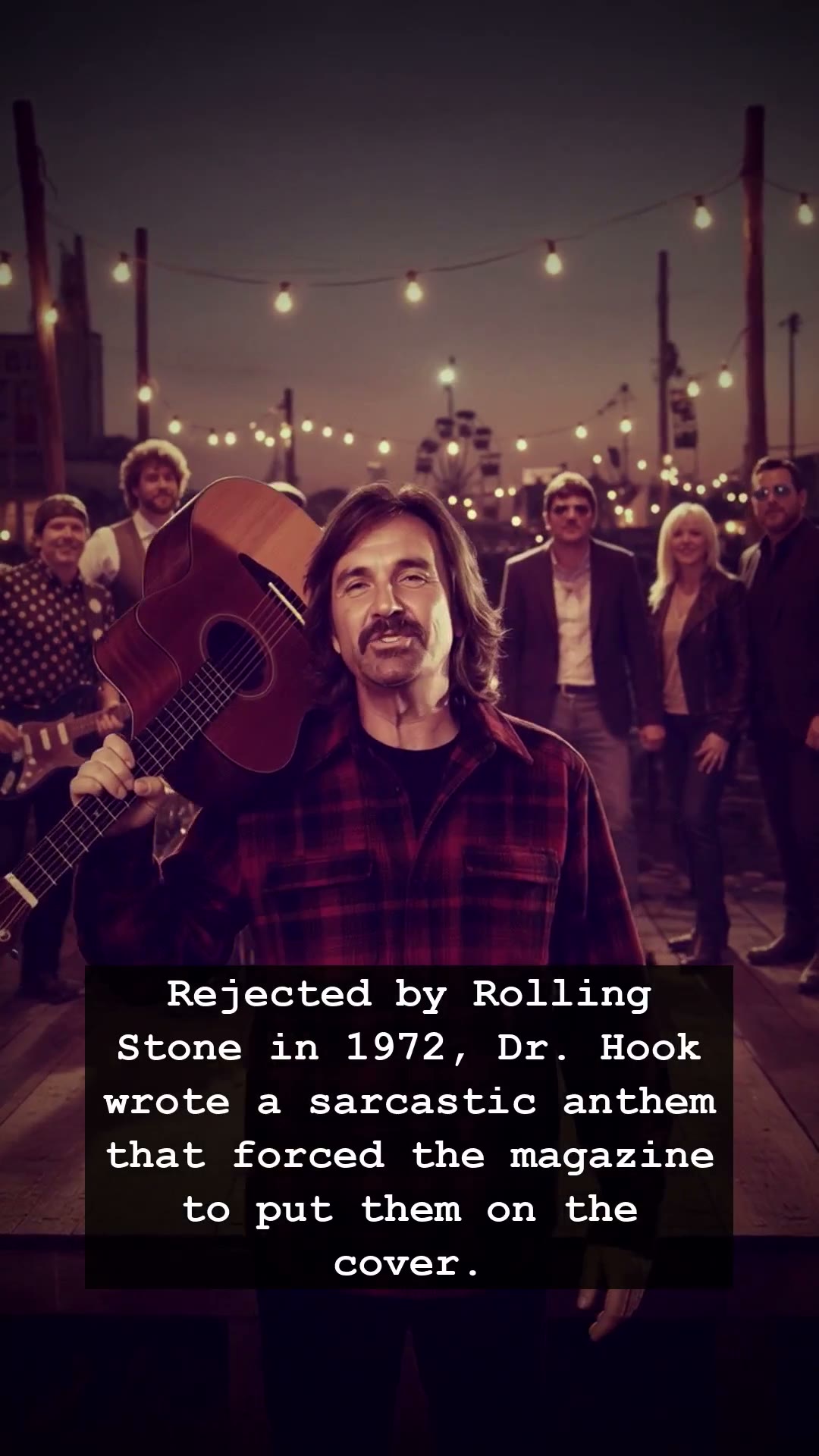
In the golden, smoke-filled era of 1972, the music industry was a playground where magazines acted as the ultimate gatekeepers of cool. If you were a band, your destiny was often decided by the critics sitting behind mahogany desks. Dr. Hook and the Medicine Show, a band known for their eccentric charm and raw, unpolished energy, found themselves on the wrong side of that hierarchy. After a scathing, dismissive review in Rolling Stone, the band didn’t just brood in the corner of a dimly lit studio. They decided to fight back in the most public, defiant way possible. They did something unheard of: they weaponized their frustration.
The resulting song, The Cover of the Rolling Stone, was a masterclass in biting sarcasm and rock and roll rebellion. With lyrics that poked fun at the very institution that had mocked them, the track resonated with every listener who had ever felt slighted by the establishment. It was a catchy, tongue-in-cheek anthem that captured the spirit of the seventies—a time when music was the voice of the disillusioned. Dr. Hook wasn’t just playing for the charts; they were reclaiming their narrative. The irony was palpable as the song climbed the airwaves, fueled by the sheer audacity of a band demanding a pedestal that had previously been denied to them.
The cultural impact was immediate and impossible for the magazine to ignore. As jukeboxes across America buzzed with the song, the pressure mounted on the editors at Rolling Stone. They were caught in a trap of their own making: they could continue to snub the group, or they could acknowledge the cultural phenomenon they had inadvertently sparked. In a move that remains one of the most legendary moments in music journalism, they finally relented. Dr. Hook and the Medicine Show were granted their wish, appearing on the cover of the very magazine that had once tried to bury them. It was a victory for the underdog, a snapshot of fame captured in ink and gloss.
Looking back at this moment, it serves as a powerful reminder of how the power dynamics of the pre-internet age functioned. Before social media allowed artists to speak directly to fans, bands like Dr. Hook had to maneuver through the iron grip of legacy media. This story isn’t just about a photograph on a magazine; it is about the grit required to survive in an industry that constantly tried to categorize and dismiss artistic identity. The story of Dr. Hook remains a beloved piece of rock folklore, illustrating how humor and talent can break through even the most stubborn walls of elitism.
Today, we look back at Dr. Hook with a sense of warm nostalgia, remembering a time when a simple song could turn the tide of public opinion. Their defiance paved the way for generations of musicians to challenge their critics openly. As you spin those old records and hear that familiar twang, remember the band that dared to laugh at the giants, proving that sometimes, the best way to change history is to simply write a song about it.