
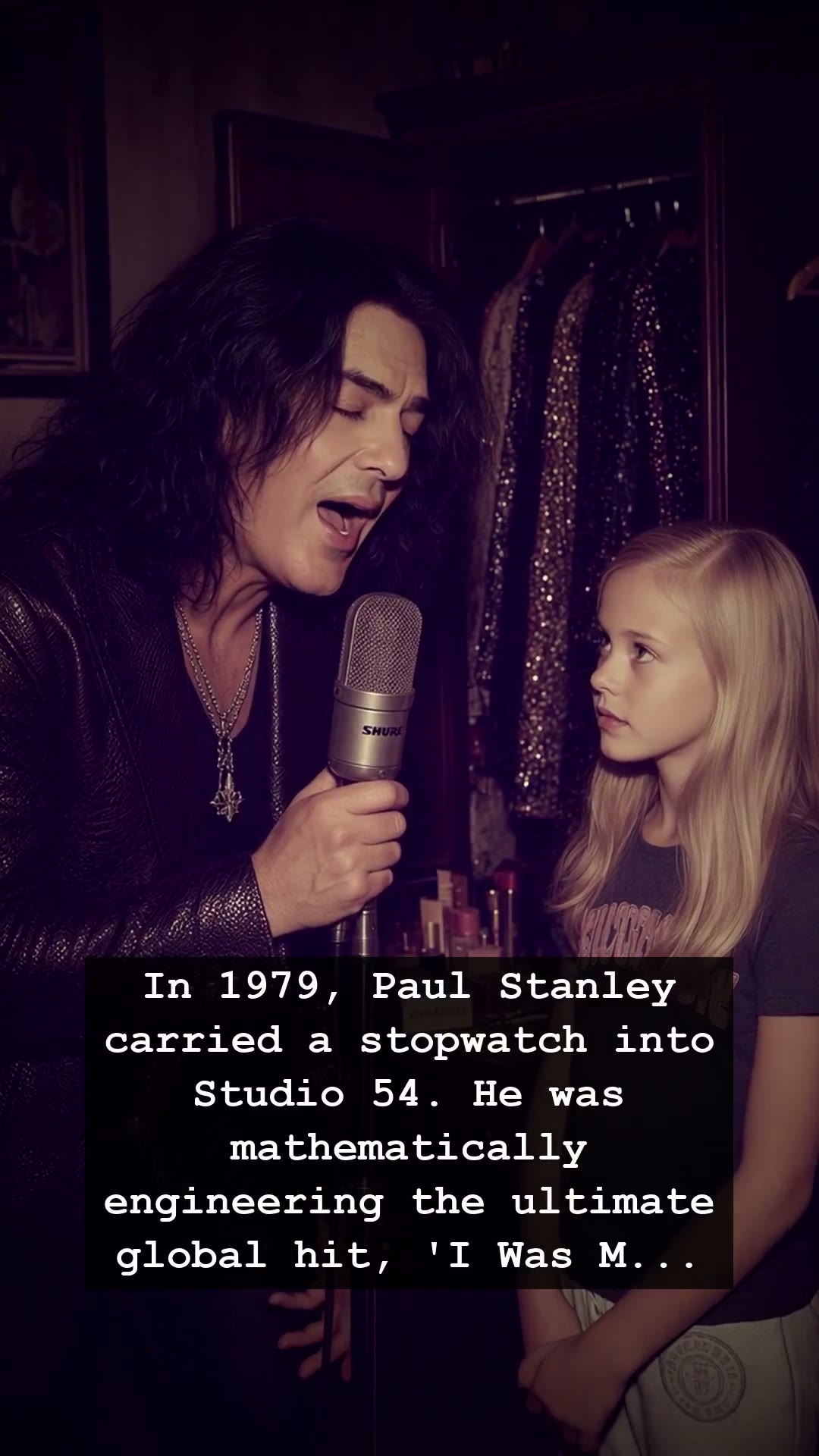
The year was 1979, and the air in New York City felt thick with the scent of hairspray, expensive cologne, and the restless energy of a decade gasping for its final breath. While the rock world clung to its leather jackets and distortion, Paul Stanley walked through the velvet ropes of Studio 54 with something tucked into his pocket that seemed entirely out of place: a stopwatch. He wasn’t there to dance or to mingle with the glitterati. He was there to commit what many of his purist rock peers would have considered an act of musical treason. Paul Stanley was on a mission to solve the mathematical puzzle of the perfect global hit, and the disco beat pulsated through his veins as the blueprint for his next obsession.
At the time, KISS was a band defined by comic-book armor and pyrotechnics, but Paul Stanley felt the ground shifting beneath his boots. The charts were no longer bowing to hard rock; they were being conquered by the relentless, four-on-the-floor thump of disco. Many artists of his stature would have scoffed, but Paul Stanley chose to study the enemy. He stood in the center of that legendary dance floor, stopwatch in hand, meticulously counting the beats per minute that made the crowd lose their inhibitions. He was engineering a sound that could bridge the chasm between the grit of the stadium floor and the glossy, strobe-lit pulse of the nightclub.
The result of that obsessive nocturnal research was ‘I Was Made for Lovin’ You’. When the track dropped, it was a lightning bolt that divided his fanbase. Purists screamed that KISS had sold out to the disco craze, yet the song became an undeniable, infectious monster that refused to die. By blending the high-voltage rock sensibilities of Paul Stanley with a sophisticated, polished dance production, they inadvertently created a timeless crossover anthem that transcended the fickle genre wars of the late seventies. It was a bold, calculated risk that proved Paul Stanley was far more than just a frontman; he was a brilliant architect of sound who understood the changing tides of culture better than any of his contemporaries.
Looking back, that moment in Studio 54 serves as a perfect microcosm of the era. It was a time when the lines between genres were blurred by ambition and the sheer pressure to remain relevant in a world dominated by the rise of MTV and the changing tastes of a generation. Paul Stanley didn’t just write a song; he performed a clinical dissection of what makes a human body want to move. He brought the raw, masculine energy of rock and injected it into the synthetic heart of disco, creating a hybrid that felt both dangerous and inevitable.
Decades later, the track still finds its way into soundtracks and stadium setlists, retaining that same electric spark it possessed when it first echoed off the mirrors of the city’s most exclusive club. It remains a testament to the fact that when an artist like Paul Stanley stops following the rules and starts studying the rhythm of the world, magic happens. Whether you were there under the disco ball or discovered the track years later on a worn-out cassette, it is impossible to deny the genius of the stopwatch. After all, the best songs aren’t just played; they are calculated, crafted, and destined to live forever.