
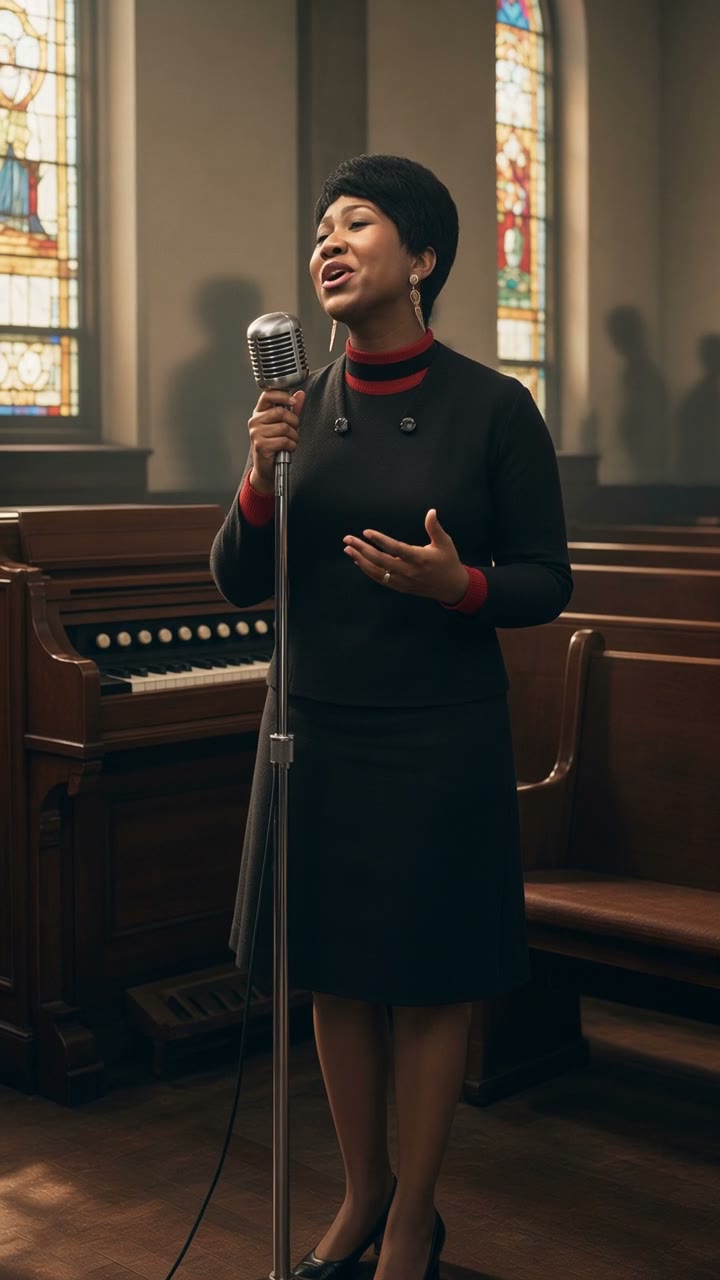
The year was 1967, and the air in the Atlantic Records studio was thick with nervous energy. A young, fiercely talented woman sat behind the piano, her fingers dancing over ivory keys, unaware that she was about to redefine the cultural landscape of the decade. This was Aretha Franklin, a powerhouse of raw emotion, preparing to record a song that would become an immortal anthem of the human spirit. While the world outside was transitioning from the polished pop of the early sixties to the complex, rebellious soul of a new era, nobody in that room realized that an impulsive, accidental guitar riff would spark one of the greatest soul masterpieces in American history.
The story of this legendary hit is not just about musical talent; it is about the alchemy of a moment. Aretha Franklin was already a known name, but she was searching for the spark that would ignite her global superstardom. As the session musicians fumbled with a rhythm that felt slightly off, a cheap guitar riff emerged from the corner of the studio. It was raw, unpolished, and arguably perfect. Aretha immediately recognized the potential in that mistake, weaving it into the very DNA of the track. This was the birth of a sound that would eventually blast from every jukebox, transistor radio, and later, the iconic Walkman, cementing its place in the heartbeat of the American experience.
Yet, the road to this recording was paved with the typical, dramatic shadows of the music industry. Aretha Franklin had spent years navigating the restrictive constraints of record executives who wanted to mold her into a standard pop singer. By 1967, she was done playing by the rules. This song became her manifesto—a demand for respect that resonated with the burgeoning Civil Rights movement and a generation of women finding their own voices. It wasn’t just a catchy tune; it was a societal shift captured in four minutes of pure, unfiltered soul.
Behind the curtain of fame, the era was a whirlwind of sensory overload. From the neon glow of the local nightclubs to the grit of the city streets, the soul movement was the soundtrack to a changing world. Aretha Franklin stood at the center of this hurricane, her voice an instrument of profound power that could silence a crowded room or spark a revolution. When you listen to the record today, you aren’t just hearing a masterpiece; you are hearing the tension of 1967, a time when music could truly change the course of history.
Decades later, the song remains a fixture of our collective memory, a testament to what happens when genuine emotion meets an accidental spark of genius. We revisit these sounds not just for the nostalgia of a bygone era, but because they remind us of a time when music was an act of bravery. Aretha Franklin taught us that the most beautiful things in life often come from the unplanned, messy, and honest moments. The next time you hear that familiar, infectious opening, close your eyes and let the history of 1967 wash over you, just as it did for the rest of the world all those years ago.