
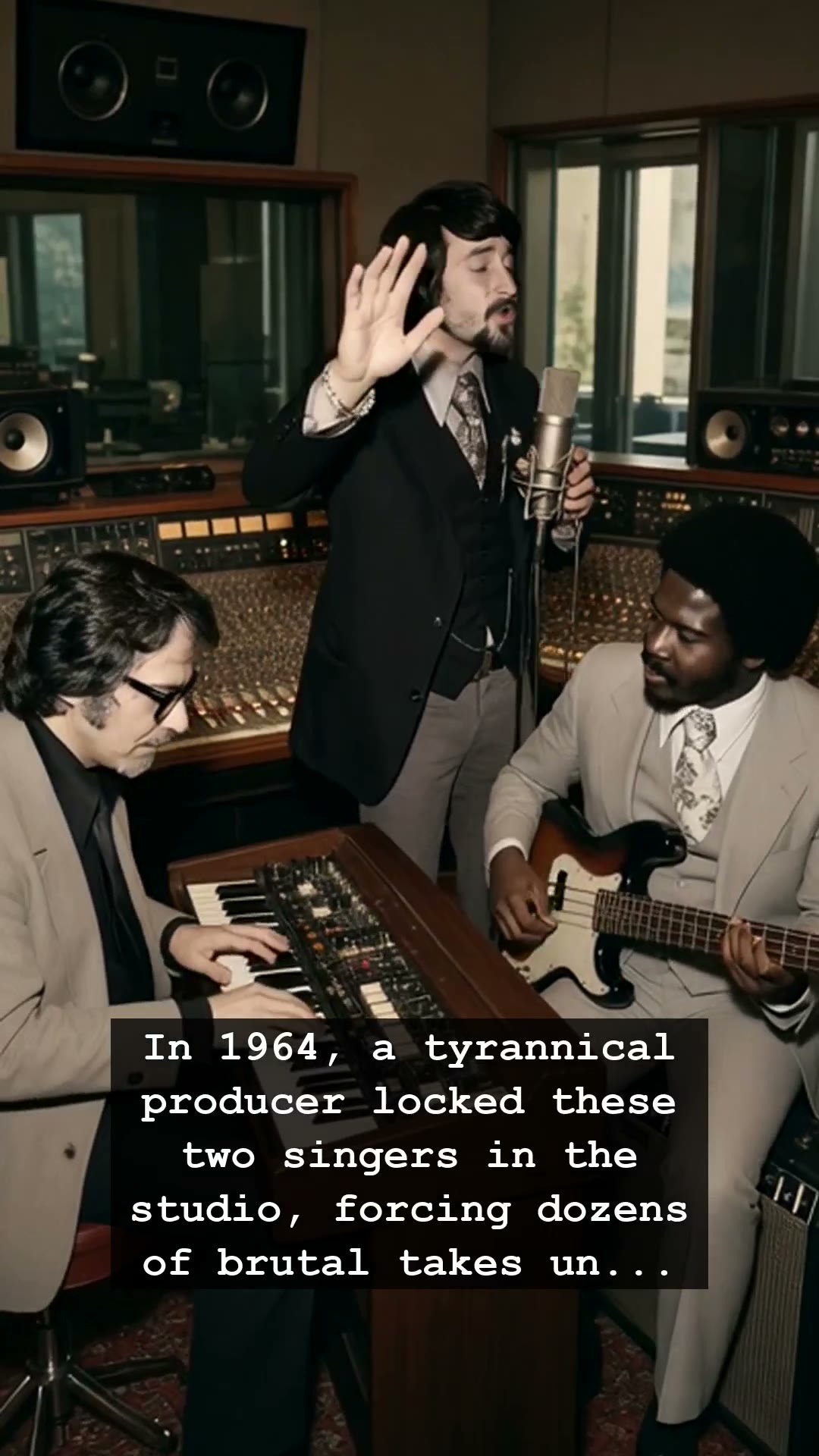
In the golden era of 1964, music was not just heard; it was felt in the marrow of your bones. Yet, behind the shimmering production of that year’s greatest hit, You’ve Lost That Lovin’ Feelin’, lay a grueling, suffocating reality. While the world danced to the jukebox rhythms of the mid-sixties, Bill Medley and Bobby Hatfield—collectively known as The Righteous Brothers—were trapped in a sonic prison. Their jailer? The infamous Phil Spector, a man whose genius was matched only by his volatile, tyrannical obsession with absolute control.
Phil Spector arrived at the studio with a singular vision: to craft the ultimate Wall of Sound. He was not merely a producer; he was a conductor of chaos. When The Righteous Brothers stepped into the booth to record their masterpiece, they had no idea they would be subjected to dozens of brutal, repetitive takes. Spector demanded perfection, pushing the singers to the edge of emotional and physical collapse. He forced them to sing the same lines until their voices cracked, stripping away their ego and patience, all to ensure that every echo and every piano note hit the listener with the force of a tidal wave.
This was the era where the studio became a pressure cooker. Long before the polished hits heard on MTV or the personal intimacy of the later Walkman generation, the recording booth was a place of psychological warfare. Spector’s method was cruel, yet the results were undeniable. The song became a haunting anthem of lost love that transcended the radio waves, cementing itself as one of the most played tracks in music history. It captured a raw, desperate yearning that resonated deeply with a generation grappling with the rapid shifts of the 1960s.
The drama did not stop at the mixing board. The dynamic between the blue-eyed soul of the duo and the manic intensity of Phil Spector created a tension that leaked into the grooves of the vinyl itself. While the listeners heard a smooth, booming ballad, the performers remembered the exhaustion, the sweat, and the fear of a producer who would stop at nothing to capture lightning in a bottle. It was a dangerous alchemy of talent and tyranny that defined the high-stakes world of the mid-century music industry.
Today, when you drop the needle on that record, you aren’t just hearing a hit song; you are listening to a document of human endurance. The legacy of Phil Spector remains a polarizing ghost in the halls of music history, a reminder that the most beautiful art often emerges from the darkest of circumstances. We look back at that 1964 session not just for the melody, but for the story of two voices pushed to the brink, carving their names into eternity. Does the song still give you chills, or do you now hear the echoes of the struggle behind the sound?