
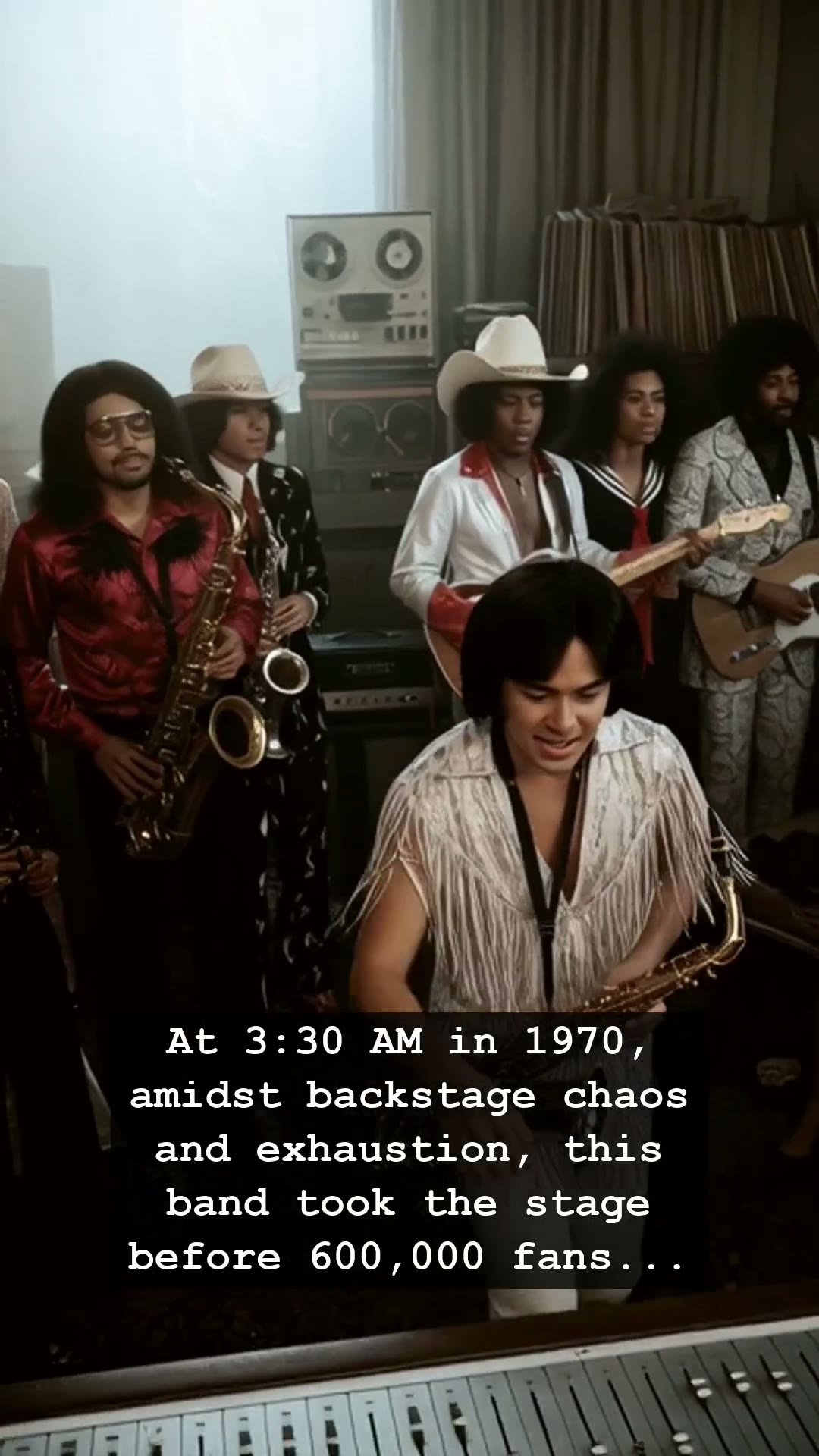
It was 3:30 AM on a humid, frantic morning in August 1969—a moment etched into the bedrock of music history. As the sun prepared to crest over the chaos of Max Yasgur’s farm, the air was thick with the scent of mud, fatigue, and the unspoken tension of 600,000 restless souls. Backstage, the atmosphere was suffocating. The machinery of Woodstock was breaking down under the weight of its own excess, yet one group was about to turn the tide. Sly and the Family Stone were not just a band; they were a force of nature, and they were about to prove that funk could save a generation from the brink of collapse.
Sly Stone, the mercurial visionary behind the outfit, navigated a world of shifting alliances and mounting personal pressure. By the time they hit the stage, the audience was physically depleted, drifting in a psychedelic haze that felt more like a survival camp than a music festival. The band was a radical melting pot of gender and race, a living, breathing defiance of the status quo that dominated the late sixties. When they finally struck the first chord, the exhaustion vanished. They unleashed a wall of sound so tight and infectious that it jolted the sprawling, mud-caked crowd into a rhythmic frenzy. It was a masterclass in tension and release, a moment where the dark energy of the night was transmuted into pure, electrifying soul.
To understand the magnitude of Sly and the Family Stone, you have to look at the era that birthed them. This was a time when the Jukebox served as the heartbeat of the neighborhood and the radio was a sacred tether to the soul of America. Yet, behind the bright lights and the kaleidoscopic fashion lay a reality stained by the excesses of the counterculture. Fame was a double-edged sword that cut deep for Sly Stone, whose genius was matched only by his increasing isolation. The band’s trajectory mirrored the decade itself: starting with vibrant, idealistic harmony and spiraling into the fractured, paranoid depths of the early seventies.
Looking back, their performance remains a haunting reminder of what was at stake. That 3:30 AM set remains one of the most significant musical turning points of the 20th century. It wasn’t just a concert; it was a spiritual intervention for a youth culture that felt like it was losing its way. The power of their music, characterized by tight horn arrangements and Sly’s insistent, funky basslines, cut through the darkness of the night with surgical precision. It was the peak of their influence, a moment of collective transcendence that solidified their status as the architects of modern funk.
Even today, the legacy of Sly and the Family Stone resonates in the DNA of every artist who understands the power of rhythm to disrupt and heal. Their story serves as a cautionary tale of how brilliance and chaos often dance in tandem. As we look back through the lens of nostalgia, we are not just remembering a band; we are remembering the raw, unvarnished intensity of a life lived at full volume. Do you still remember that sound? It is a melody that continues to vibrate through the decades, waiting for you to turn the dial and let the funk take over once more.