
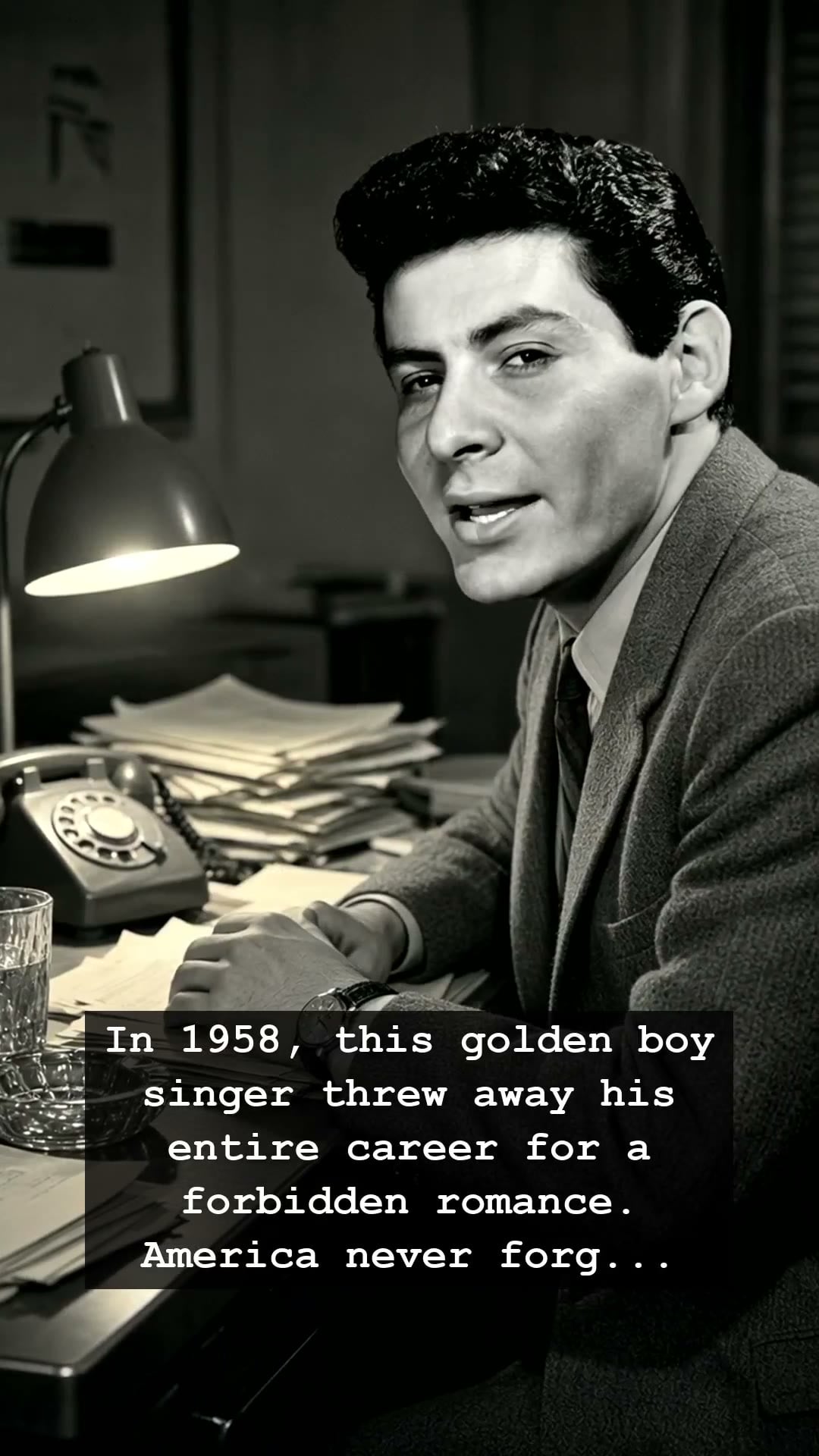
In 1958, the Jukebox era was at its absolute zenith, and atop that gleaming mountain of vinyl sat Eddie Fisher. With a voice that could melt steel and a smile that seemed engineered to soothe a post-war nation, he was the golden boy of American music. Every household in the country invited him into their living rooms through their television sets, entranced by his effortless charisma. Yet, in the blink of an eye, the man who had the world in his palms became the most hated figure in show business. The catalyst was not a failed record or a lost audition, but a forbidden romance that shattered the pristine, moral fabric of Eisenhower-era America.
Eddie Fisher was the quintessential crooner, a master of the romantic ballad who seemed immune to the typical pitfalls of fame. He was married to Hollywood royalty, Debbie Reynolds, and together they were the ultimate American fairy tale. But beneath the velvet-curtain glamour, a darker storm was brewing. When Fisher began an affair with Elizabeth Taylor, the grieving widow of his best friend Mike Todd, he committed the ultimate social transgression. To the public, it was not just an affair; it was a betrayal of everything they held sacred: loyalty, friendship, and the sanctity of the American home. The backlash was swift, brutal, and unforgiving.
Television networks, once desperate to host him, dropped him like a stone. Sponsors who had built their empires on the back of his popularity fled, terrified by the vitriol of a jilted public. Almost overnight, the airwaves that had carried his smooth, honeyed voice were silent. Eddie Fisher found himself cast out, his career effectively erased in the span of a few headlines. It was a stark reminder of how fragile the idol worship of the 1950s truly was. Back then, your public persona was your capital, and once that was tarnished, the culture turned its back with a cold, mechanical efficiency that modern social media cycles have only just begun to replicate.
The tragedy of Eddie Fisher is not just about the scandal itself, but about the transition of a society caught between traditional values and the looming turbulence of the sixties. As we look back through the haze of history, his story feels like a pivotal moment—a crack in the porcelain perfection of the decade. While the world eventually moved on to the raw energy of rock ‘n’ roll and the psychedelic chaos that followed, the memory of his fall lingers as a warning. It is a cautionary tale of how quickly a national sweetheart can be transformed into a pariah, buried under the weight of his own human fallibility.
Today, the records of Eddie Fisher remain, hidden in dusty attics alongside forgotten Walkmans and stacks of scratched vinyl. Listening to his music now, it is easy to hear the talent that made him a legend, even if the man himself remains trapped in the shadow of his own undoing. History is rarely kind to those who break the heart of a nation, but in his songs, we can still find the echoes of an era that believed in fairy tales, right up until the moment they fell apart.