
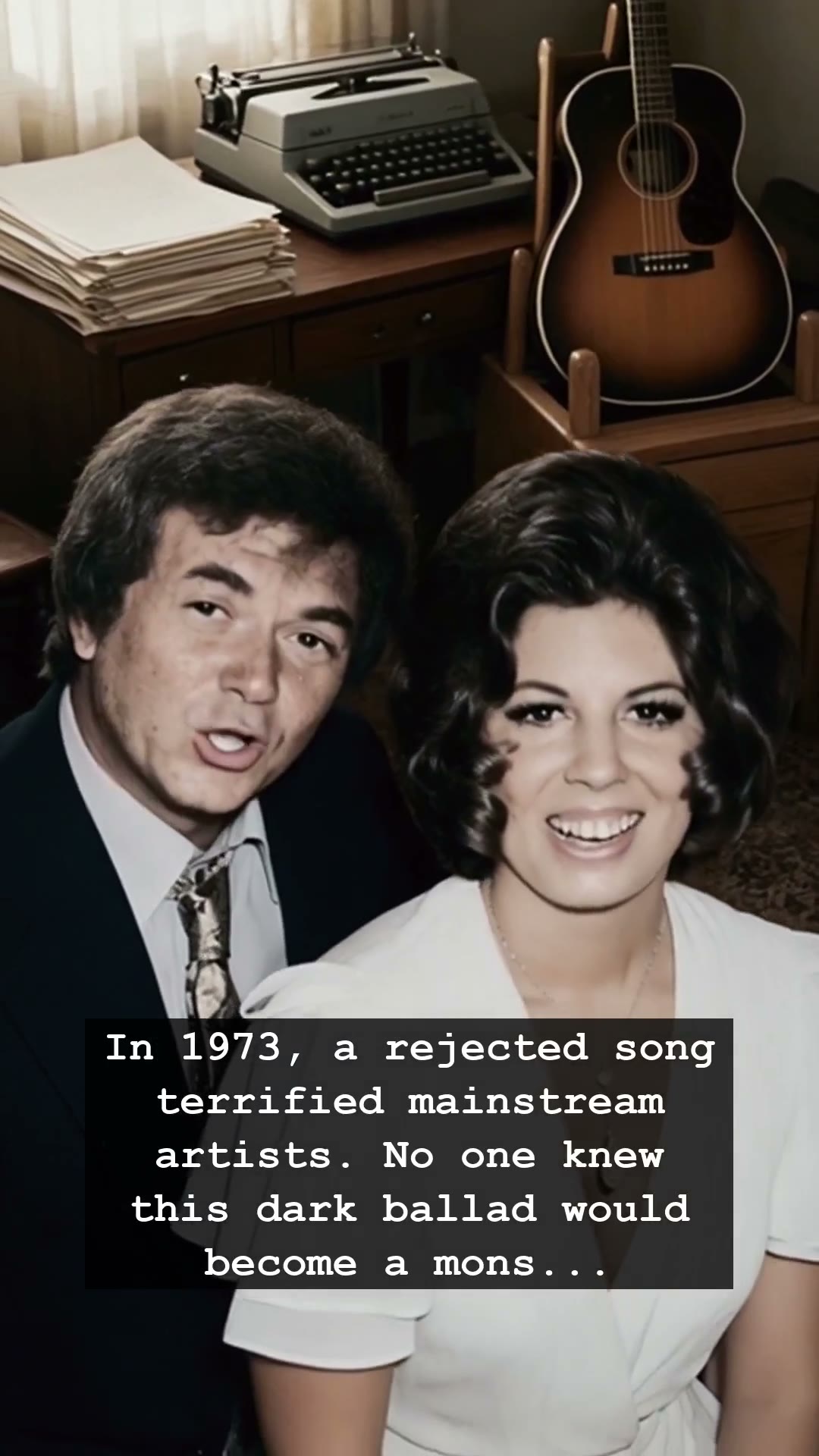
In 1973, the American airwaves were saturated with breezy pop melodies and disco-ready grooves. Yet, amidst this musical landscape, a song emerged that felt like a cold draft in a warm room. It was a narrative ballad dripping with southern gothic tension, betrayal, and a chilling judicial twist. That song was The Night the Lights Went Out in Georgia. Today, it remains a haunting relic of the seventies, but its journey to the top of the charts was paved with rejection, skepticism, and the unexpected ascent of a television star who refused to let a dark story die.
Bobby Russell, the songwriter behind this masterpiece, had a gift for capturing the grit of human nature, but the industry was not immediately sold. The song was a noir short story set to music, detailing a sequence of murders and a miscarriage of justice that ended in a graveyard. Major artists of the era shied away from the morbid narrative, fearing it was too macabre for mainstream radio. It sat in the dust of Nashville, waiting for a voice that could navigate its treacherous, story-driven verses. When the demo was handed to Vicki Lawrence, she saw something that the established stars had missed. She wasn’t just a singer; she was a storyteller with a flair for the dramatic, and she understood that listeners were hungry for more than just love songs.
Vicki Lawrence was already a household name due to her iconic role on The Carol Burnett Show, but recording a song this dark was a gamble. It was a stark departure from the glitz of network television. When she stepped into the studio, she didn’t try to polish the grim edges of the lyrics. Instead, she leaned into the tragedy. With her distinct, weary-yet-sharp delivery, she brought the Georgia courtroom to life. When the track hit the jukeboxes and car radios across the country, it gripped the nation. It was a masterclass in tension, capturing the attention of a generation that was beginning to move away from the idealism of the sixties and into the more complex, cynical realities of the mid-seventies.
Beyond the catchy chorus, the song resonated because it tapped into a primal fear of the American South: the feeling that justice can be as arbitrary as a flip of a coin. Bobby Russell had managed to weave a tale that felt like a true-crime documentary long before the genre took over our streaming queues. The song became a massive number-one hit, proving that even in an era of flashy fashion and synth-pop experimentation, audiences still craved the raw, narrative power of a well-told story.
Decades later, the legacy of this track persists. It serves as a reminder of a time when the music industry was willing to take risks on songs that defied convention. Vicki Lawrence proved that a performer could bridge the gap between comedy and tragedy, while the songwriting genius of Bobby Russell remains etched in the annals of American music history. Whenever those opening notes play, we are transported back to 1973, sitting by a warm radio as the lights go out, captivated by a story that refuses to fade away.