
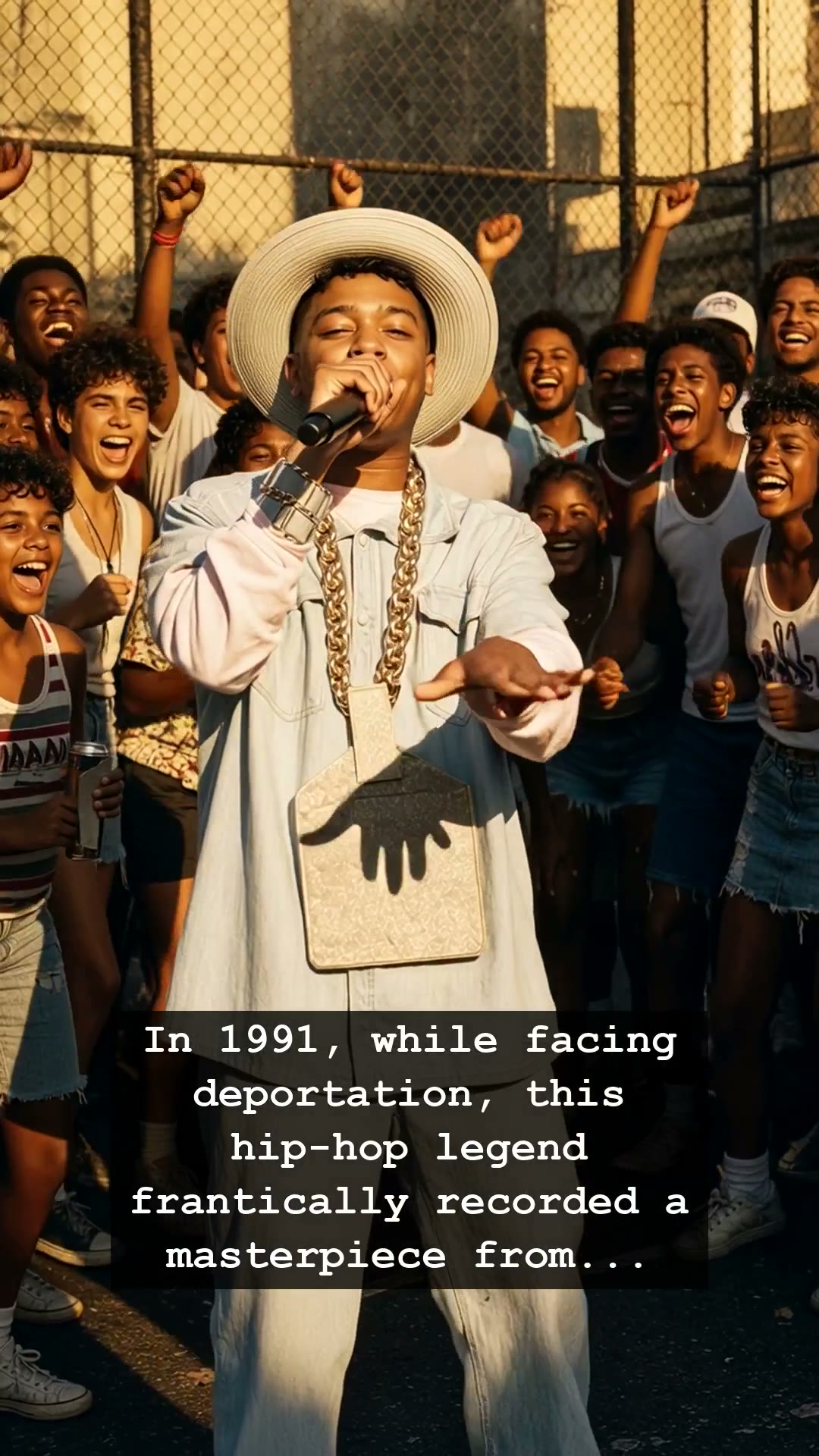
In 1991, the neon glow of the hip-hop scene felt different for Slick Rick. He was not just a storyteller spinning yarns of London and New York; he was a man staring into the abyss of his own shattered future. Facing a devastating deportation order and the weight of a legal nightmare, the legendary rapper found himself in a position few artists ever endure. While the world outside was moving to the rhythmic pulse of a rapidly changing musical landscape, Slick Rick was locked in a race against time, desperately trying to finish his sophomore album, The Ruler’s Back, before the doors of his career—and his life in America—were slammed shut forever.
There is a haunting, visceral quality to that period of his work that modern listeners often overlook. Imagine the air in the studio: thick with anxiety, the silence between the bars heavy with the threat of exile. Slick Rick did not have the luxury of time or the comfort of a peaceful mind. He was a fugitive of circumstance, channeling every ounce of his raw, unfiltered desperation into the microphone. It was not merely about hitting the right notes or keeping the beat; it was a frantic, soul-baring document of a man trying to immortalize his voice before it was silenced by the machinery of the law. Every lyric felt like a plea, a testament, and a goodbye all rolled into one.
Slick Rick has always been a storyteller, a master of the narrative craft who brought a cinematic quality to hip-hop long before it became the industry standard. His unique cadence and eye-patch-wearing persona made him a fixture of the late 80s and early 90s, but that 1991 window revealed the human behind the myth. While his peers were chasing chart success, Slick Rick was chasing legacy. The studio became his sanctuary and his courtroom, the only place where he could still claim the throne. This period of turmoil added a layer of jagged, authentic intensity to his music that polished, big-budget productions simply could not replicate.
When we look back at the golden era of hip-hop, we often focus on the bravado and the rivalries, but we rarely talk about the genuine fear that fueled some of the greatest verses. The story of Slick Rick in 1991 serves as a stark reminder that behind every legendary track is a heartbeat, a struggle, and a very human conflict. Whether you are a fan of his storytelling or just discovering the depth of his discography, it is impossible to listen to those songs today without feeling the phantom tension of that era. He survived the storm, but the records he made while the clouds were darkest remain his most poignant work.
His ability to transform trauma into art is exactly why he remains a pillar of hip-hop history. Slick Rick did more than just survive that moment; he crafted a masterclass in resilience that resonates with anyone who has ever faced the brink. As you revisit these classics, listen closely to the urgency in his voice. You are not just hearing a legend; you are hearing a survivor telling his side of the story while the clock was ticking down.