
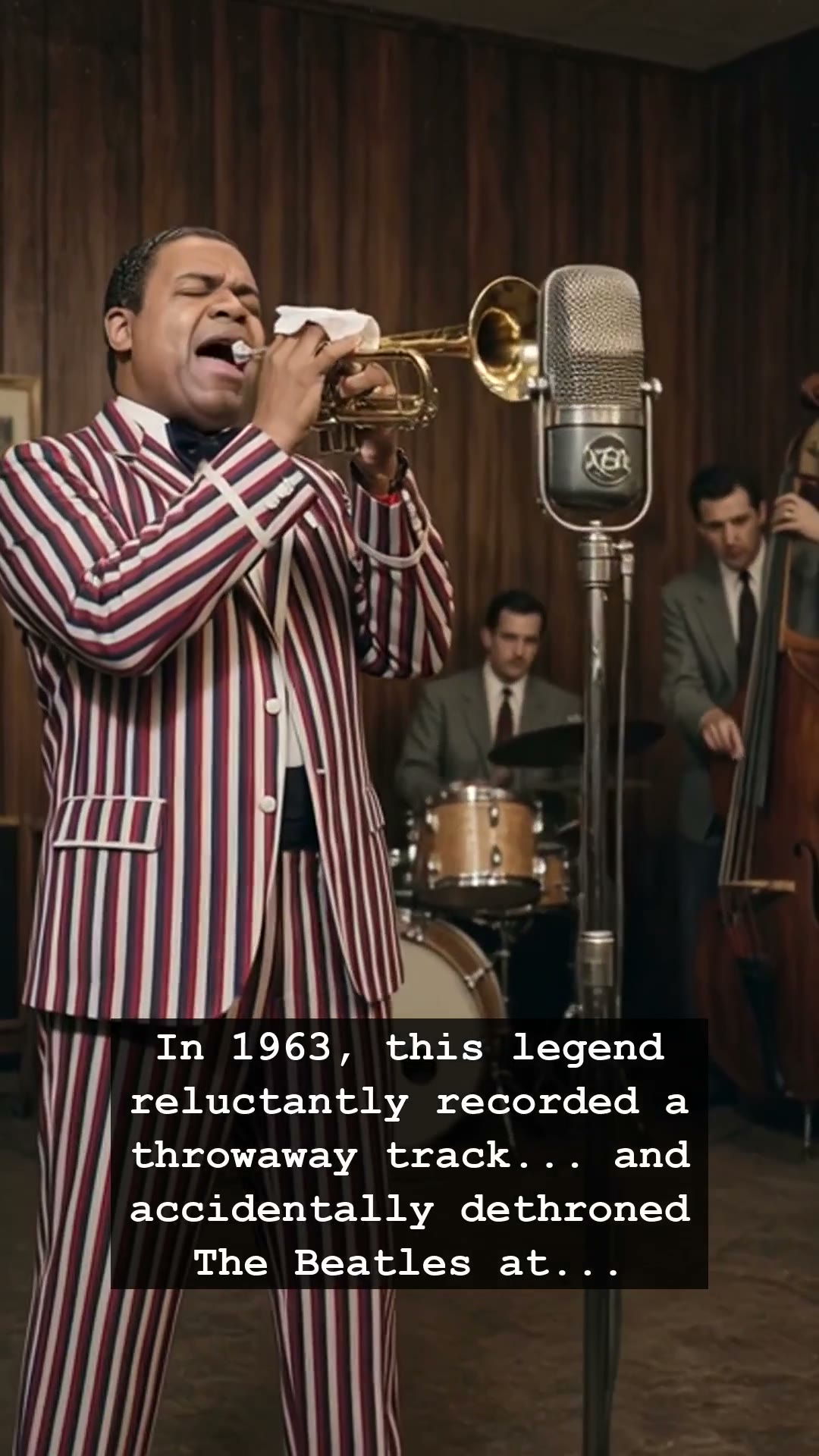
The year was 1964, and the airwaves were dominated by the frenetic energy of the British Invasion. Beatlemania was sweeping across the United States like a tidal wave, leaving the old guard of American music feeling as obsolete as a dusty jukebox in a forgotten diner. In the eye of this cultural storm sat Louis Armstrong, the gravel-voiced titan of jazz, who felt as though his time in the spotlight had long since passed. He was an American icon, a man whose trumpet had defined an entire era, but the charts were no longer interested in the sophisticated rhythms of his past. He was preparing to record a song for a Broadway musical called Hello, Dolly!, viewing it as little more than a promotional throwaway, a track he expected to vanish into the thin air of mid-century radio static.
Louis Armstrong did not want to record the song. He thought the upbeat, brassy Broadway number was too far removed from his jazz roots, a commercial gimmick that lacked the soul he had poured into his work for decades. Yet, in a cramped recording studio, with the pressure of the label weighing on him, he leaned into the microphone and gave it his signature, unmistakable touch. He didn’t know it then, but those few hours in the studio would become a historic footnote in music history. He wasn’t trying to change the world; he was simply doing his job, carrying the torch of an older generation into a modern, electric age defined by the emerging power of youth culture.
When the record hit the shelves, the world was obsessed with the mop-top rockers from Liverpool. The Beatles were at the absolute peak of their powers, holding the top spots on the Billboard charts with a firm, unyielding grip. But then, something impossible happened. The sheer warmth and universal charm of Louis Armstrong began to climb the charts, defying the logic of the new musical order. In May of 1964, the song Hello, Dolly! surged to the number one spot, knocking The Beatles off their throne. At 62 years old, Louis Armstrong became the oldest artist to ever score a number one hit, a record that stood for nearly a decade and cemented his place as a timeless anomaly in an industry obsessed with trends.
Looking back, this moment feels like a beautiful contradiction. It was a clash between the legacy of classic jazz and the dawn of the global rock era. The grit and gravel of the voice that had serenaded speakeasies and concert halls since the 1920s proved that authenticity could still bridge the gap between generations. It was a triumph for the old guard, a reminder that while fads come and go, a genuine connection with the audience never truly goes out of style.
Today, the story of how Louis Armstrong inadvertently silenced the Fab Four remains one of the most endearing legends of the era. It speaks to the unpredictability of art and the enduring power of a legend who, despite his reluctance, ended up creating a final, glorious chapter in his storied career. As we listen to that iconic opening brass swell today, it serves as a nostalgic reminder that even in the height of an intense cultural revolution, there was always room for a little bit of magic from the man who gave jazz its heartbeat.