
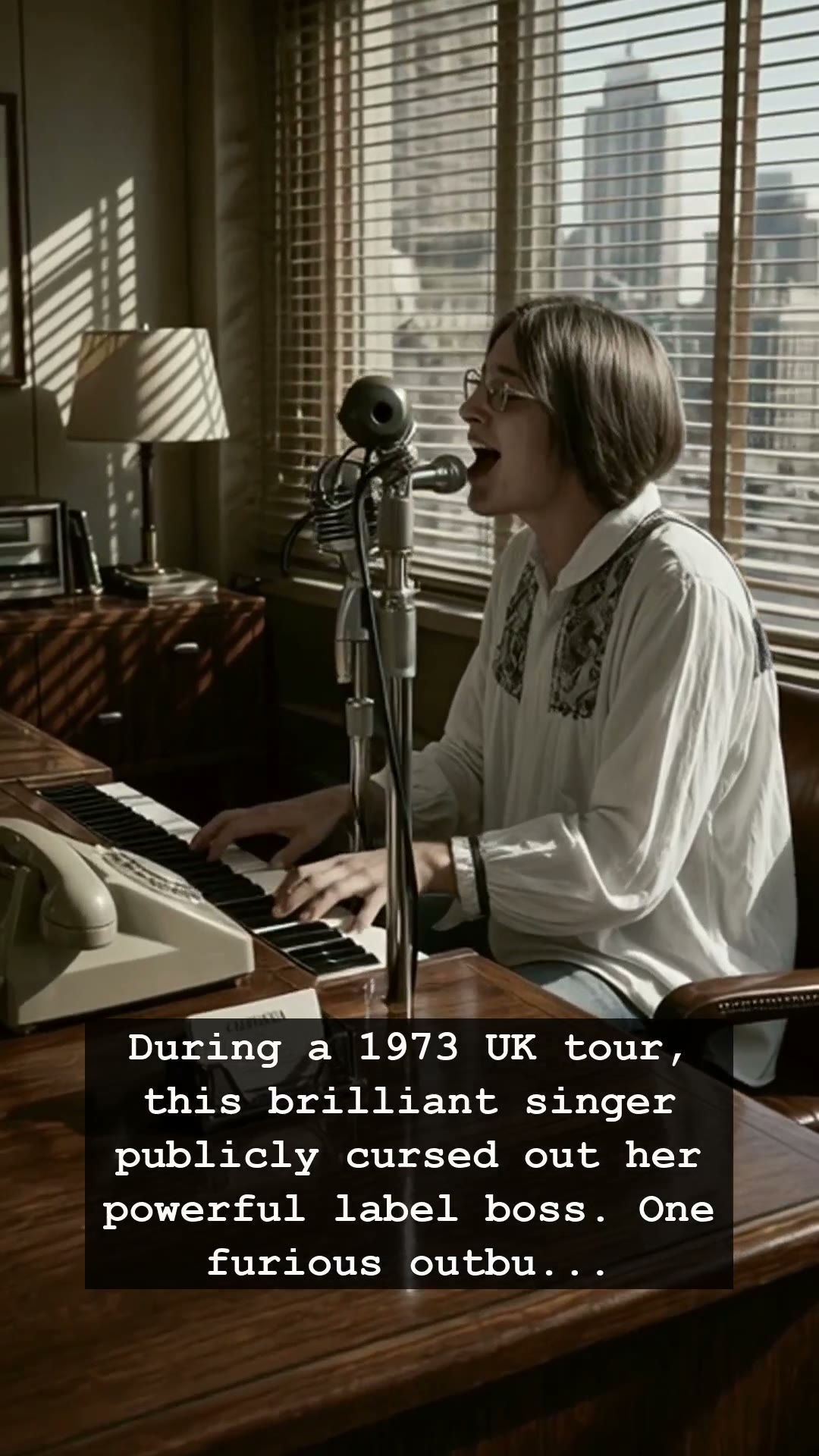
The year was 1973, and the air was thick with the scent of cigarette smoke and the changing tides of the music industry. In the dimly lit corridors of the British music scene, Judee Sill stood as a haunting enigma. With a voice that felt like a bridge between sacred hymnals and the raw, bruised reality of a life lived on the edge, she was poised for greatness. Yet, in the blink of an eye, a single moment of uncontrollable rage against a powerful label executive didn’t just burn a bridge—it ignited the entire foundation of her promising career, leaving behind only echoes of what could have been.
Judee Sill was never meant to fit the cookie-cutter mold of the early seventies folk singer. She possessed a troubled, poetic soul, shaped by a childhood defined by loss and a young adulthood spent navigating the gritty underbelly of Los Angeles. Her music was intricate, spiritual, and deeply personal, capturing the kind of vulnerability that modern listeners, raised on the polished aesthetic of MTV, might find startlingly raw. At the time, she was the first artist signed to David Geffen’s Asylum Records, sharing a roster with legends like Joni Mitchell and The Eagles. She had the vision, the talent, and the momentum, but she also carried the heavy, turbulent baggage of a life that felt like it was constantly threatening to unravel.
The fateful night in the UK remains etched in musical folklore as a cautionary tale of hubris and heartbreak. During a heated tour, the pressure of expectations and the toxic friction between artist and label management reached a boiling point. In a public display of defiance, Judee Sill turned on her label boss with a vitriolic, expletive-laden outburst that silenced the room. In an industry where power was absolute and reputation was currency, that single act of rebellion was viewed as an unforgivable transgression. The gatekeepers who had once championed her brilliance suddenly looked away, and the industry’s cold, mechanical machinery began to grind her prospects into dust.
It is heartbreaking to look back at the trajectory of Judee Sill and realize how much of her potential was silenced by the uncompromising nature of the era. She wasn’t just a singer; she was a brilliant, if fractured, songwriter who blended baroque pop with gospel sensibilities. While her contemporaries were filling stadiums and defining the sounds of the decade, Judee Sill drifted into the shadows, her music relegated to the bargain bins of record stores for decades. The tragedy is that her voice—fragile, celestial, and deeply human—was silenced just as it was finding its true, resonant depth.
Today, we look back at the 1970s with a mix of awe and melancholy, remembering the era through the static of a Walkman or the crackle of a vinyl record. Judee Sill serves as a reminder that history is written by the survivors, but the most compelling stories often belong to the ones who fell along the way. Her music has seen a modest resurgence in recent years, proving that true artistry, no matter how briefly it burned, leaves a permanent mark on the landscape of American music. As you listen to her haunting melodies, you are hearing the echo of a woman who dared to scream at the machine, and in doing so, became an eternal, quiet legend.