
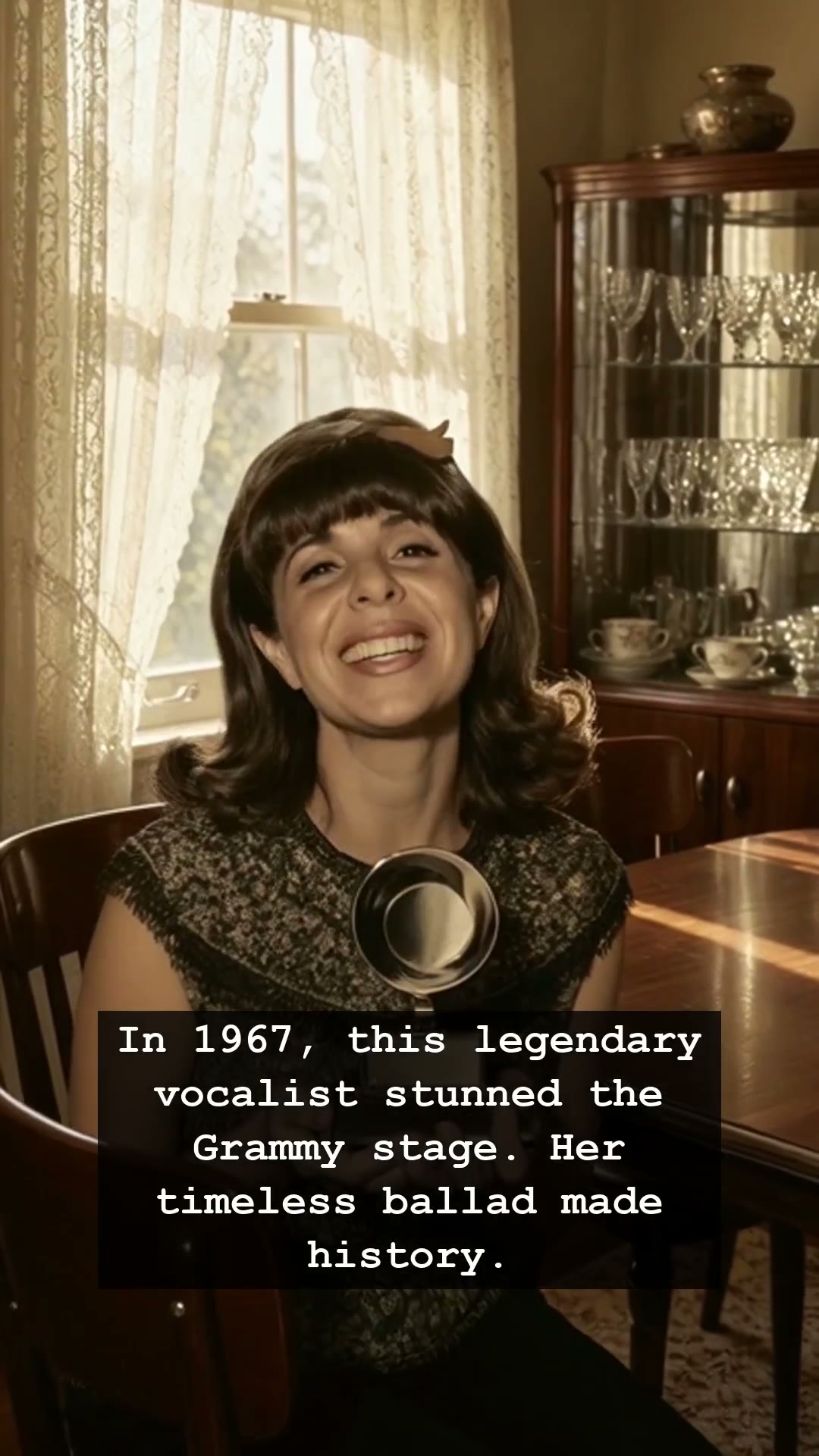
Imagine a world before the digital hum, where the crackle of a vinyl record on a warm turntable was the soundtrack to every living room. It was 1967, a year defined by social revolution and the rapid pulse of change, yet amidst the psychedelic rock and the rising tide of protest songs, one woman stood center stage with a voice that commanded absolute silence. Eydie Gorme, a powerhouse of vocal precision and emotional depth, captivated the nation with a performance that would solidify her place in the pantheon of traditional pop legends forever.
When Eydie Gorme stepped onto the stage to accept the Grammy for Best Female Vocal Performance for her iconic hit If He Walked Into My Life, she wasn’t just collecting an award; she was reclaiming a standard of musical excellence that felt both timeless and urgent. Her delivery of the ballad was nothing short of haunting, vibrating with the raw vulnerability of a woman reflecting on love, loss, and the bittersweet passage of time. It was a moment of sheer artistic triumph that stood in stark contrast to the emerging chaos of the late sixties.
But the brilliance of Eydie Gorme didn’t happen in a vacuum. She was a product of an era where talent was measured by the strength of one’s lung capacity and the ability to hold a crowd captive in a smoke-filled cabaret or a grand arena. Long before the era of synthesized pop and auto-tuned perfection, Eydie Gorme mastered the art of the torch song. Her partnership with Steve Lawrence created a domestic musical empire, yet it was her solo work that showcased a depth of sorrow and joy that resonated deeply with the Boomer generation, who saw their own shifting lives mirrored in her lyrics.
The industry at the time was shifting violently. The British Invasion had already reshaped the airwaves, and the counterculture was beginning to overshadow the sophisticated arrangements of the past. Yet, Eydie Gorme navigated this transition with grace. She remained a constant in the world of variety shows and late-night television, bringing a touch of class to a rapidly evolving entertainment landscape. Her success was a reminder that even as the world around us changes, the human heart craves the kind of authentic, soaring melody that only an artist like Eydie could provide.
Looking back, her 1967 victory feels like a beautiful bridge between the classic standards of the fifties and the emotive balladry that would dominate the seventies. To listen to her records today is to step back into a time when music felt tactile, personal, and profoundly moving. Whether played on a portable transistor radio or a high-end stereo system, the resonance of her voice remains unchanged. Eydie Gorme left behind a legacy that proves true artistry is never lost; it simply waits for us to press play and remember exactly how it felt to be young, in love, and listening to the golden voice of a legend.