
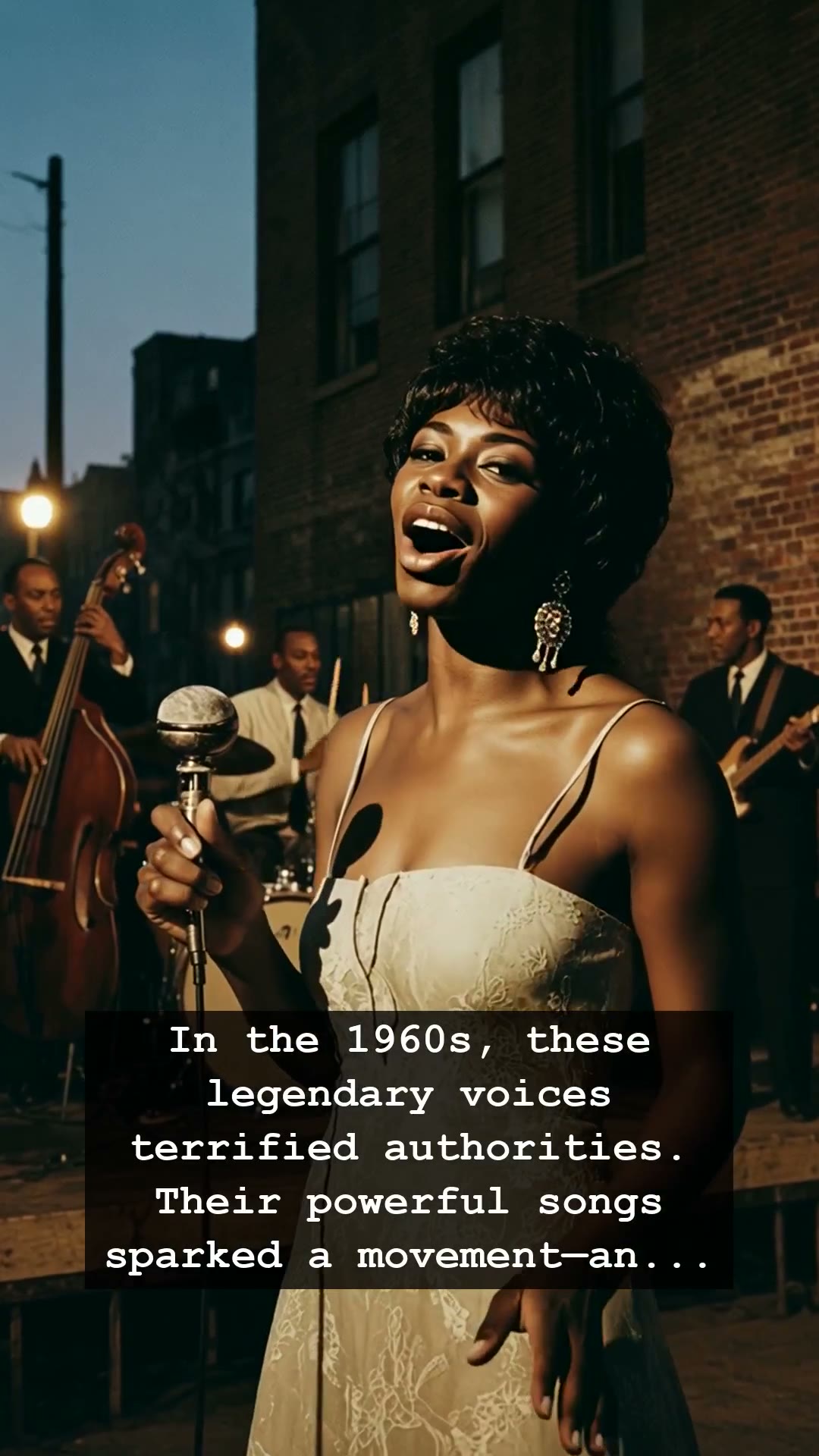
In the sweltering heat of the 1960s, music was far more than just a melody echoing from a jukebox. It was a weapon of mass mobilization, a defiant scream against systemic injustice that made even the most powerful government officials tremble in their offices. Among those who dared to turn their art into a revolution were two towering titans of music: Nina Simone and Miriam Makeba. To the establishment, these women were not just singers; they were dangerous agitators whose haunting voices could ignite a movement, leading them down a perilous path of surveillance, suppression, and eventually, a long, lonely exile from the lands they fought so hard to change.
Nina Simone, the High Priestess of Soul, possessed a voice that sounded like it had been carved from the very foundation of the earth. She was not interested in singing popular love songs while her community faced violence. Instead, she poured her fury into anthems like Mississippi Goddam. Every note she struck felt like a direct punch to the status quo. She walked the stage with a regal, icy intensity, fully aware that her protest music was being tracked by intelligence agencies who feared the fire she was lighting in the hearts of millions. Her brilliance was matched only by her personal struggle with the heavy weight of being a conscious icon in a divided America.
Thousands of miles away, Miriam Makeba, known affectionately as Mama Africa, was waging her own battle. Her voice, a delicate instrument that carried the spirit of the South African struggle against apartheid, became a global beacon of freedom. When she took the stage, she wasn’t just performing; she was acting as a diplomat for the oppressed. The South African government was so terrified of her international influence that they revoked her citizenship and barred her from ever returning home. She spent decades wandering the globe, a woman without a country, carrying the haunting melodies of her homeland as her only baggage.
These two women eventually found common ground, both literally and figuratively. They understood the deep, crushing price of speaking truth to power in an era defined by civil rights struggles and international upheaval. Whether it was the smoky haze of a jazz club or the vast, transformative energy of a stadium concert, they operated with the knowledge that their careers could be dismantled at a moment’s notice. They lived through the dark side of fame, where the glitz of the spotlight often hid the cold reality of being blacklisted by the very systems they challenged.
Today, the legacy of Nina Simone and Miriam Makeba resonates with a clarity that refuses to fade. They taught us that music is the ultimate documentation of the human spirit, a testament that survives even when the artist is pushed into the shadows. Their stories remain essential, not just as historical footnotes, but as a reminder of what happens when courage takes the form of song. As we look back on the mid-20th century, we are reminded that some voices are simply too loud to be silenced, even by the reach of empires and the cruelty of exile.