
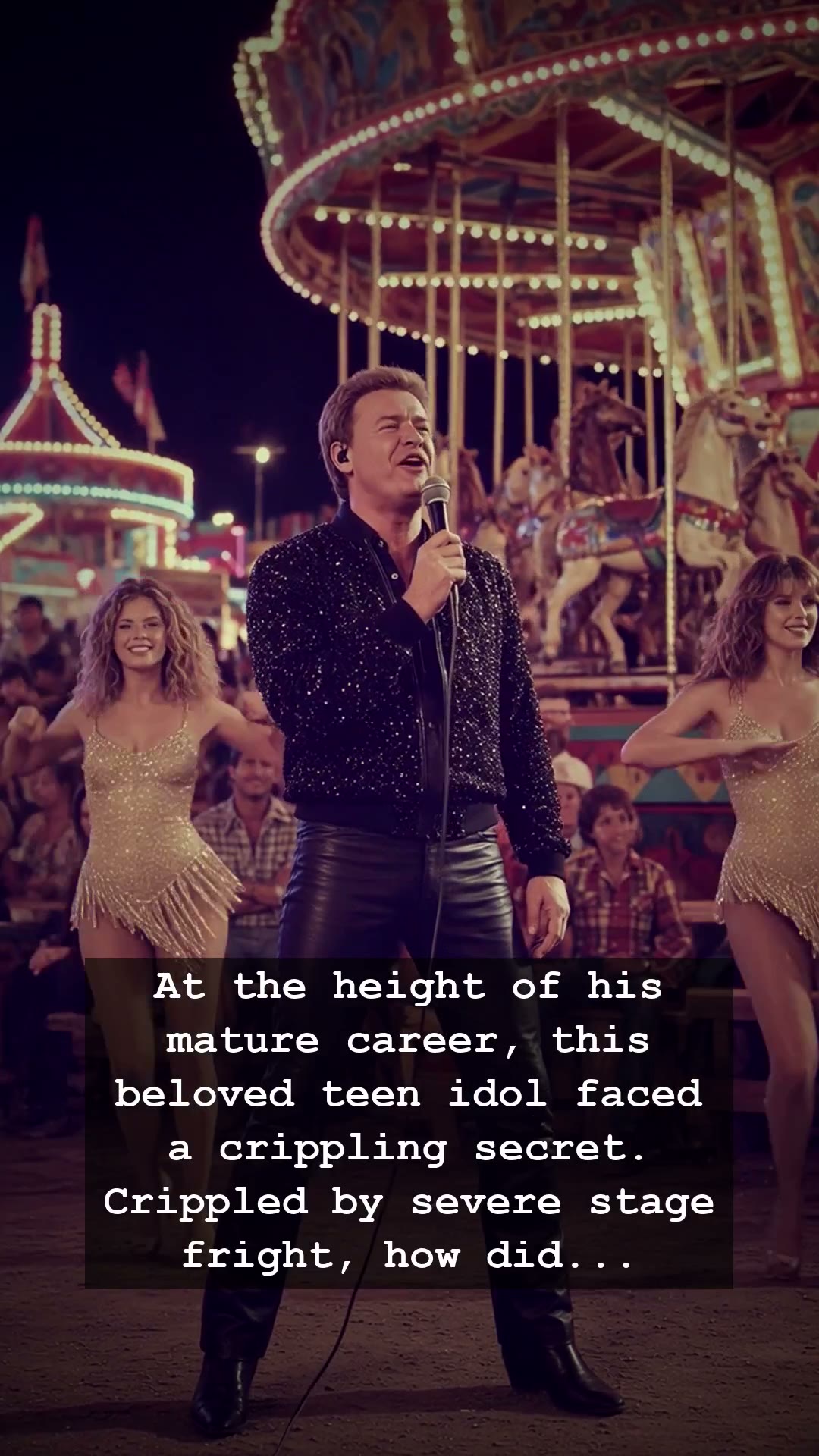
To the millions of fans who swooned over his poster-covered bedroom walls in the 1970s, Donny Osmond was the ultimate embodiment of perfection. With that signature toothy grin and a voice that could melt hearts from Provo to London, he was the face of teen pop royalty. Yet, behind the bright lights of the television studio and the deafening roar of hysterical crowds, a different narrative was unfolding. While the world saw an effortless superstar, Donny Osmond was fighting a silent, paralyzing war within his own mind. At the very height of his fame, when he should have been untouchable, he was grappling with a crippling, invisible monster: severe stage fright.
It is difficult to reconcile the image of the exuberant boy from The Donny & Marie Show with the reality of his internal isolation. For years, Donny Osmond lived in terror of the very stage that had granted him his fame. Imagine standing under the white-hot glare of stage lights, the scent of hairspray and old velvet thick in the air, while your heart hammers against your ribs like a trapped bird. For Donny, this wasn’t just nervous energy; it was a psychological blockade. He lived in constant fear that his composure would shatter, and that the perfectionist mask he had worn since childhood would finally drop to reveal the terrified man underneath.
The industry, however, is a relentless machine that rarely pauses for personal healing. As the disco era faded into the neon-soaked excess of the 1980s, the public perception of the former teen heartthrob began to sour. The shifts in musical culture—from the wholesome pop of the Jukebox era to the gritty, rebellious spirit of Grunge—left Donny Osmond adrift. He was no longer the industry darling, and the pressure of fading relevance only exacerbated his anxiety. Many artists in his position retreated into the dark corners of the rock and roll lifestyle, turning to substance abuse or fading into total obscurity, but Donny chose a far more treacherous path: he stepped into the unforgiving light of Broadway.
When Donny Osmond accepted the role of Joseph in Joseph and the Amazing Technicolor Dreamcoat in the early 1990s, the critics were skeptical. They expected a nostalgic novelty act, not a powerhouse performance. Yet, it was in this theater, away from the synthetic safety of MTV music videos, that he faced his demons head-on. Night after night, in front of live, unforgiving audiences, he channeled his paralyzing fear into a raw, undeniable stage presence. He wasn’t just singing lines; he was performing an exorcism of his past insecurities.
His triumph on Broadway was more than just a comeback; it was a profound human reclamation. By confronting the stage fright that nearly destroyed his career, Donny Osmond transformed from a manufactured idol into a seasoned, resilient performer. Today, his story serves as a poignant reminder that even the brightest stars are susceptible to the deepest shadows. Whether you remember him from the vinyl days or his later resurgence, the saga of Donny Osmond remains a testament to the power of courage when the curtains finally rise.