
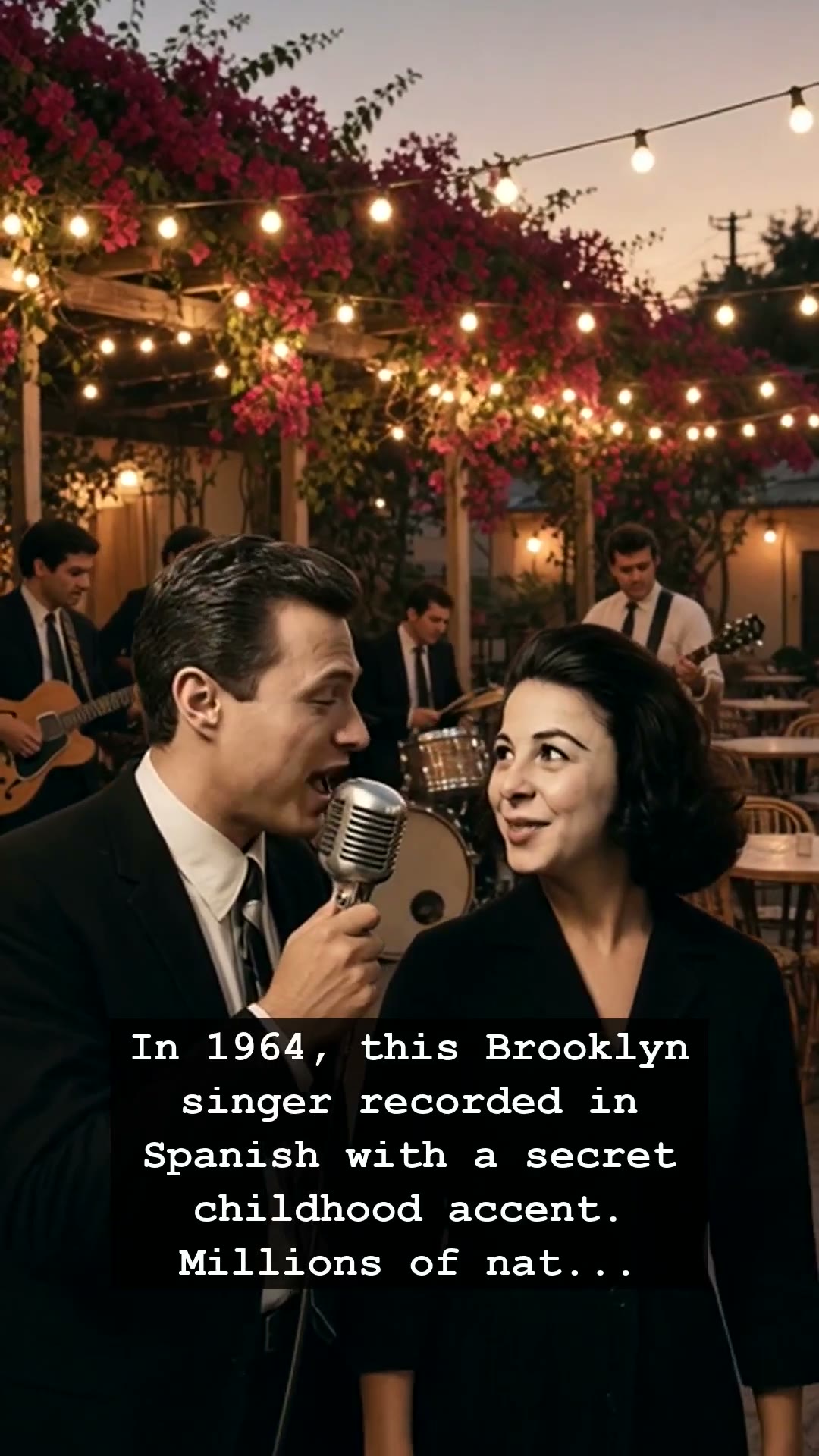
Step back to the glowing era of the mid-1960s, a time when the warm glow of a living room television and the crackle of a vinyl record player defined a generation. Imagine dropping a coin into a neighborhood jukebox, hearing the lush, sweeping strings of a romantic Latin ballad, and falling completely under the spell of the vocalist. Millions of listeners across Latin America and the United States were utterly convinced they were listening to a native Latina superstar with a voice straight from the heart of Havana or Madrid. The shocking truth, however, was that the mesmerizing voice belonged to Eydie Gorme, a nice Jewish girl from Brooklyn whose secret weapon was an intimate childhood secret.
Born Edith Isabella Gormezano in the Bronx, Eydie Gorme grew up in a traditional Sephardic Jewish household where Ladino and Spanish were spoken alongside English. This unique linguistic foundation gave her an authentic, flawless accent and a profound emotional connection to the cadence of Hispanic music that no ordinary American pop star could easily mimic. When she teamed up with the legendary Trio Los Panchos in 1964 to record an album of romantic boleros, she did not just sing the words; she inhabited them with a breathless, theatrical passion that bridged cultural divides.
Back in the smoky recording studios of the era, where analog tape captured every nuance of vulnerability, Eydie Gorme worked magic that would today be hailed as an unprecedented cultural triumph. Tracks like Sabor a Mi and Piel Canela became massive crossover hits, playing on the radio while people walked the streets with their transistor radios pressed to their ears. Native speakers were completely fooled, writing heartfelt fan letters to a singer they imagined growing up under the tropical sun. It was a golden age of musical deception, driven entirely by pure artistic excellence and a deep, genuine love for the genre.
Behind the velvet curtains of her soaring career, Eydie Gorme and her husband and musical partner, Steve Lawrence, ruled the stages of Las Vegas and prime-time television variety shows. Yet it was her daring Spanish-language detour that cemented her legacy as a fearless boundary-pusher. In an era before global digital streaming made the world instantly connected, her daring crossover required immense trust, vocal precision, and an unspoken reverence for Latin American culture. She proved that music speaks a universal language that bypasses borders entirely.
Today, the rich legacy of Eydie Gorme continues to resonate whenever a vintage vinyl record spins on a turntable or a modern listener discovers the timeless elegance of the 1960s bolero sound. Her ability to weave two distinct cultural worlds into seamless, breathtaking art remains a masterclass in vocal storytelling. As we look back at the glamour and drama of mid-century American entertainment, her unforgettable voice reminds us of a simpler, more romantic time when a single song could magically transport you across the globe.