
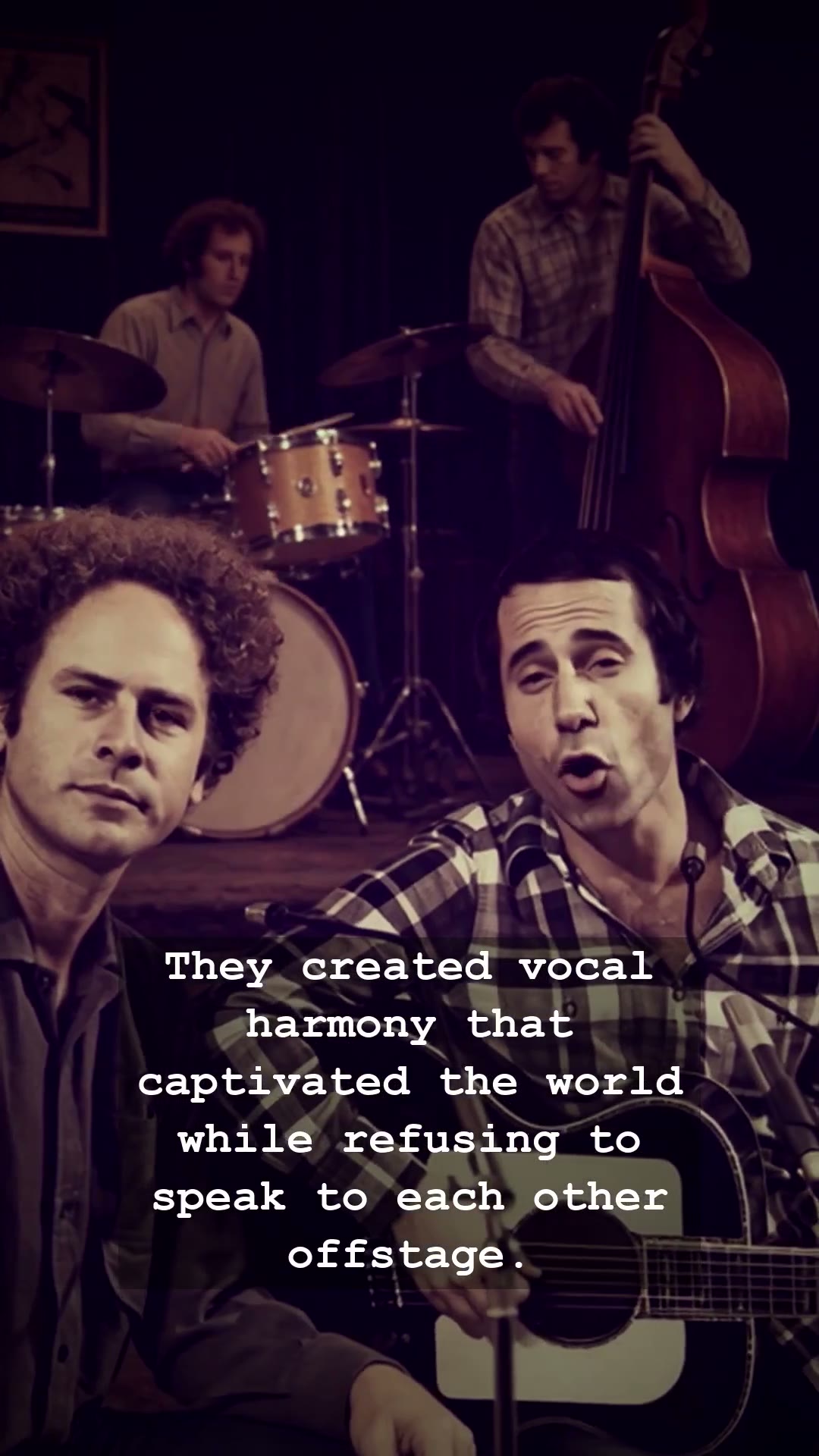
In the golden age of folk-rock, few sounds were as angelic as the voices of Simon and Garfunkel. When their harmonies soared, it felt like a collective exhale for a generation lost in the turbulent social landscape of the 1960s. Fans across America were captivated by the crystalline precision of their records, believing that such perfect musical synergy could only stem from a deep, unshakable friendship. Yet, behind the scenes, the reality was a stark, jarring contrast. The duo who gave us the soundtrack to a generation was, for long stretches, trapped in a suffocating silence where they refused to speak a single word to each other offstage.
To understand the enigma of Simon and Garfunkel, one must step back into a world where the Jukebox was the heartbeat of every roadside diner and the radio served as a lifeline to culture. Paul Simon and Art Garfunkel had been friends since childhood in Queens, but as the duo reached the zenith of their fame, the friction between Simon’s perfectionist drive and Garfunkel’s independent spirit ignited. The studio, which should have been their sanctuary, became a battlefield of creative control and hidden resentment. During the recording of their final studio album, the tension reached a breaking point that would leave their growing fanbase oblivious to the crumbling foundation of the partnership.
It was a strange, haunting irony. When the microphone was live, they were the picture of unity, their voices blending in a haunting tapestry that defined the folk era. Yet, the moment the recording light flickered off, the room would turn icy. They walked past one another as strangers, ignoring the existence of the man who shared their greatest triumphs. This wasn’t just a simple disagreement; it was a profound, ego-driven fracture that mirrored the wider divisions in a society struggling to find harmony amidst the chaos of the late twentieth century.
For those of us who grew up spinning their vinyl on a worn-out turntable, it is difficult to reconcile that beautiful, soaring bridge over troubled water with the reality of their icy, non-verbal exchanges. The tragedy of Simon and Garfunkel is not that they fought, but that the emotional weight of their internal war was often channeled directly into the lyrics. We were listening to their therapy, their frustrations, and their deepest insecurities without ever knowing the names of the demons they were fighting at the time. Their music remains a testament to the fact that greatness is rarely achieved in comfort.
Decades later, the allure of Simon and Garfunkel remains undimmed, largely because their work feels so achingly human. Their story reminds us that even the most enduring legends are merely people, susceptible to the same pride and misunderstandings as anyone else. As we look back through the lens of nostalgia, we aren’t just listening to songs; we are listening to a complex, messy, and brilliant chapter of American music history. Whether they were speaking or silent, they managed to leave behind a legacy of sound that, thankfully, continues to speak for them long after the curtains have closed.