
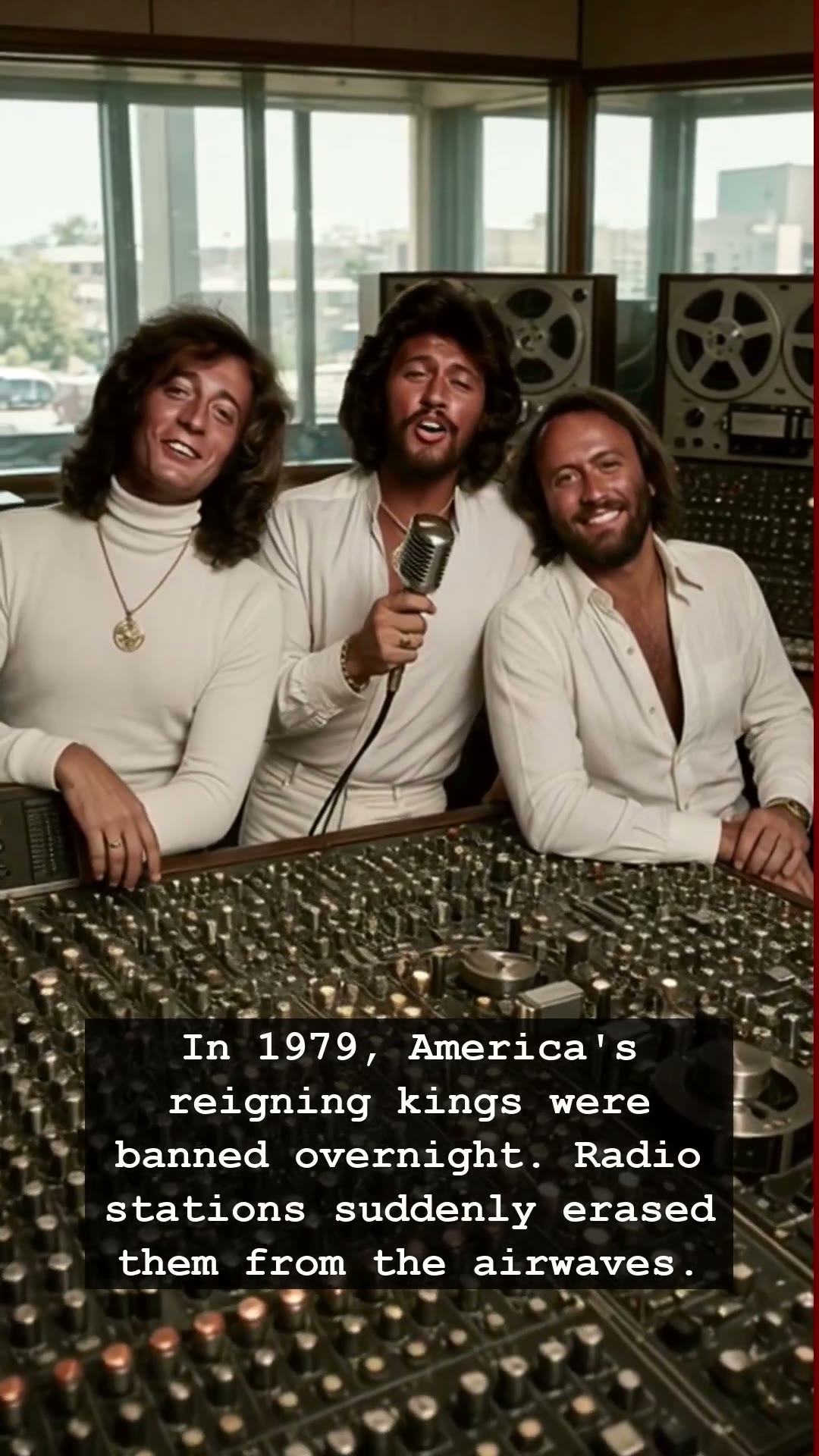
In 1979, the Bee Gees stood atop the summit of the music world. They were not merely a band; they were the heartbeat of an entire generation, the architects of the soundtrack that defined the disco era. With the success of Saturday Night Fever, the Gibb brothers had become cultural deities, their signature falsettos echoing from every corner of the planet. But beneath the shimmering surface of the mirror ball, a storm was brewing. By the end of the year, the kings of the charts were suddenly erased from existence. It was a cold, calculated execution orchestrated by the radio industry, as the infamous Disco Demolition Night sparked a nationwide boycott that would send the legendary Bee Gees into a period of prolonged, agonizing silence.
To understand the magnitude of this fall, one must look at the cultural landscape of the late seventies. The Bee Gees had inadvertently become the faces of a genre that was rapidly losing its cool. As the decade drew to a close, a backlash against disco began to fester among rock purists and the mainstream media. It was not just about the music; it was a societal fracture. The Bee Gees, with their tight white suits and polished pop sensibilities, became the convenient scapegoats for a movement that many perceived as plastic and hollow. Radio stations across America began smashing Bee Gees records in public spectacles, effectively blacklisting them overnight. It was a brutal transition from being the most played artists on the airwaves to being musical pariahs.
The emotional toll on Barry, Robin, and Maurice Gibb was profound. The brothers had spent decades honing their craft, surviving the early shifts of the rock and roll landscape only to be discarded when the tide of public opinion turned. The trauma of that 1979 purge haunted them for years, casting a shadow over their immense talent and songwriting genius. They went from the glamour of Studio 54 to the isolation of the recording studio, wondering if the world would ever forgive them for simply being too successful for their own good. It was a testament to the fragile nature of fame, where the same audience that adores you today can be turned against you by the winds of cultural shifting.
Yet, the beauty of music lies in its resilience. Decades later, the legacy of the Bee Gees has been restored to its rightful place. We now recognize that behind the disco gloss were master songwriters capable of heart-wrenching ballads and intricate harmonies that few could replicate. The prejudice against their sound has faded, leaving behind the undeniable truth of their impact. We can listen to their tracks now without the weight of 1979’s prejudice, finally appreciating the melody over the image. It is a reminder that while trends fade and critics may shout, the truth of a song will eventually find its way back home.